An office painting checklist should identify the rooms and surfaces, existing damage, furniture and equipment protection, building access, working hours, ventilation arrangements, and handover checks. Agree these details before booking dates. A clear list helps your business and painting contractor assess the same work, prepare a useful quote and avoid surprises when the crew arrives.
A Toronto office can include meeting rooms, reception areas, shared workstations and private offices, each with different access needs. One instruction to “paint the office” leaves too much open to interpretation. Does it include ceilings? Who clears the desks? Can the contractor use the service elevator after hours?
This guide helps office managers, business owners, and property managers turn those questions into a practical brief. Use it alongside Bauer Painting’s commercial office painting service when planning your next repaint.
Your office painting checklist at a glance
Before asking for dates or approving a quote, confirm these eight items:
Rooms: List every space included and mark anything excluded.
Surfaces: Separate walls, ceilings, trim, doors and frames.
Condition: Record damage, stains and areas that need inspection.
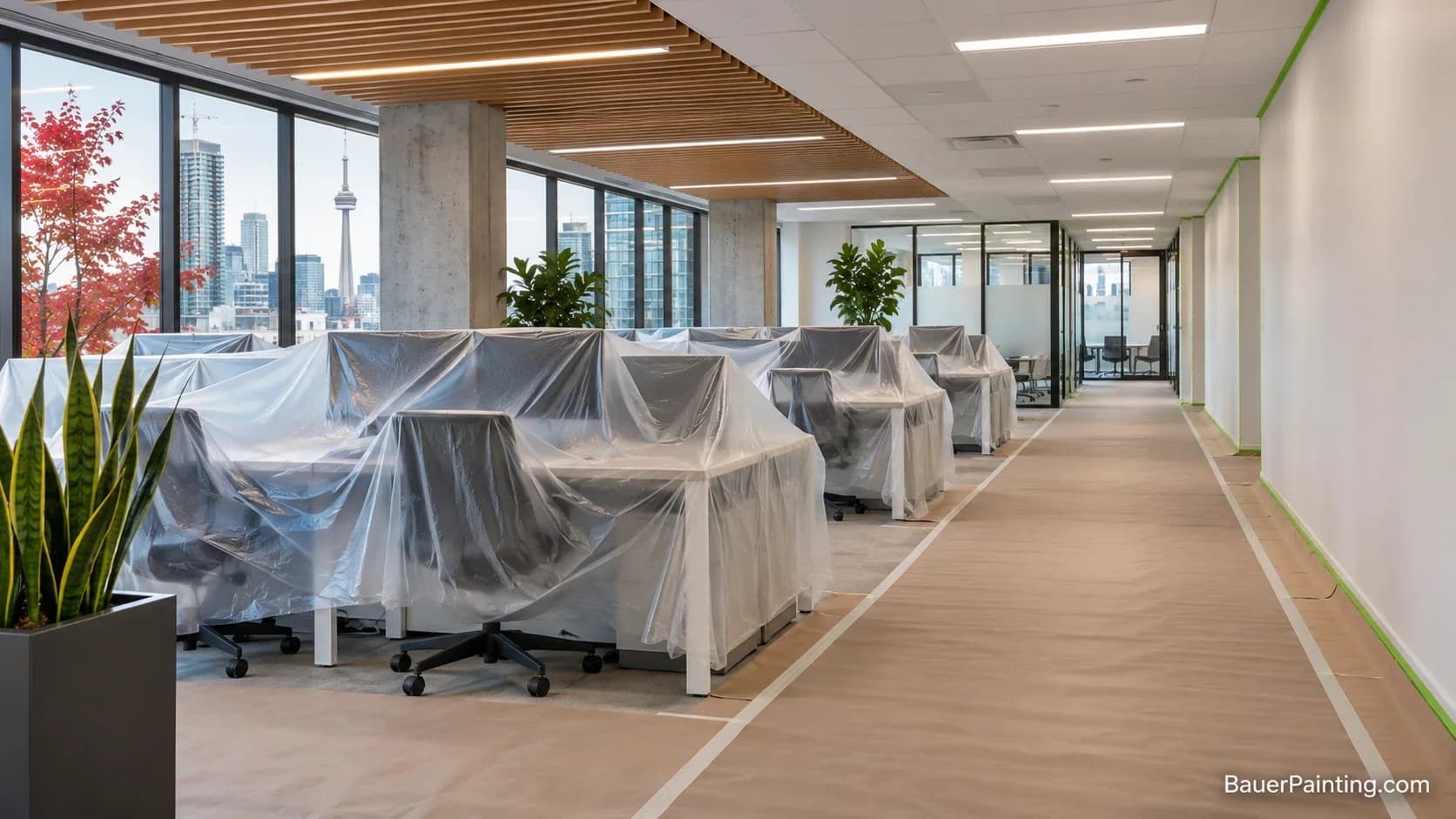
Protection: Decide who moves furniture, equipment and personal items.
Access: Confirm keys, loading arrangements, elevators and security procedures.
Work window: Identify available hours and rooms that must remain usable.
Product and ventilation requirements: Share building restrictions and arrange a suitable review.
Handover: Agree how the finished work, cleaning and outstanding items will be checked.
Give one person responsibility for maintaining this list. Changes are easier to manage when the contractor receives one agreed version rather than separate instructions from several departments.
Start with a room-and-surface list
Walk through the office before writing the scope. Use the names your staff recognizes, such as “east meeting room” or “reception behind the entrance desk”. Match those names to a floor plan if one is available.
For each room, record what needs painting and what should remain untouched. A glass partition, acoustic panel or wall graphic may sit beside a painted surface without belonging in the same scope.
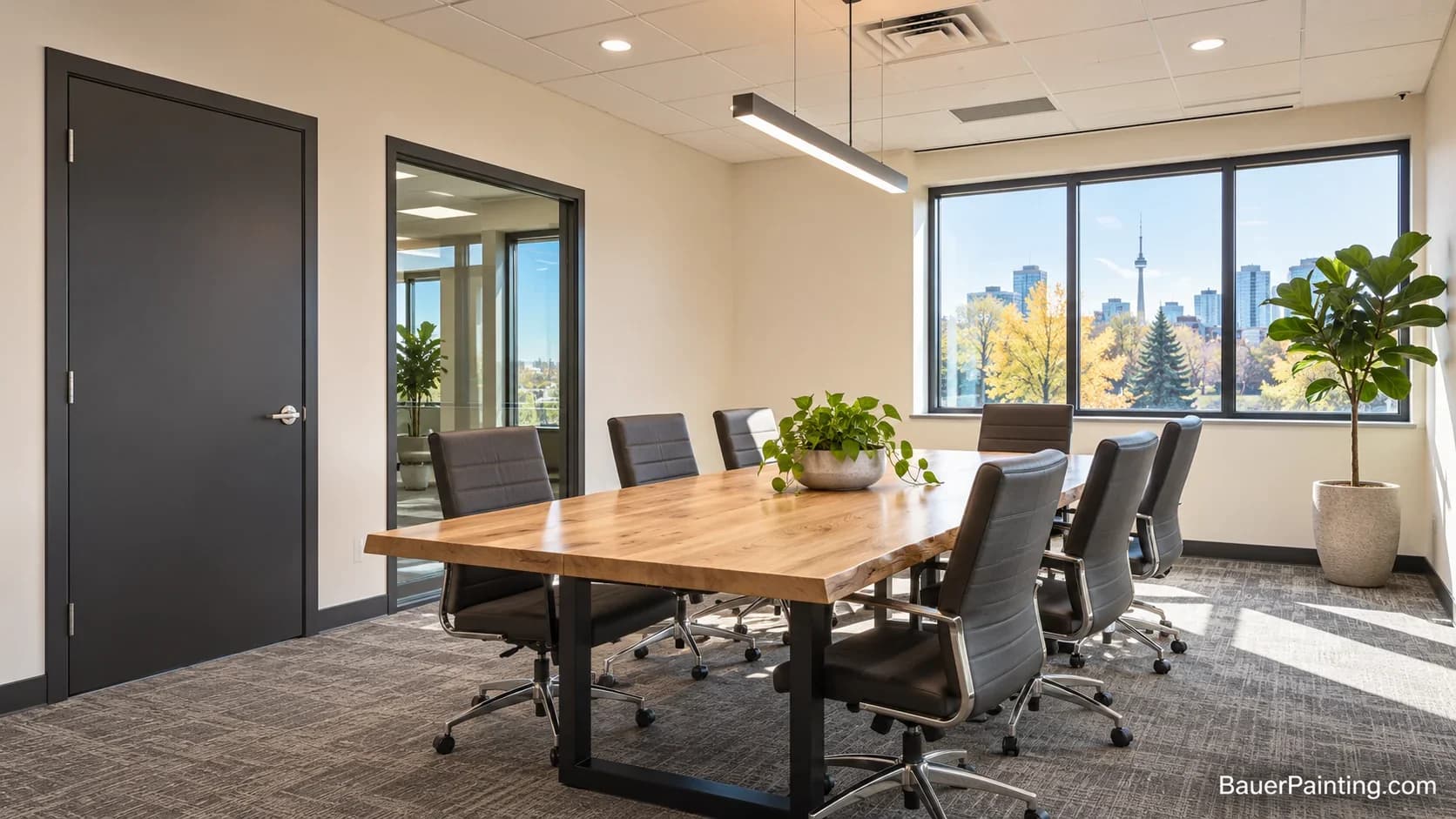
A simple scope worksheet
Copy this format for each space:
Room and reference: Reception, ground floor, R01.
Included surfaces: Painted walls and specified door frames.
Excluded items: Glass, signage, furniture and any surfaces not listed.
Condition notes: Scuffed corner beside the entrance; stain requiring assessment.
Access restrictions: Reception must remain available during agreed business hours.
Decision needed: Confirm color and whether adjacent surfaces need a separate price.
Repeat the same fields for meeting rooms, private offices, corridors and staff areas. This gives the contractor a usable starting point without asking you to diagnose every surface problem.
Record damage without guessing the repair
Photograph cracks, peeling areas, stains and impact damage. Note whether a problem has appeared again after a previous repair. Tell the contractor about known leaks or ongoing maintenance issues.
A repaint should not be treated as the solution to an unresolved moisture source. Ask what requires investigation before preparation begins and who will arrange that work. If a building’s materials or history raise concerns about hazardous substances, arrange appropriate assessment before disturbing surfaces.
If you are unsure whether a full repaint is needed, our guide to signs your office interior needs repainting can help you organize the initial walk-through.
Agree who moves and protects each item
Furniture and technology often create more uncertainty than the paint colors. A desk can be moved only after someone has dealt with its cables, monitors, documents and personal belongings.
Do not assume the painting crew will disconnect computers, handle confidential records or relocate specialist equipment. Agree those responsibilities before the start date.
Use a responsibility checklist
Assign a named contact to each task, with a completion date:
Staff or office manager: Remove personal items, clear accessible work surfaces and secure confidential documents.
IT contact: Assess equipment moves, disconnections, reconnections and any testing required.
Building representative: Confirm permitted access, shared-area rules and any required building coordination.
Painting contractor: Confirm the agreed surface protection, preparation, painting and cleanup included in the quote.
Project contact: Check that the space is ready and approve changes through one communication channel.
These are discussion points, not automatic contractual responsibilities. Adjust them to the actual agreement and the needs of your office.
Make exclusions visible
Identify items that cannot be moved or covered without specialist input. These might include fixed equipment, security devices, sensitive electronics or a reception system that must stay operational.
Tell the contractor where sensitive items are located before planning the application method. Spray application, where suitable, needs controlled conditions and appropriate masking and protection. It should not be assumed appropriate beside occupied desks or unprotected equipment.
Check building requirements before booking dates
A preferred evening or weekend may not be available under the building’s operating arrangements. Contact the property manager early, especially in a multi-tenant office building.
Ask about:
Contractor registration and any required documents.
Loading bay use, parking and delivery access.
Service elevator booking and permitted material routes.
Security check-in, keys, access cards and lock-up procedures.
Permitted work hours and restrictions affecting neighboring tenants.
Waste removal, storage and shared-area protection.
Ventilation arrangements and who can authorize adjustments.
Requirements vary by building. Record the actual instructions rather than relying on what applied at a previous property.
Keep a clear access route
Mark how staff, visitors and contractors will move around the work. Consider washrooms, exits, reception and any meeting rooms that must remain accessible.
Avoid planning around a corridor that is simultaneously needed for work access, furniture storage and normal office circulation. Discuss a different sequence if the proposed arrangement cannot keep necessary routes clear.
For a Toronto location, share the building address and access details when requesting an assessment. Our Toronto commercial painting page provides a starting point for discussing local office work.
Plan ventilation and winter conditions with the right people
Interior painting in November still needs suitable conditions. Heating, outside air, humidity, and the temperature of surfaces can affect the work. An office that feels comfortable during the day may operate differently overnight.
The Canadian Centre for Occupational Health and Safety’s indoor air quality guidance identifies paints among potential indoor contaminant sources and discusses ventilation as part of indoor air quality management. Use that guidance to support a conversation with your building representative and contractor.
Ask which product instructions apply, how ventilation will be managed, and whether the building’s overnight settings need review. Do not assume a low-odor product removes the need for planning or means every space can immediately return to normal use.
The Alberta Painting Contractors Association’s cold-weather interior painting guidance also highlights the importance of temperature, humidity and ventilation. The practical step is to confirm suitable conditions for the selected coating during application and drying.
Avoid setting a universal reopening time from an online article. The product, conditions, application and intended use need to inform that decision.
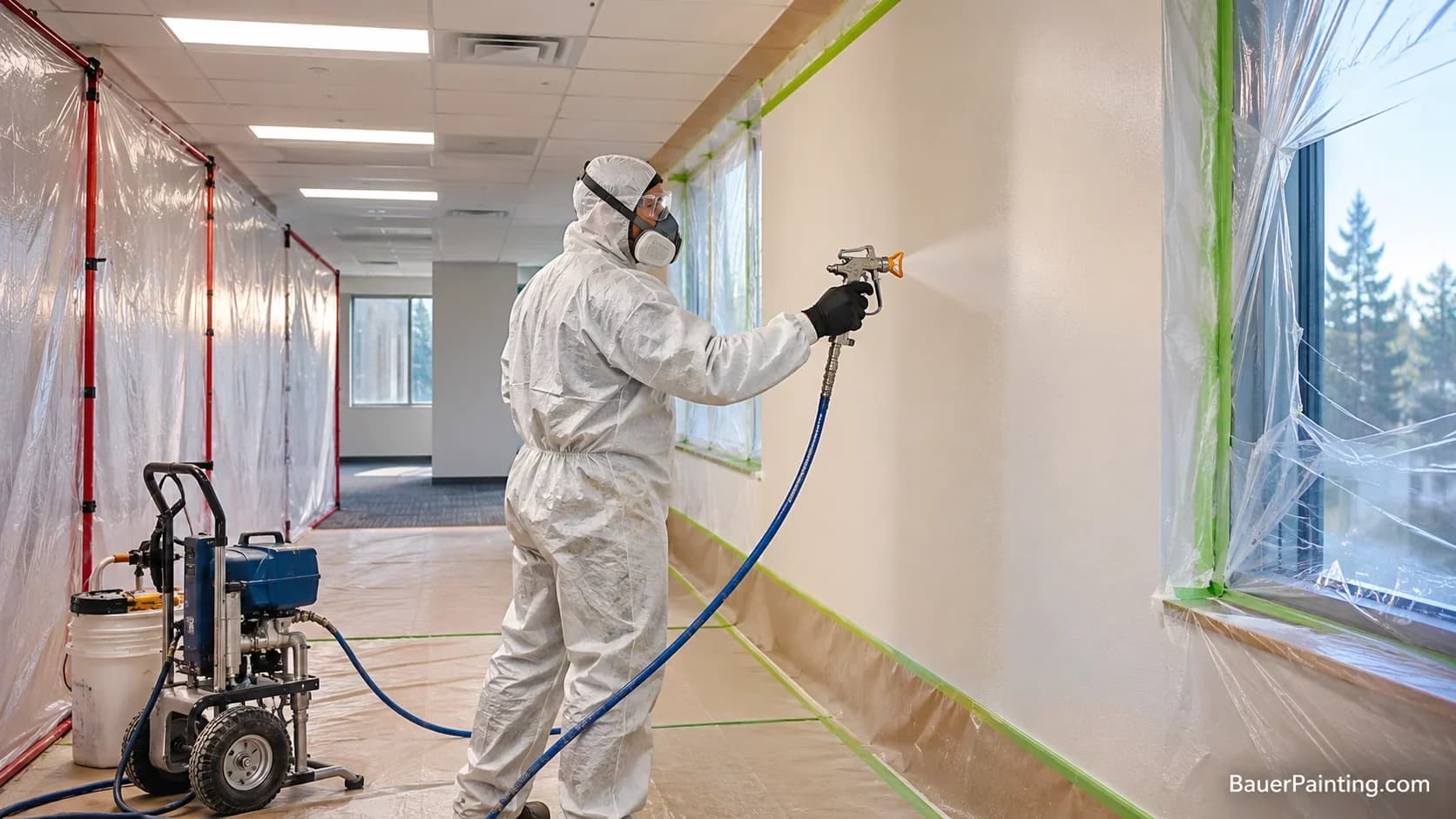
Build a work window around the agreed scope
Once the surfaces, preparation, access and responsibilities are understood, discuss the work sequence. Ask which rooms can be grouped and which need separate access arrangements.
A useful sequence identifies:
When the office will be ready for preparation.
Which areas will be worked on first.
When access restrictions will apply.
How drying and ventilation requirements will be accommodated.
When inspection and any agreed follow-up will happen.
Keep this discussion specific. “After hours” is less useful than a clear statement of permitted access and the time staff expects to return. Do not promise your team uninterrupted use until the contractor and building representative have assessed the arrangement.
For more detail on occupied spaces, read how we plan painting around occupied buildings. That guide covers the operational side without replacing the room-by-room scope you prepare here.
Confirm finishes and compare the same work
Choose colors and finishes after considering how each area is used. Reception, circulation routes and meeting rooms may have different cleaning, appearance and maintenance needs.
Ask for the proposed coating system and any relevant preparation to be identified in the quote. Clarify whether ceilings, repairs, trim and color changes are included. Do not compare two prices until you can see whether they cover the same surfaces and tasks.
Our guides to office painting cost factors in Toronto, and paint finishes for high-traffic areas can help you prepare questions. They should support a site-specific assessment rather than substitute for one.
Agree the handover checks
Arrange a walk-through with the person authorized to review the work. Compare the completed areas with the agreed scope, note any outstanding items and confirm the next action for each one.
Check that agreed protection has been removed, the space has been cleaned as specified, and access arrangements have been closed out. Ask for the final color and product details to be recorded for future maintenance.
Send a clear office painting request
You do not need a finished technical specification to make an inquiry. Send the address, room list, approximate extent of work, condition photos, preferred timing and known building restrictions.
Mention anything that may affect access or preparation. A short, accurate brief is more useful than an optimistic deadline with missing details.
Bauer Painting can discuss your office repaint across the GTA and surrounding areas. Start with our office painting service and share your checklist so the proposed work can be assessed against your space and operational needs.
Frequently asked questions
What should an office painting checklist include?
Include the room list, surfaces, condition notes, exclusions, protection responsibilities, building access, working hours, ventilation arrangements and handover checks. Add photos and a floor plan where useful. The aim is to make the work understandable before a contractor assesses the scope and timing.
Who should move computers and office furniture before painting?
Agree this in advance. Your IT contact should assess technology moves and reconnections, while staff can clear personal items and confidential documents. Confirm any furniture moving and protection included in the contractor’s quote rather than assuming all items will be handled by the painting crew.
Should we agree the painting scope before booking dates?
Yes. Identify the surfaces, likely preparation, access restrictions and readiness tasks first. Those details affect the work sequence and the available window. Dates discussed before an assessment should be treated as provisional until the necessary arrangements are confirmed.
Can an office repaint be completed after hours?
After-hours work may be possible when the building permits it and the scope, access, protection and ventilation arrangements support it. Confirm when staff return and how each area will be handed back. An evening slot alone does not establish that every room will be ready the following morning.
What information helps a contractor assess an office repaint?
Provide the address, room-and-surface list, condition photos, known damage, preferred timing and building rules. Explain which spaces must stay usable and identify who can approve decisions. A site assessment may still be needed to confirm preparation, quantities and the practical work sequence.
How is a painting checklist different from a quote?
A checklist organises the information and decisions needed to plan the work. A quote sets out the contractor’s proposed scope, price and terms. Use your checklist to review the quote, then resolve missing items or different assumptions before approving the work.


Join the conversation
Have a question or a useful tip? Leave a comment for our team and readers.
Loading comments…