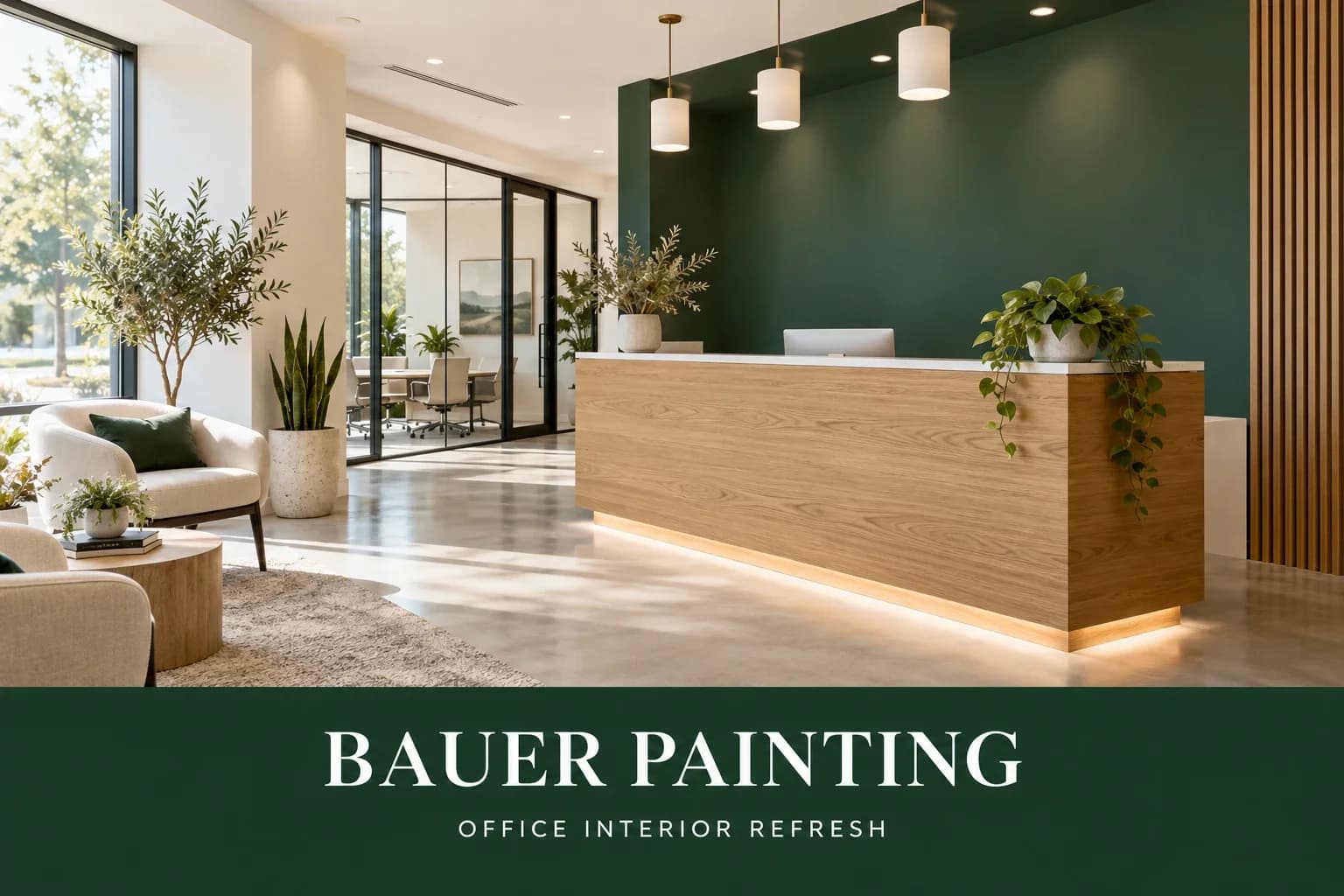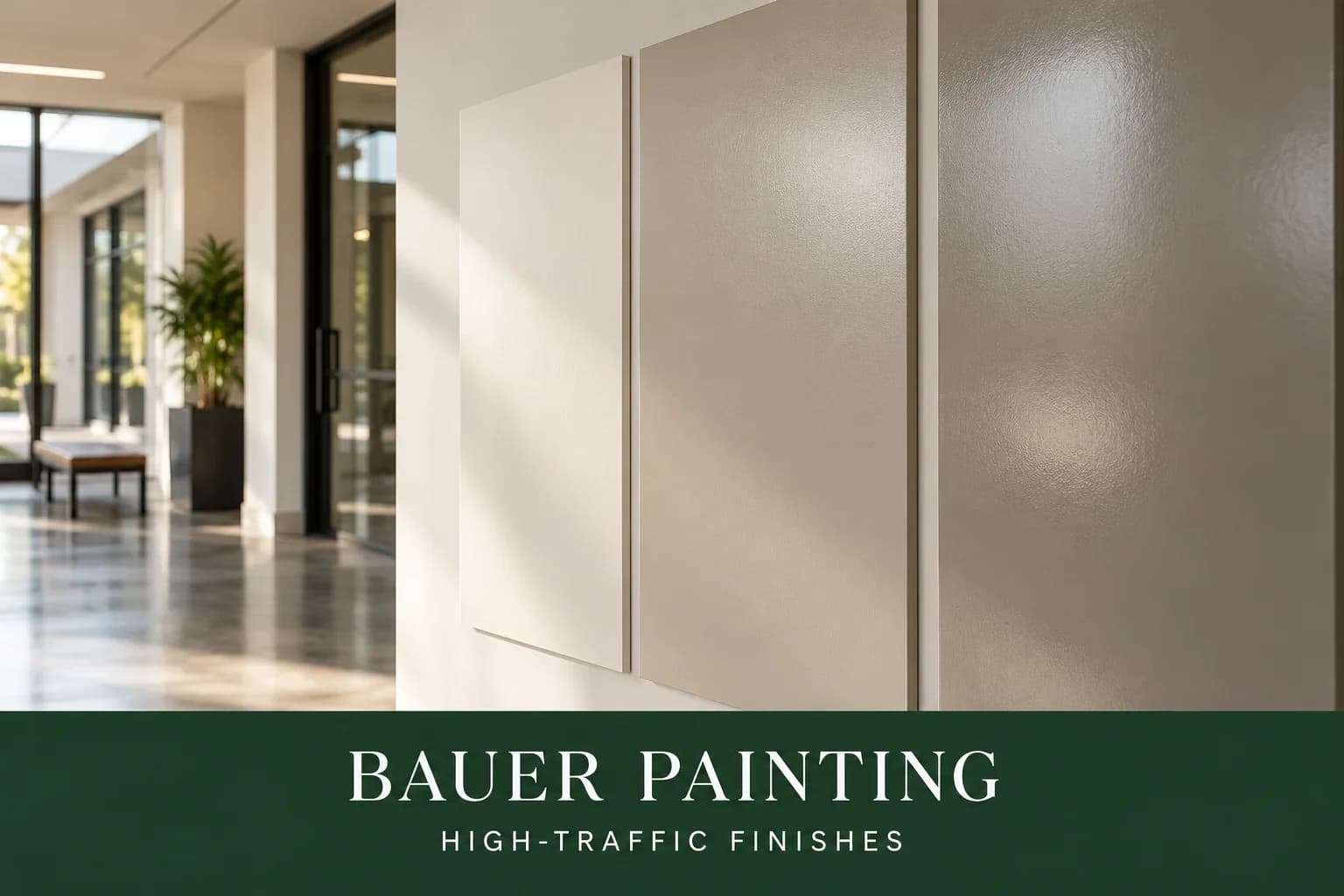
Office painting costs in Toronto depend on measured surfaces, preparation, coatings and access. Compare written scopes before comparing totals. Confirm whether rates use floor area or wall area. Ask what includes primer, finish coats, furniture protection and tax. A site-specific quote gives a firmer budget than a generic square-foot rate.
Two quotes can describe the same office and cover different work. One includes walls, doors, and preparation; the other covers walls alone. Those differences matter when budgeting your next Toronto office repaint.
This guide explains how to fairly compare office painting costs. It focuses on commercial workplaces, including meeting rooms, reception and shared areas. Bauer Painting provides painting for commercial offices across its established service areas.
What determines office painting costs in Toronto?
The useful starting point is the work, rather than the rate. Record the rooms, surfaces, condition and access requirements before requesting prices. This helps each contractor assess the same project.
1. Painted surfaces and office layout
A floor plan tells you the office footprint, not every paintable surface. Internal partitions, enclosed rooms and columns add more surfaces. Two equally sized offices can therefore require different quantities of work.
Separate walls, ceilings, doors, frames, trim and feature colours. Identify any areas that remain untouched, including tenant fixtures and equipment. Check which side of shared doors belongs within your scope.
Treat open workstations and a suite of enclosed offices differently. Numerous small rooms create more edges, doorways and separate setup areas. Ask the estimator to record these conditions during the walkthrough.
2. Surface preparation and existing condition
Scuffs, damaged corners and previous patches need individual assessment. Loose coatings, staining and contamination may require different preparation steps. Ask how the contractor will establish compatibility with existing paint.
The phrase “standard preparation” leaves too much open to interpretation. Request written details covering cleaning, minor filling, sanding and primer. Confirm how larger repairs or unexpected conditions will be handled.
Preparation can affect office painting costs before finish paint is applied. Describe recurring damage and provide clear photographs with your enquiry. Suspected hazardous materials require a qualified assessment before disturbance occurs.
How should square-foot painting prices be compared?
Always ask what the quoted square footage actually measures. Floor area, gross wall area and net paintable area differ. A price without its measurement basis cannot support a reliable comparison.
3. Floor area versus wall area
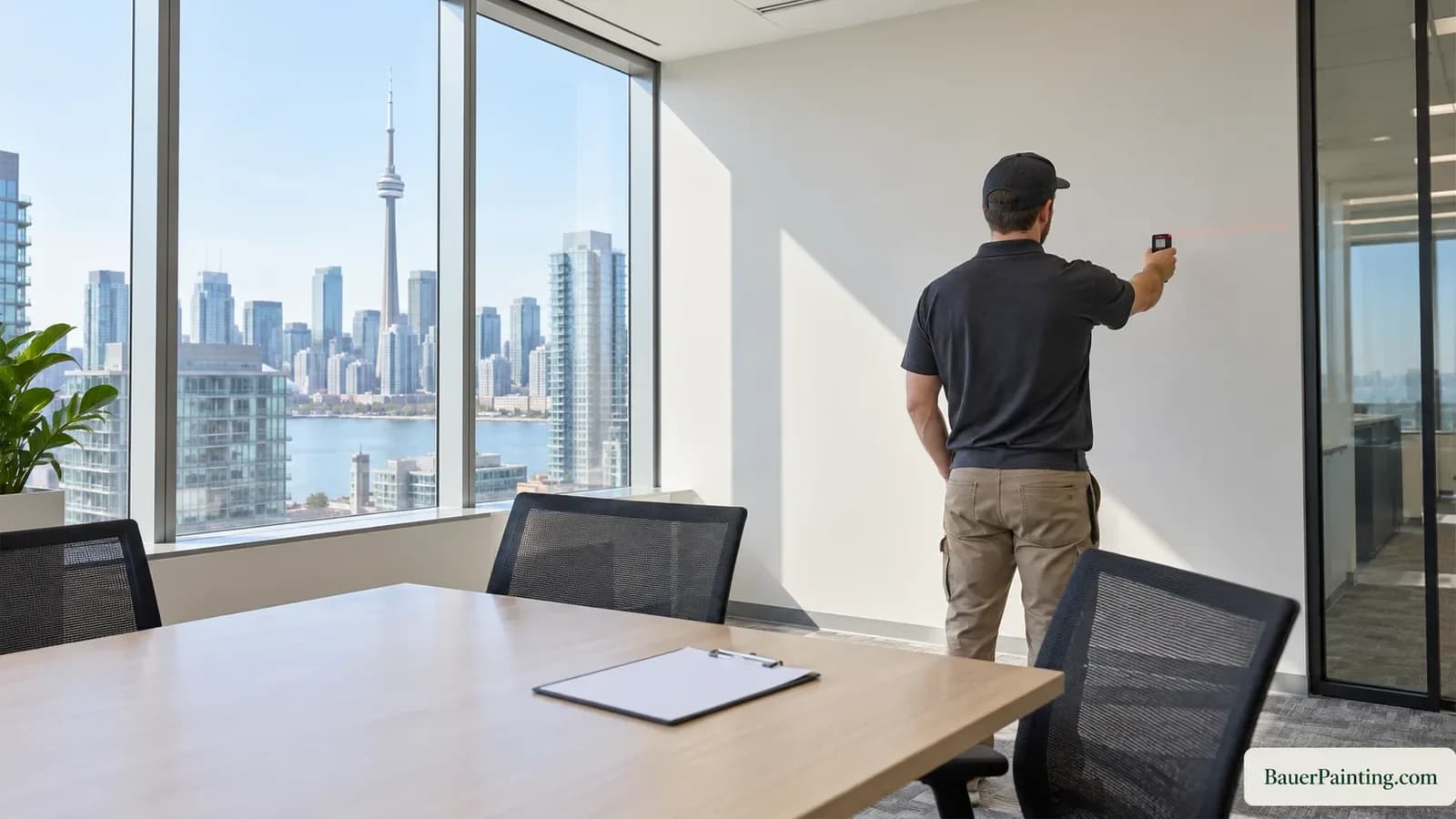
Floor area measures the office footprint along length and width. Wall area is generally calculated as wall length multiplied by painted height. Internal partitions can add painted surfaces on both sides.
For a rectangular room, the perimeter multiplied by the height gives the gross wall area. Confirm how openings, glazing and built-in cabinetry affect measured quantities. Doors and frames may remain separately priced items.
This distinction can substantially change your reading of office painting costs. Ask each bidder to state its units beside the quantity. Avoid applying a wall-area rate to the floor-plan measurement.
The Benjamin Moore paint calculator helps estimate material quantities. Its stated assumptions include two coats and exclude the ceiling. It estimates paint needs, rather than labour or your complete project price.
4. Coats, primer and colour changes
Confirm whether the quotation includes preparation, primer and finish coats. Primer and finish paint perform different roles within a coating system. Neither should be assumed simply because paint appears in the description.
Changing a strong colour can affect coverage and the application plan. Newly repaired surfaces may also need a different preparation approach. Ask how the specified system will achieve the agreed finish.
Record the product line, colour, sheen and intended coat schedule. Include sample approval before ordering or completing a larger area. Our guide to finishes for busy buildings explains related durability considerations.
Which access and coating choices affect the budget?
Product choice and working conditions should be reviewed together. A suitable coating still needs appropriate preparation and application conditions. Access restrictions can change the sequence, equipment and time required.
5. Paint specification and cleaning requirements
Compare named products rather than a general promise of premium paint. Ask whether the finish is suitable for routine cleaning and expected contact. Discuss reception desks, corridors and frequently handled door frames separately.
Low-VOC claims do not automatically establish a return-to-work time. Product instructions, ventilation, and workplace requirements still need to be considered. Ask who coordinates these decisions with your building or facilities team.
CCOHS guidance on indoor air quality discusses ventilation during painting. Consider this alongside product documentation and site-specific controls. Do not base reopening decisions on dry-to-touch appearance alone.
These choices influence office painting costs through the whole coating system. Ask for alternatives only when each option suits the intended use. A cheaper material is unhelpful when its maintenance requirements do not fit.
6. Furniture, access and working hours
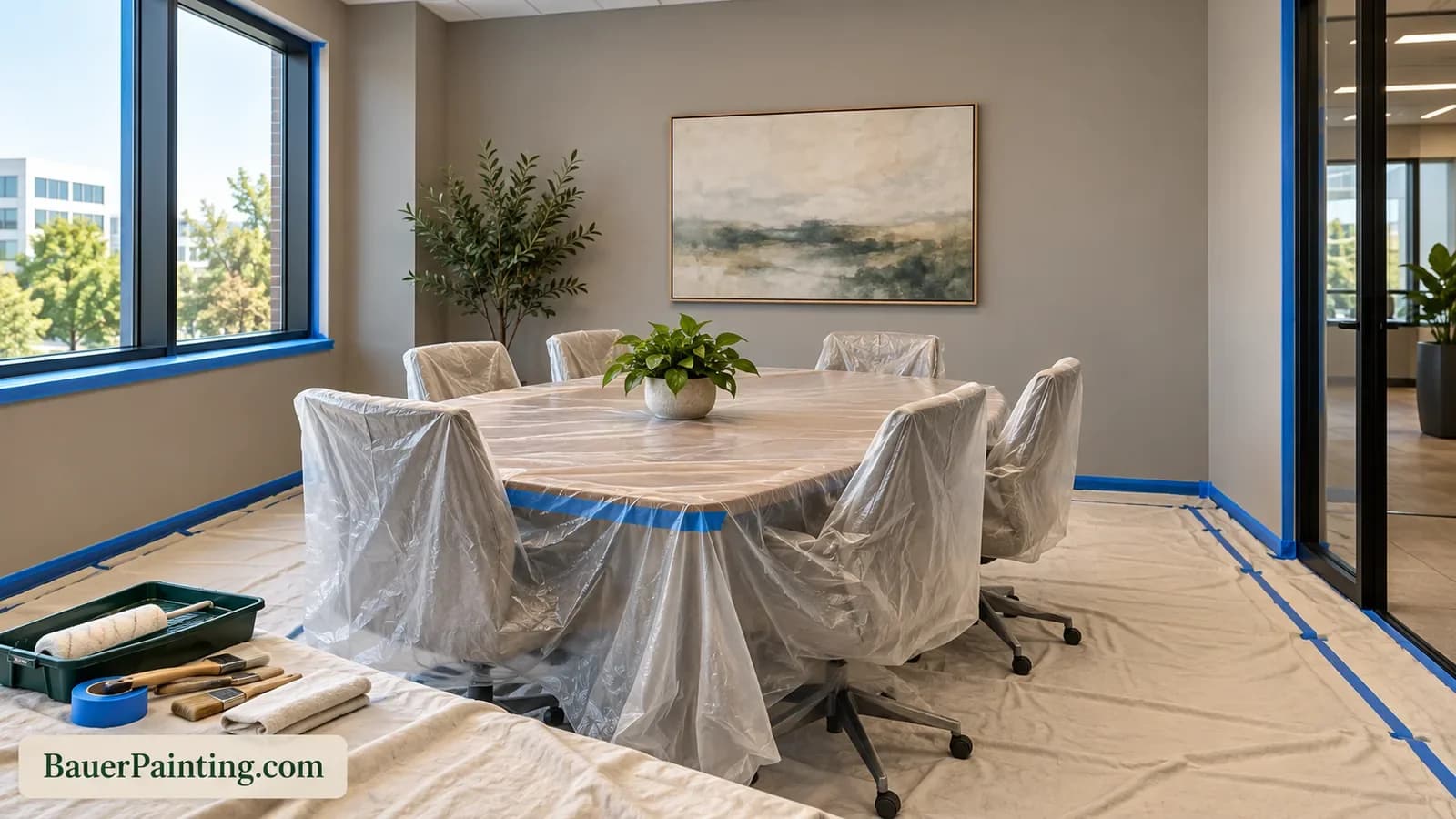
Occupied offices require clear responsibilities for furniture and equipment. Confirm who clears wall access, protects desks and handles sensitive electronics. Establish how each work area will be secured and released.
For your Toronto building, check loading access and elevator booking requirements. Confirm permitted work hours, security procedures, and any building management approvals. These are building-specific questions, rather than assumptions about every downtown address.
Evening or weekend work may affect office painting costs. Ask whether restricted hours change labour, mobilization or building-access charges. Obtain any adjustment in writing instead of assuming a standard surcharge.
Use our occupied-building planning guide for staging and communication details. If ceilings are involved, request a separate overhead painting assessment. Ceiling height and obstructions can require a different access plan.
What should a complete office painting quote include?
A comparable quote connects quantities, preparation and products to a total. It also explains exclusions and the process for approving changes. Ask for clarification before accepting office painting costs as final.
7. Scope and responsibility checklist
Give each contractor the same scope checklist before requesting a quotation. Ask for missing details to be added in writing. Keep the approved version with your building records.
Rooms and surfaces: List included areas, painted heights and exclusions.
Measurements: State the area basis and, separately, the doors or frames counted.
Preparation: Describe cleaning, minor repairs, sanding and any primer requirements.
Coatings: Record product lines, colours, sheen and the proposed application system.
Protection: Identify responsibilities for floors, furniture, equipment and adjacent finishes.
Access: Record work hours, building approvals, equipment and permitted storage areas.
Completion: Define cleanup, walkthrough, touch-ups and the handover documentation.
Commercial terms: Confirm tax, payment stages, quotation validity and change approvals.
Ask how assumptions will be checked if drawings are incomplete. A site visit may identify details that photographs cannot establish. Request a revised scope when those findings affect the quotation.
8. Tax, documentation and approval of extras
Check whether quoted totals include applicable tax or show it separately. Ontario's HST rate is 13% for applicable taxable supplies. Confirm the invoiced treatment before approving your project budget.
The Canada Revenue Agency's current tax-rate table provides the provincial rates. Keep taxes separate from the underlying scope when reviewing alternatives. This makes office painting costs easier to reconcile with your purchasing records.
Ask for insurance documentation appropriate to your building's procurement requirements. Where required, verify current WSIB clearance rather than relying on a logo. WSIB's clearance questions and answers explain how to check contractor status.
Also identify who may approve additional work during the project. Agree how changes will be described, priced and accepted. This prevents an informal request from becoming an unexpected invoice item.

How can you confidently plan the next step?
Use the information collected above to narrow uncertainty before booking work. A clear enquiry helps the estimator ask better questions. It also creates a useful record for your internal approval process.
9. Compare scope before choosing a price
Place each quotation beside your original room and surface checklist. Mark every missing inclusion and unclear assumption before comparing totals. Ask bidders to respond to those differences using the same brief.
For office painting costs, compare the scope before comparing the final total. One bid may omit doors, while another includes them. Neither total answers your question until both scopes are understood.
Keep preparation and coating suitability within the comparison. Removing necessary preparation can lower a quotation without improving value. Likewise, avoid paying for work outside your actual maintenance needs.
Check whether schedule, cleanup and acceptance requirements match across the proposals. Record any unresolved questions before recommending a contractor internally. Choose the proposal that clearly addresses your building and requirements.
10. Send a useful Toronto office enquiry
Start with the address, suite number and a contact person. Include approximate dimensions, photographs and your preferred work period. State whether the office remains occupied during the proposed work.
Describe known damage, requested colour changes and any ceiling work. Provide building rules or management contact information when available. Confirm who will approve samples, scope adjustments and the final walkthrough.
Bauer Painting's Toronto service-area page explains the local enquiry route. You can then send your office project details for assessment. Share relevant photographs or documents through the website enquiry form.
Office painting costs become more meaningful when the scope is documented. Keep the approved quotation and finish details after completion. Those records support future touch-ups, maintenance decisions and consistent repaint specifications.