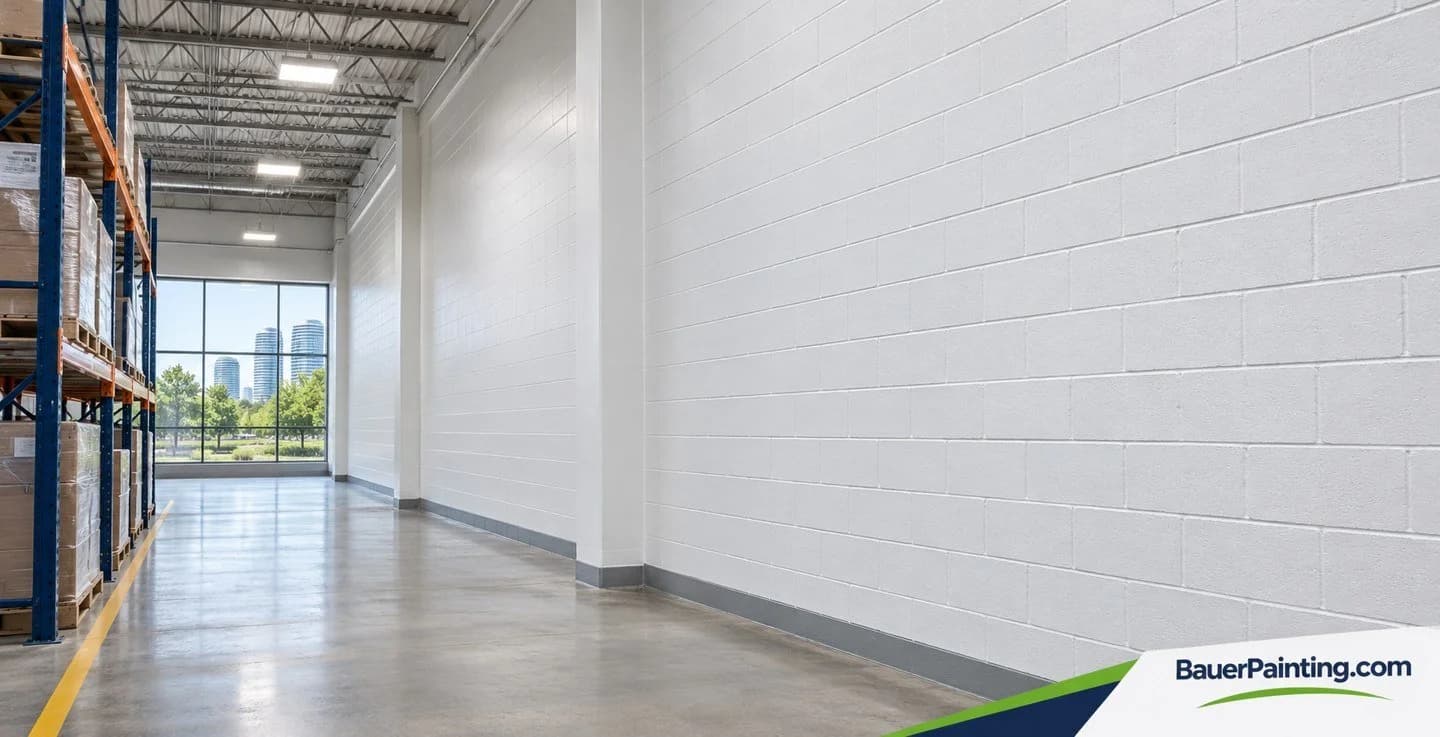
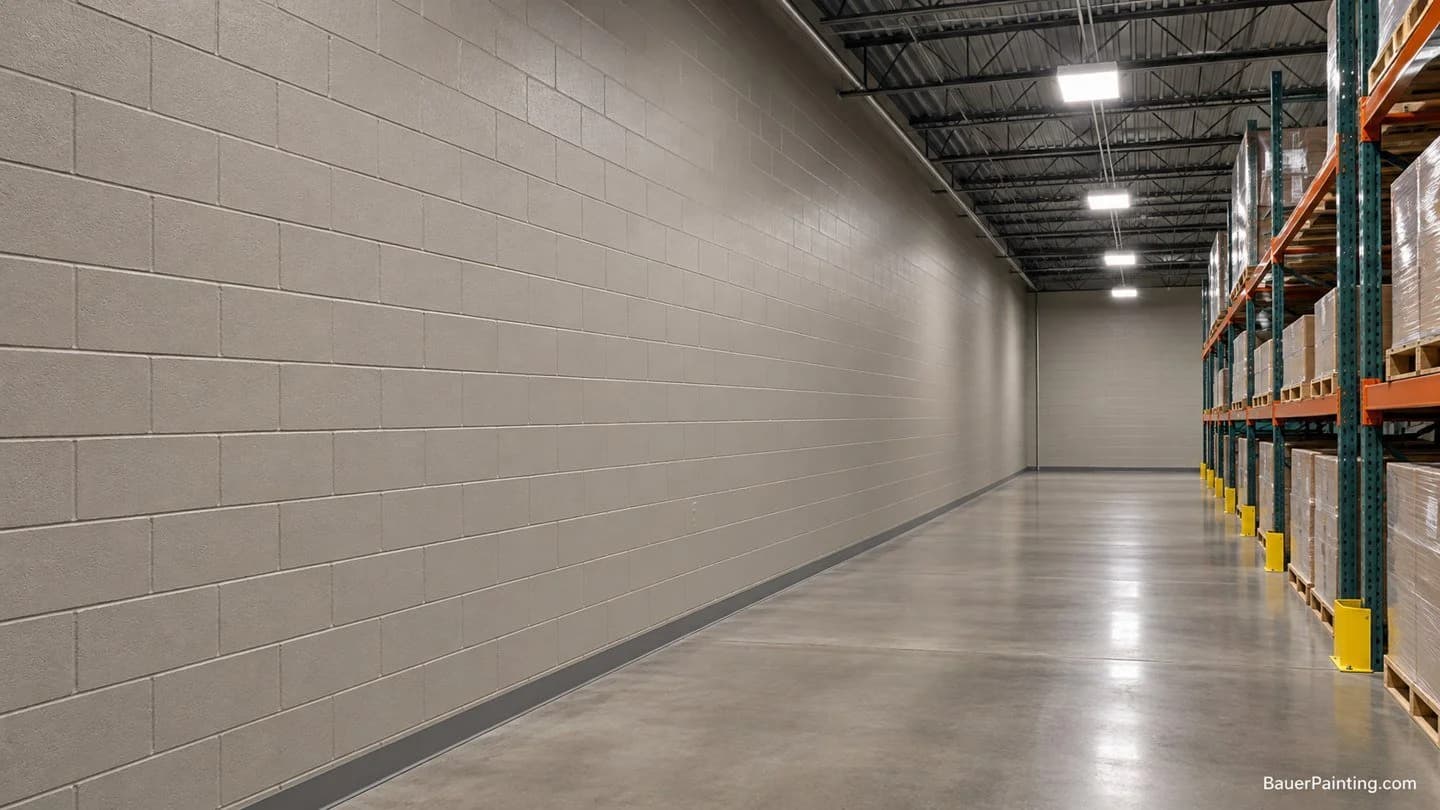
White powder on a warehouse block wall is a reason to assess the surface before painting. The material could be efflorescence, a deposit left by salts carried through masonry by moisture. A photograph alone cannot confirm what the deposit is or where moisture came from. Record where it appears, whether it returns and what is known about the wall before agreeing to coat it.
For a warehouse interior painting enquiry, we need to distinguish the paintable areas from places that still require investigation or repair. That is especially useful when most of a wall looks sound but a few sections show a recurring deposit. A clear condition brief lets the facility manager and painter discuss those sections without assuming the entire warehouse needs the same treatment.
What White Deposits May Mean on Concrete Block
The Concrete Masonry & Hardscapes Association’s technical note on efflorescence explains how moisture can transport soluble compounds through masonry. When that solution reaches the surface and moisture evaporates, a pale deposit can remain. Concrete block and mortar can both be involved.
A powdery appearance does not establish that this is what happened on your wall. Dust from operations and residue on the surface may also look pale. An older painted finish might have loose or powdery material of its own. Describe what you see without naming the substance until the appropriate assessment has been made.
What Photographs Cannot Confirm
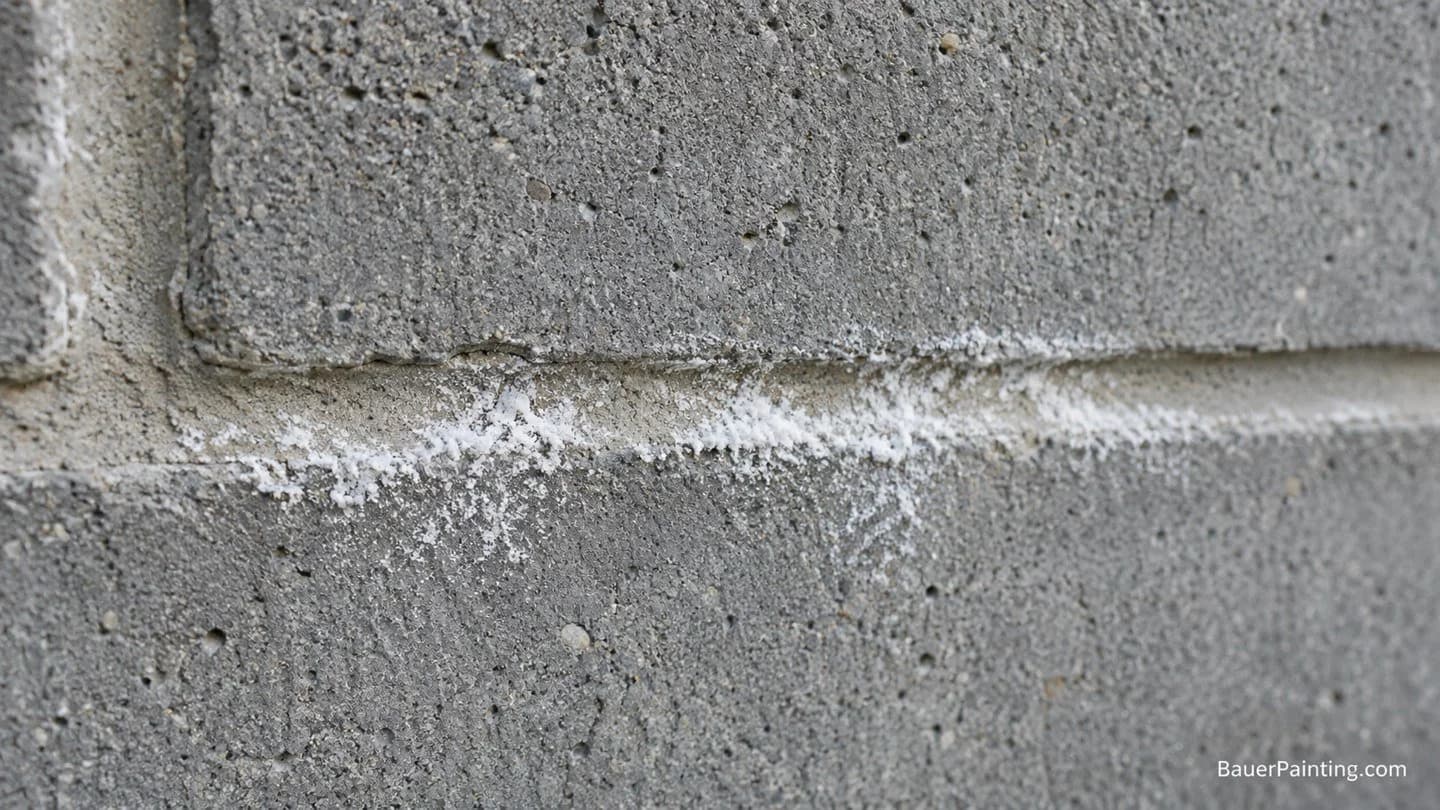
Pictures help show whether material follows joints, appears at a wall base or is scattered over the face of the block. They do not tell the reviewer whether the masonry is suitable for a new coating, whether moisture is still present or whether an earlier repair addressed the source. Avoid labelling a photograph “confirmed efflorescence” when all it shows is a white area.
A surface can also look different under loading-area lights than it does near a window. Use photos to show location and extent, not to compare subtle colours as if they were test results. Where the material or condition is unclear, have the facility contact arrange the appropriate review before anyone disturbs it.
Record Where and When the Deposit Appears
Give the affected wall a reference that the maintenance team can find. Use the loading bay, aisle or room designation already used in the building. Record whether the marks are on bare block, mortar joints, painted block or a junction between materials. Separate marks near the floor from those higher up, and show their approximate extent.
Take a wide photo that locates the area and a closer photo that shows its appearance. Include the date, and note whether the condition has changed since the last inspection. If the wall has been repainted or repaired before, collect the available records. A remembered repair is a lead to investigate, while a dated work record gives the reviewer a firmer starting point.
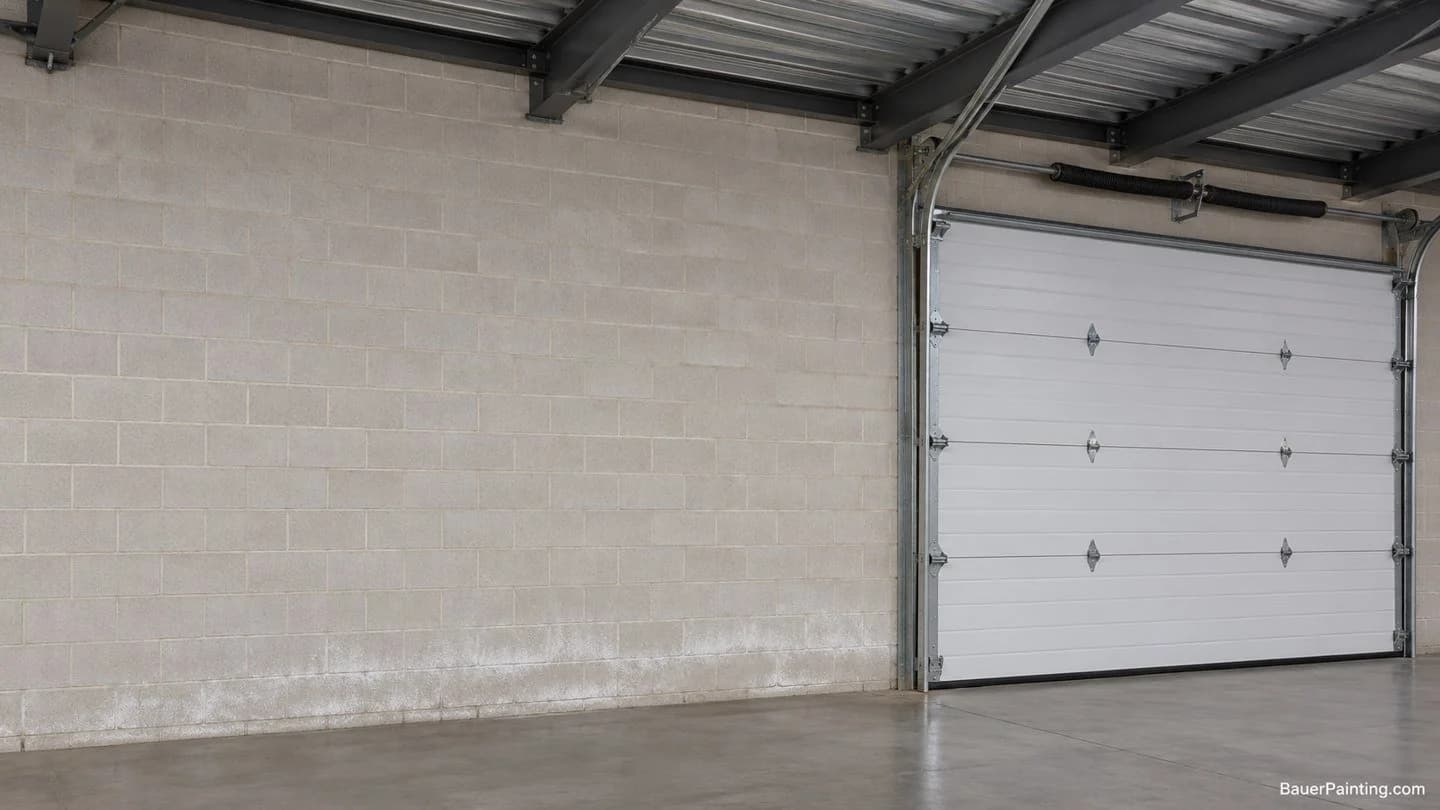
Note nearby openings, wall joints, cleaning areas and other conditions that may be relevant. A deposit beside a loading door does not prove that the door is admitting water. A mark at floor level does not prove how moisture moved. Provide the observations and let the appropriate building contact decide what needs checking.
If the deposit returns, record the date and the area it covers. A record of recurrence is more useful than a statement that the wall “always looks like that.” It helps distinguish a previously documented condition from one that may be changing and should be reviewed before painting.
When to Pause the Painting Scope
Pause the affected section when there is visible dampness, a returning deposit, a deteriorating surface or uncertainty about what the material is. Ask the facility contact who can review the condition and what evidence is needed before the painting scope can proceed. Avoid treating a painting date as a deadline for resolving a building problem.
Sometimes the best scope decision is to keep the affected wall out of the first phase while the facility reviews it. Record the boundary on the plan so that the exclusion is clear. If other walls are being considered for repainting, assess those surfaces on their own merits. A condition in one bay does not automatically establish the same issue across the warehouse.
Cleaning a visible deposit and addressing the conditions that caused it are different jobs. If a moisture source remains active, a cleaner-looking wall does not establish that it is ready to coat. Do not use an unidentified residue as a reason to choose a particular primer, sealant or aggressive cleaning process. The relevant surface and building conditions should guide any preparation plan.
Bauer can assess the proposed painting work and identify where the wall condition affects the quote. Ask the appropriate building or material specialist to address unresolved questions about the substrate, moisture or deposits. Keep their findings with the facility record so they are available when the coating scope is reviewed.
What Needs Confirming Before a Coating Is Proposed
Start with the wall as it exists, not with a preferred finish. Confirm whether the block is bare or coated, whether the existing surface is sound, and whether any repairs are complete and accepted. If the previous coating is unknown, state that in the brief. A product name guessed from appearance should not drive the specification.
Agree on which preparation is included and which work belongs to another trade. The proposal should identify the areas under review and any assumptions about surface condition. If additional defects become visible after agreed preparation, the project contact needs a way to review the change before the scope is expanded.
For a selected coating, refer to its instructions and the findings from the site review. Conditions that matter can vary with the substrate and product. Do not use a universal moisture limit or waiting period from another job. Ask who is responsible for any checks needed and where the result will be recorded.
A finish sample can help confirm appearance on an accepted surface. It cannot demonstrate that an unresolved moisture issue has been corrected. Keep those two approvals separate: the facility confirms any required investigation or repair, and the project team reviews the proposed finish on the prepared wall.
Build a Warehouse Wall Condition Brief
The brief can be one page. Its job is to make the observed condition, missing information and next decision easy to find. Use a separate entry for each wall section where conditions or responsibilities differ.
Field | What to record |
|---|---|
Wall and surface | Facility location, wall reference, block or joint, and known existing finish. |
Observation | Deposit appearance, approximate extent, date and whether it has returned. |
Supporting record | Wide and close photographs, prior repair notes and confirmed findings. |
Open question | What still needs review, who will review it and what information is missing. |
Painting status | Ready for painting assessment, or review needed before including it in the scope. |
Use “ready for painting assessment” to indicate that the relevant information is available for review. It is not a moisture test result or permission to apply a coating. If a reviewer asks for more evidence, update the entry and keep the question open. That makes it possible to revisit the scope without losing track of the earlier observations.
Where the project includes walls and overhead work, give each its own line in the enquiry. Our Mississauga warehouse ceiling painting guide explains how to describe overhead components. The wall brief focuses on the surface condition and preparation questions below.
Request a Mississauga Warehouse Painting Assessment
For a Mississauga commercial painting enquiry, share the wall references, current photos, known repair history and areas that are still under review. Include the facility contact and any access limits. We can discuss which walls can be assessed now and where further information is needed before preparing a scope. Contact Bauer Painting to discuss the proposed work.
Frequently asked questions
Is white powder always efflorescence?
No. White material on block may be a salt deposit, dust or residue from another source. A photo can show the pattern and location, but it cannot identify the material reliably. Record the observation and have the responsible facility contact arrange a review when the condition is unclear.
Can I paint over white deposits on a block wall?
Do not assume the surface is ready for a coating. Confirm what is known about the deposit, the wall condition and any underlying issue. Then review preparation and product requirements for the actual surface. A coat of paint does not resolve an unidentified building condition.
Why might the deposit return after cleaning?
Removing visible material may leave the conditions that led to it unchanged. Document where it returned and when, and ask the facility contact to investigate as appropriate. Recurrence is evidence to share with the reviewer; it does not by itself identify the source of moisture.
Can a painter identify the moisture source from a photo?
No. A photo can help describe the affected area and prepare for an assessment, but it does not establish a moisture source. Where that question remains open, refer it to the appropriate building professional before agreeing to repaint the affected area.
What should I send for a warehouse wall assessment?
Send the wall location, wide and close photos, dates and any known history of recurrence, repairs or previous coating work. Include access details and identify who can confirm the facility’s findings. Separate confirmed information from assumptions so the next step is clear.

Join the conversation
Have a question or a useful tip? Leave a comment for our team and readers.
Loading comments…