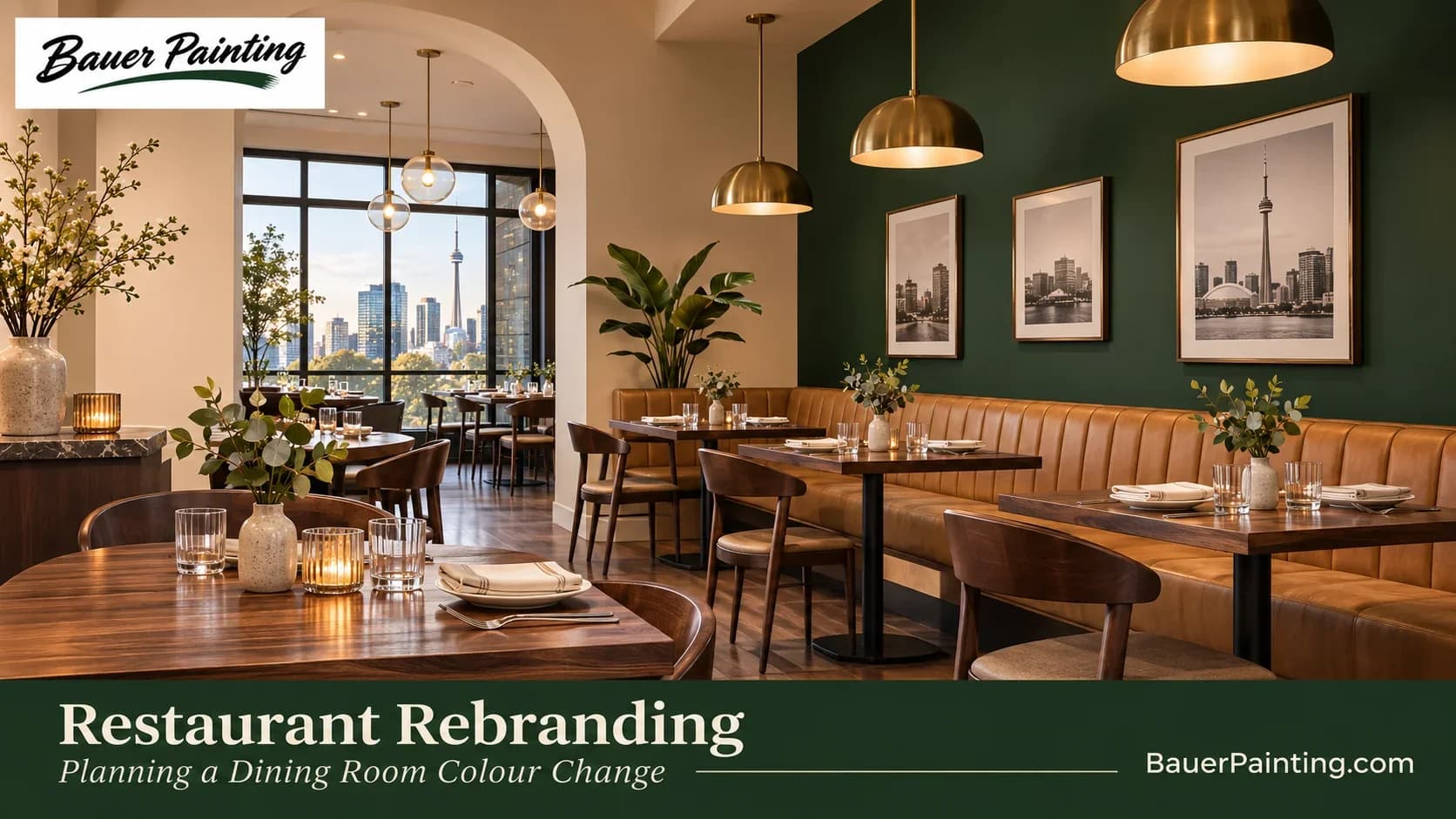
A restaurant color change starts with three decisions: which parts of the brand should appear in the room, which surfaces need repainting, and how the proposed colors look beside the finishes you are keeping. Settle those decisions through physical samples before approving the full repaint.
At Bauer Painting, we provide restaurant interior painting services for businesses updating their dining rooms and other customer-facing areas. A clear color brief helps connect the proposed painting work with the restaurant’s wider rebrand.
Your new palette might need to work with existing timber tables, upholstered seating, floor tiles or a bar that will remain in place. Those features belong in the discussion from the beginning.
This guide explains how to prepare that brief, review colors in your restaurant and record the choices before painting begins.
Turn Your Restaurant’s Brand Colors into a Paint Brief
Brand guidelines provide a starting point. They may include logo colors, digital color values, printed materials and examples of how the brand should appear.
However, a color displayed on a phone or printed on a menu is not enough to approve a painted wall. Screens, printing materials, paint finishes and lighting can produce different appearances.
Bring together the references that matter to your restaurant:
Current brand guidelines and any approved color codes.
Physical samples supplied by your designer or franchise team.
Menus, signage or other printed materials that will remain.
Photographs showing the areas you want to change.
A list of furniture and fixed finishes you are keeping.
The name of the person authorized to approve the final colors.
Separate a color that must follow a brand standard from one that simply needs to complement it. That distinction gives the painting discussion a clearer direction.
Bring Physical References Alongside Digital Color Codes
If a particular shade is important, provide an approved physical reference where possible. Identify whether it represents the final color requirement or an initial direction that still needs review.
Ask how the proposed paint color will be sampled and approved. Do not assume that supplying a digital code automatically establishes an exact match across different materials.
The Canadian Coatings Association’s dining-room guidance recommends testing color on the wall before committing to the whole room. Although its guidance addresses domestic dining spaces, the sample-first principle is useful when reviewing colours for a restaurant.
Keep the approved reference available throughout the project. A screenshot forwarded between several people can quickly become an unclear basis for a decision.
Decide Which Areas Need the New Colour
A rebrand does not necessarily require every painted surface to change. Start by identifying where the new palette needs to appear and which existing colours can remain.
Consider the room from several positions:
What customers see when they enter.
The walls behind the main seating areas.
The backdrop to the bar or service counter.
Connections between the dining room and private dining areas.
Doors, frames and trim beside the proposed wall colours.
These views help define the painting scope. They do not establish that any particular colour will improve sales or change customer behaviour.
For example, a new accent colour might belong on one dining-room wall while the surrounding walls retain a quieter shade. Alternatively, an existing accent may need removing so the updated signage and furniture work together.
Record which approach you want to assess rather than leaving the contractor to infer it from a mood board.
Work with the Furniture and Finishes You Are Keeping
Existing materials place practical boundaries around a new palette.
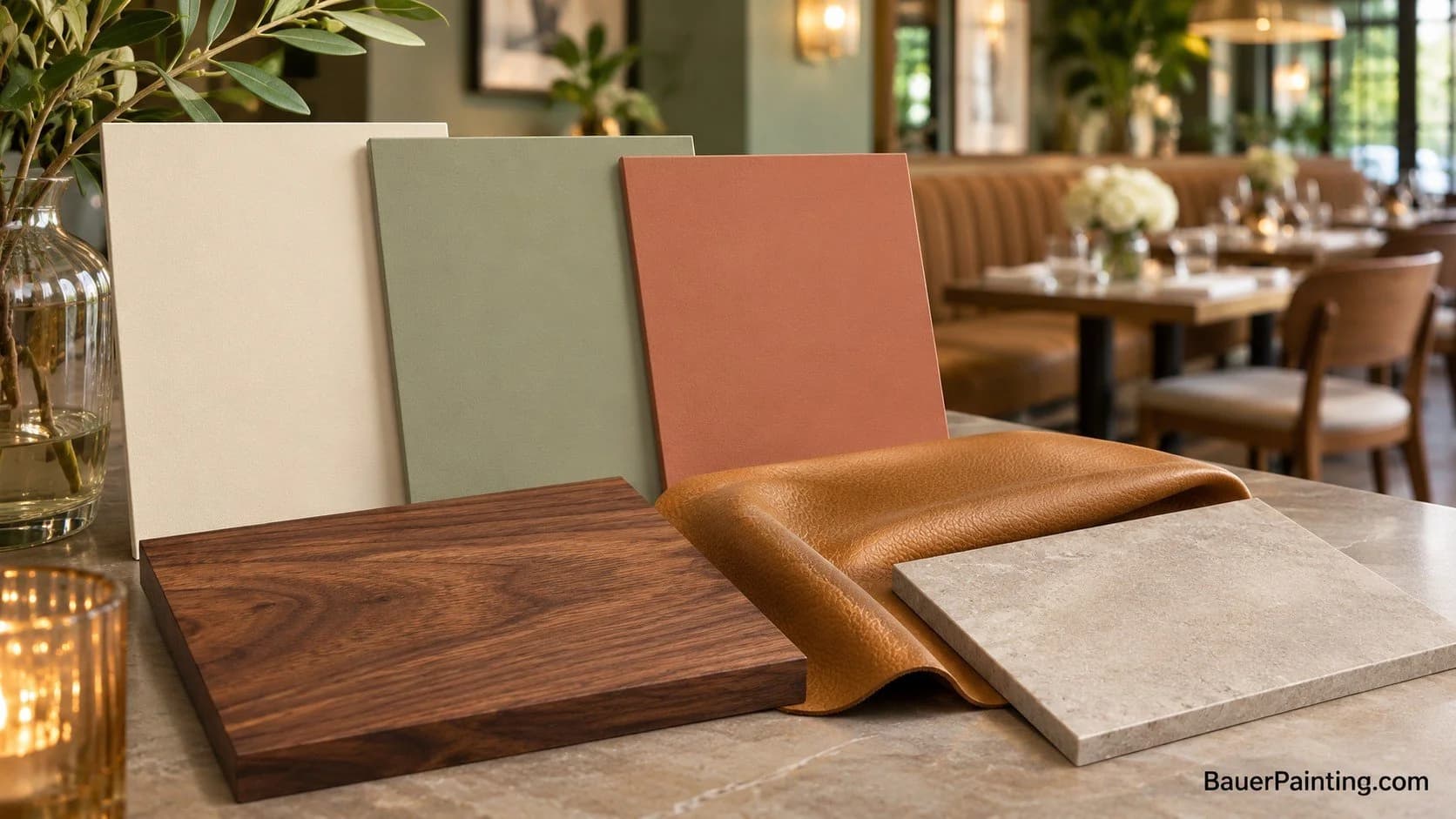
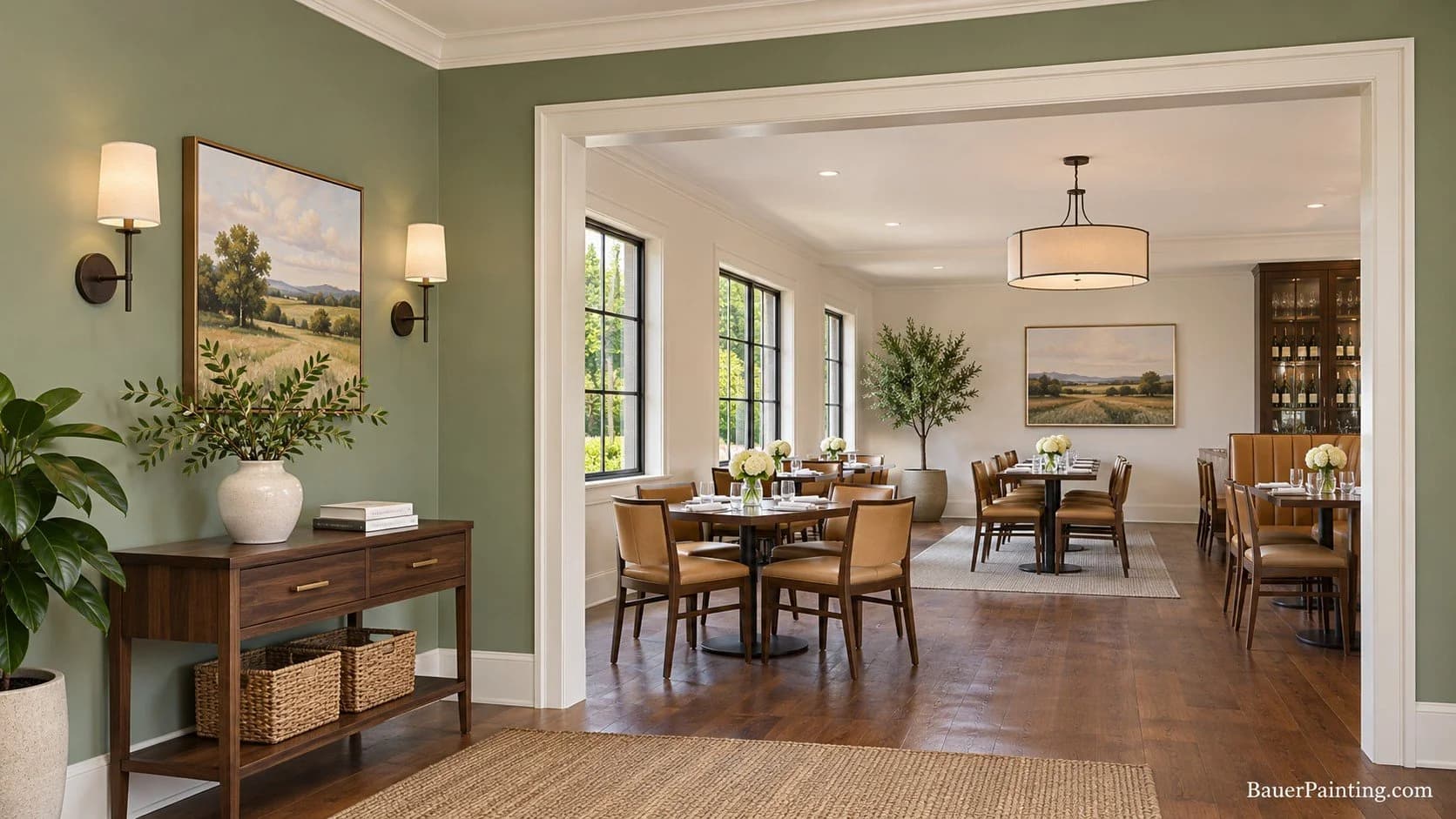
A wall colour viewed on its own may appear different beside warm timber, patterned upholstery, stone or coloured floor tiles. Review those combinations before making a decision.
Divide the restaurant’s finishes into three groups:
Staying: Furniture, flooring, tiles and fixtures that will remain.
Changing: Items being replaced as part of the rebrand.
Unconfirmed: Materials or colours that have not yet been selected.
Avoid final approval beside an item that will soon be replaced. If the new seating or signage has not arrived, use an appropriate physical sample supplied by the responsible team.
Painting can update the room around retained materials, but it cannot resolve every conflict within a wider design scheme. Your designer, owner or franchise representative may need to settle those choices first.
Review Paint Samples Under Your Restaurant’s Lighting
A colour decision made during a bright morning visit may not reflect how the room looks during evening service.
Review proposed samples under the lighting conditions that matter to your business. That may include daylight near the entrance, the normal evening setting and the lighting used in a private dining room.
The Canadian Coatings Association also recommends reviewing shades at different times of day.
For a Toronto restaurant preparing a colour change, arrange the review when the relevant lighting settings can be shown. If lighting is also changing during the rebrand, make that clear before approving the paint.
Use the sample review to answer specific questions:
Does the proposed colour work beside the retained materials?
Is the contrast with adjacent walls and trim intentional?
Does the colour still meet the brand brief under evening lighting?
Have the decision-makers reviewed the same sample?
Does another sample need assessing before approval?
There is no need to force a decision during the first review. A second sample is more useful than proceeding with a colour that remains uncertain.
Record the Approved Sample and Location
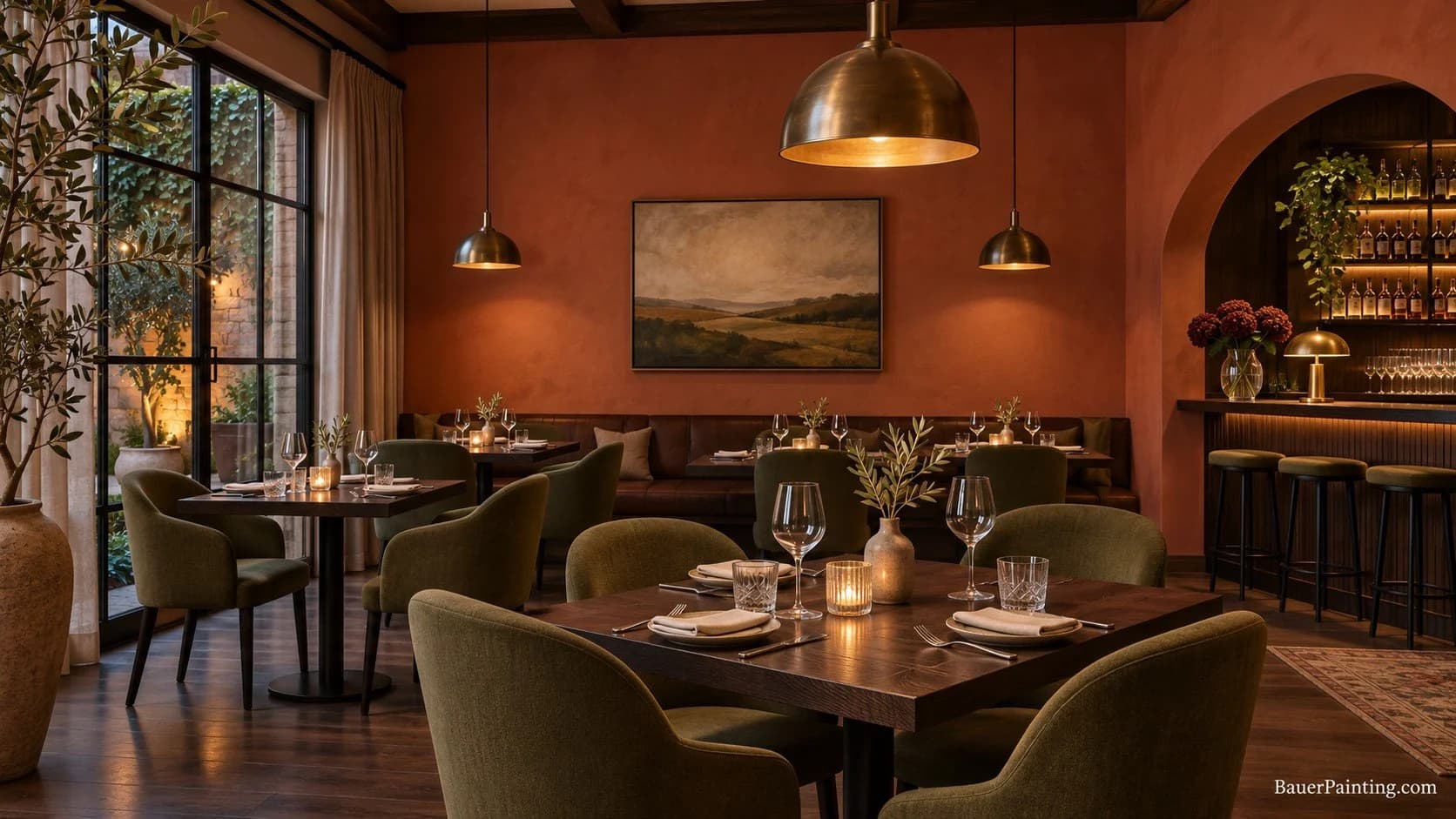
Give each sample a clear identifier. Record its colour reference, intended surface and approval status.
An instruction such as “use the green we saw last week” leaves room for misunderstanding. “Approved sample B for the rear dining-room wall” is more precise.
Keep a photograph for context, but retain the physical reference as well. A photograph should not become the only record of the colour.
If a sample is rejected, mark it accordingly. Leave no uncertainty about which option is authorized for the work.
Assess the Existing Walls Before Changing Colour
Once the colour direction is clear, the existing surface still needs assessment.
Previous repairs, damaged areas, contamination and the condition of the current coating can affect preparation. A new colour does not remove those issues.
Share known concerns before the scope is agreed:
Old fixings or wall graphics that will be removed.
Areas exposed by changing signage.
Uneven patches from previous repairs.
Peeling or poorly attached paint.
Stains or damage requiring investigation.
Surfaces whose existing coating is unknown.
If a stain is connected to an unresolved leak or another maintenance problem, address the cause rather than treating the repaint as a repair for it.
Avoid Assuming a Fixed Number of Coats
A dark-to-light colour change may need a different approach from repainting a similar shade. The existing surface, selected coating and product instructions all matter.
Ask for the proposed preparation and coating system to be explained in the quote. Do not assume every colour change needs the same primer or number of coats.
The finish also needs to suit how the area is used and maintained. Where cleaning demands are part of the decision, our guide to commercial paint finishes for high-traffic areas provides supporting information.
Keep those practical requirements alongside the colour approval. A colour name alone does not describe the complete painting specification.
Create a Colour Approval Record
Before approving the repaint, bring the decisions into one short document.
A colour approval record connects the visual choice with the actual surface. It also shows which decisions are still outstanding.
Area | Colour reference | Retained materials | Lighting reviewed | Approved by | Status |
|---|---|---|---|---|---|
Entrance wall | Record sample/code | Record adjacent finishes | Record settings | Name | Pending/approved |
Main dining wall | Record sample/code | Record adjacent finishes | Record settings | Name | Pending/approved |
Bar backdrop | Record sample/code | Record adjacent finishes | Record settings | Name | Pending/approved |
Private dining room | Record sample/code | Record adjacent finishes | Record settings | Name | Pending/approved |
Doors and trim | Record sample/code | Record adjacent finishes | Record settings | Name | Pending/approved |
Use only the rows relevant to your restaurant. Add a separate entry when two surfaces need different colours or finishes.
The record should make these points clear:
Which reference has been approved.
Exactly where it will be used.
Whether surrounding surfaces are included.
Who approved the choice.
Whether any later changes replace an earlier decision.
This document supports the painting scope; it does not replace the contractor’s quote or the restaurant’s wider design drawings.
If the palette changes after approval, update the record and discuss any effect on the work before proceeding.
Keep the Colour Decision Separate from the Opening Schedule
Colour approval and operational planning are connected, but they are different decisions.
A restaurant may have a new menu launch, updated signage or a planned reopening date. Tell the contractor about those milestones without assuming that a chosen date establishes a workable painting window.
Late colour changes can also affect the agreed arrangements. Resolve outstanding approvals before treating the scope as final.
If your restaurant will remain in use during the wider project, our guide to planning painting in occupied buildings covers the coordination questions to discuss.
For this colour brief, the key task is simpler: provide a settled list of surfaces and approved references so the work can be assessed accurately.
Discuss Your Toronto Restaurant Repaint with Bauer Painting
When you contact us about a rebranding repaint, send the information that explains the intended change.
A useful inquiry includes:
Your restaurant’s address.
Photographs of the current dining room and other relevant areas.
The brand references or proposed palette.
A list of surfaces you want assessed.
Details of furniture and finishes that will remain.
Any colour approvals still needed from a designer or franchise team.
Your preferred timing and any related renovation work.
You do not need to have every technical detail resolved before making an inquiry. Explain what has been decided and what still needs discussion.
Our Toronto commercial painting page provides local service information. To discuss the repaint itself, visit our restaurant interior painting service and share your plans with Bauer Painting.
A clear brief gives us a better starting point for discussing the surfaces, preparation and proposed colour change.
Frequently asked questions
Can Our Restaurant’s Logo Colour Be Matched Directly to Wall Paint?
A logo colour can provide a reference, but it should not be treated as automatic approval for a painted wall. Supply the brand specifications and an approved physical reference where possible. Review a proposed paint sample in the restaurant before deciding whether it meets your requirements.
Should We Review Samples Under Both Lunch and Dinner Lighting?
Yes, if those settings produce different conditions in your restaurant. Review the sample under the lighting customers will actually experience, alongside the materials you are retaining. If new lighting is part of the rebrand, coordinate that decision before giving final colour approval.
Can We Keep Existing Furniture, Timber and Tiles During a Colour Change?
Yes, a repaint can be planned around retained finishes. Include them in the colour review so the proposed palette is assessed in context. Separately confirm how furniture and fixed features will be protected or accommodated within the agreed painting scope.
What Should a Franchise Team Approve Before Repainting Begins?
Confirm who has authority to approve colours, where each colour will appear and which physical references govern the decision. Record any required finish specifications and the approval status of samples. Resolve differences between local preferences and franchise requirements before the painting scope is finalised.
What Should We Send Bauer Painting for a Rebranding Repaint Assessment?
Send the address, current photographs, proposed brand colours and the areas you want to change. Identify retained finishes, outstanding approvals and related renovation work. Include your preferred timing so we can discuss the proposed repaint with a clear understanding of your restaurant’s plans.


Join the conversation
Have a question or a useful tip? Leave a comment for our team and readers.
Loading comments…