
A small hotel wall defect does not always require repainting the whole room. Assess the underlying condition, existing coating and distribution of marks, then review whether a local repair can meet the agreed appearance. If the repair remains visible, recoating the affected wall may be more appropriate than repeatedly enlarging the touch-up.
At Bauer Painting, our hotel interior painting service includes agreed guest-room surfaces alongside other hospitality interiors. For Markham hotel maintenance teams, the useful decision is the extent of work needed for each wall, rather than a blanket rule for every room.
This guide explains what information helps that decision, why the same colour code does not guarantee a seamless patch and how to record a trial result before approving further painting.
Is the Mark on the Paint or Damage Beneath It?
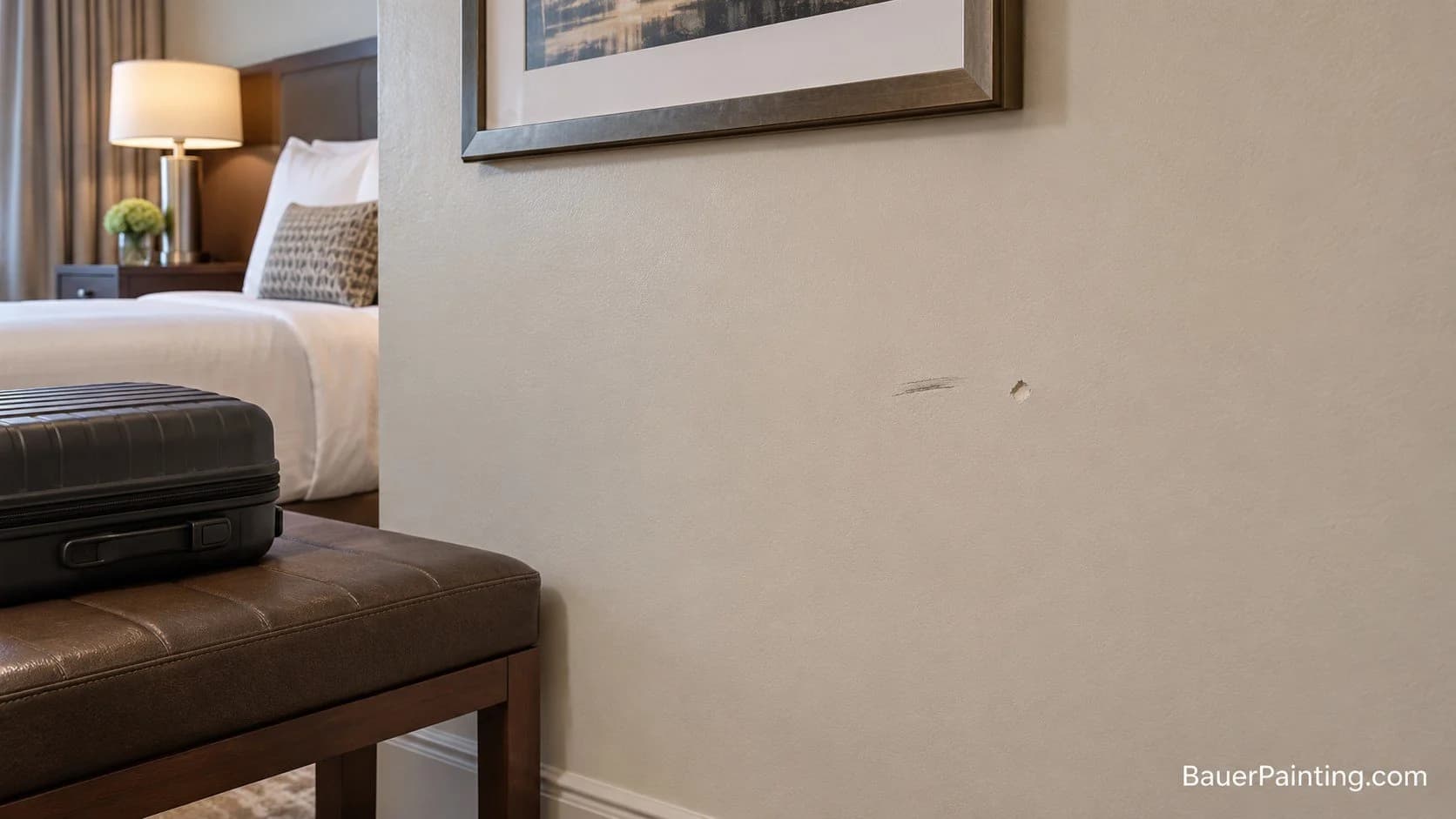
Start by describing what is visible. A transfer mark, a worn finish, a dent and peeling paint are different conditions. They should not all be entered as touch-ups on a maintenance list.
Identify the location in terms the room team can recognise, such as the wall beside the luggage bench or the return next to the desk. Note whether the defect is isolated or repeated across the surface.
Useful observations include:
A surface mark without an obvious change in level.
A dent or damaged edge.
A previously repaired patch with a visible texture difference.
A polished or dulled area from repeated contact or cleaning.
Peeling, cracking or staining needing separate assessment.
Avoid aggressive cleaning or scraping merely to identify the condition. Follow the coating’s maintenance guidance and arrange assessment when the cause is unclear.
Where staining relates to a known leak or another building defect, resolve that cause. Repainting is not a repair for ongoing water entry.
Separate Surface Appearance from Wall Repair
If the wall has a dent or damaged panel, coating alone cannot restore its shape. Conversely, a removable surface mark may not require the same work as a damaged substrate.
Ask what repair is proposed before discussing the paint boundary. A patch can be the right substrate repair while still needing broader recoating to achieve the agreed appearance.
The decision should therefore have two parts: what restores the surface, and how far the finish needs to extend. Keeping them separate makes the proposal easier to assess.
Check the Existing Product and Sheen
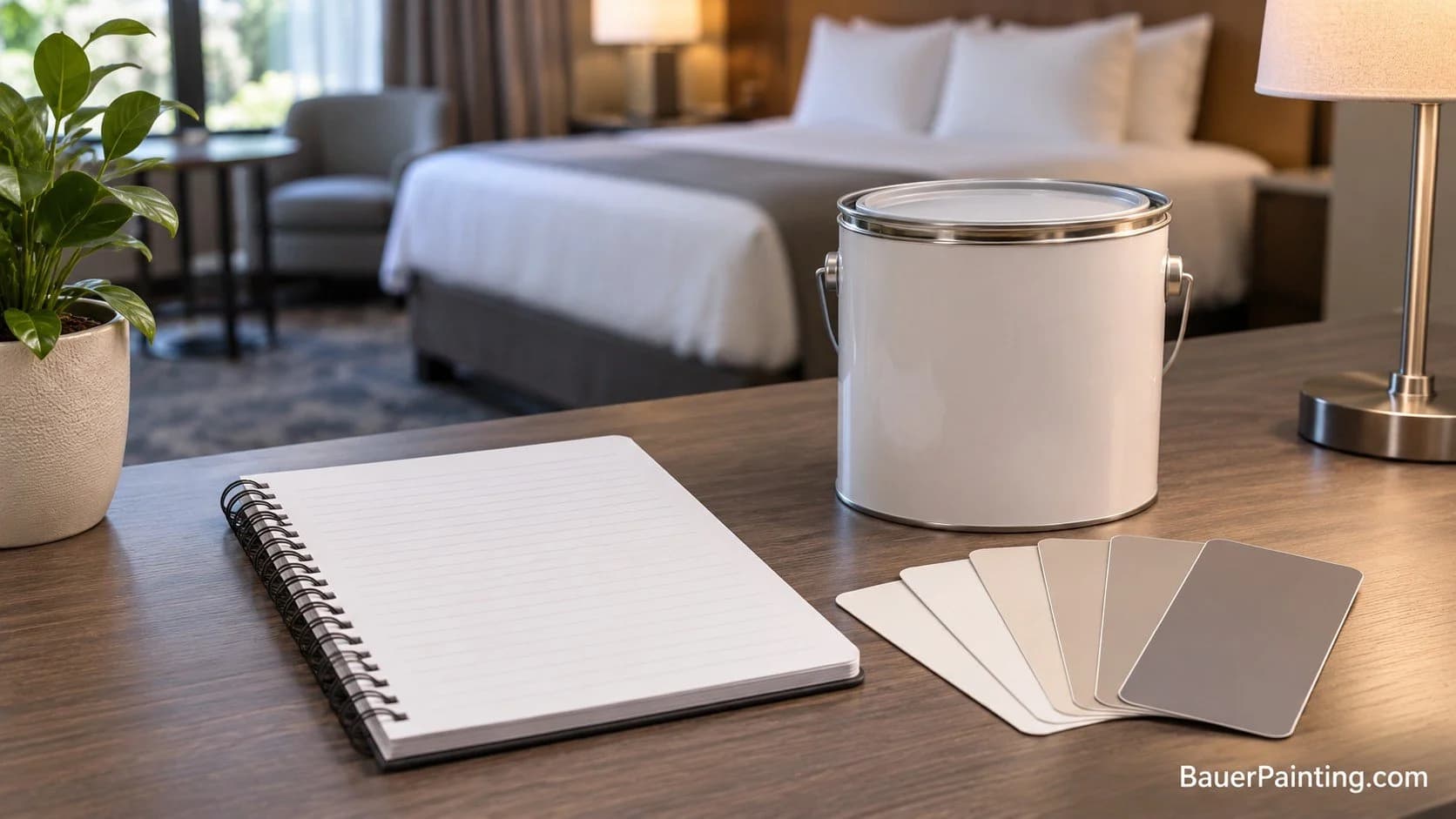
Before ordering matching paint, find the most reliable coating record available. A colour name is useful, but it is only one part of the specification.
Look for the product line, colour reference, sheen, original application date and any documented changes. A room may have been repainted using a different product even though the colour description stayed the same.
Useful records include:
The original painting specification or maintenance schedule.
A clearly identified product label.
Previous invoices showing the actual product.
Room or floor records noting later repainting.
A retained sample linked to a known wall and date.
Treat an unlabelled container or an old digital photograph as uncertain evidence. Neither establishes that the contents or displayed colour represent the current wall.
Why Sheen Belongs in the Record
Sheen describes how a coated surface reflects light. The Canadian Coatings Association’s paint finishes guide explains this distinction between finishes.
For maintenance purposes, record the finish as well as the colour. A patch that differs in reflected appearance can remain noticeable even when the shade seems close.
This article is not a general finish-selection guide. If you need that background, our existing article on commercial paint finishes for high-traffic areas provides the related discussion.
Why a Hotel Wall Touch-Up Can Remain Visible
A local repair can differ from its surroundings in colour, texture or gloss. These differences should be assessed rather than dismissed as proof that more of the same paint will solve the problem.
The repaired substrate may have a different texture or absorption. The existing surface may also have changed through use and cleaning. Available records can help explain the starting point, but they cannot promise a match.
The Canadian Coatings Association’s common paint problems resource describes uneven gloss, sometimes called flashing, and other appearance defects. Its guidance supports assessing the surface and coating together instead of relying on colour alone.
For a guest-room wall, ask which difference is actually visible:
Is the patch a different shade?
Does it reflect light differently?
Is there a raised or uneven repair edge?
Does the surrounding wall contain several earlier patches?
Is the issue confined to one place or spread across the wall?
These questions lead to a more useful decision than repeatedly adding paint around the original mark.
Review Under Normal Room Conditions
Assess the trial from normal viewing positions with the room’s usual lighting available. Side light from a window or bedside fitting may reveal a difference that is less apparent from directly in front of the wall.
The purpose is to evaluate the repair, not to choose a new colour scheme. Keep the trial location and review conditions consistent enough for the maintenance contact and contractor to discuss the same result.
Do not judge the final appearance while the coating is still in an intermediate drying stage. Follow the selected product’s instructions when deciding when the trial can reasonably be reviewed.
Compare a Trial Repair with Full-Wall Recoating
A trial can establish whether local treatment is acceptable for that wall. Agree its purpose and boundary before proceeding, particularly where previous attempts have already enlarged the visible patch.
The result may support a local repair, further investigation or full-wall recoating. It should not automatically become approval to repaint the whole room.
Use the following decision points:
Observation | Question to resolve | Possible scope discussion |
|---|---|---|
One limited mark on otherwise consistent paint | Can an appropriate local treatment meet the agreed appearance? | Review a defined trial |
Several visible patches on one wall | Is another patch likely to leave the wall inconsistent? | Assess full-wall recoating |
Uneven or damaged substrate | What repair is required before coating? | Separate repair and finish extent |
Unknown existing product | What can be established from records or assessment? | Avoid a promised exact match |
Defects on several walls | Which surfaces actually need work? | Assess individually rather than assume a full room |
These are assessment routes, not automatic specifications. The actual condition and selected coating determine the proposal.
When a Full Wall Is the Clearer Boundary
If local repairs remain conspicuous, discuss repainting the affected wall to a defined boundary. Corners and wall returns help describe the extent without implying that every surface in the guest room is included.
Clarify whether the boundary includes trim, doors, adjoining returns or the ceiling. A full-wall proposal should name those limits rather than rely on an informal description.
Repainting the whole wall does not remove preparation requirements. Any underlying repair still needs to suit the surface before the finish is applied.
Record a Room-Specific Finish Decision
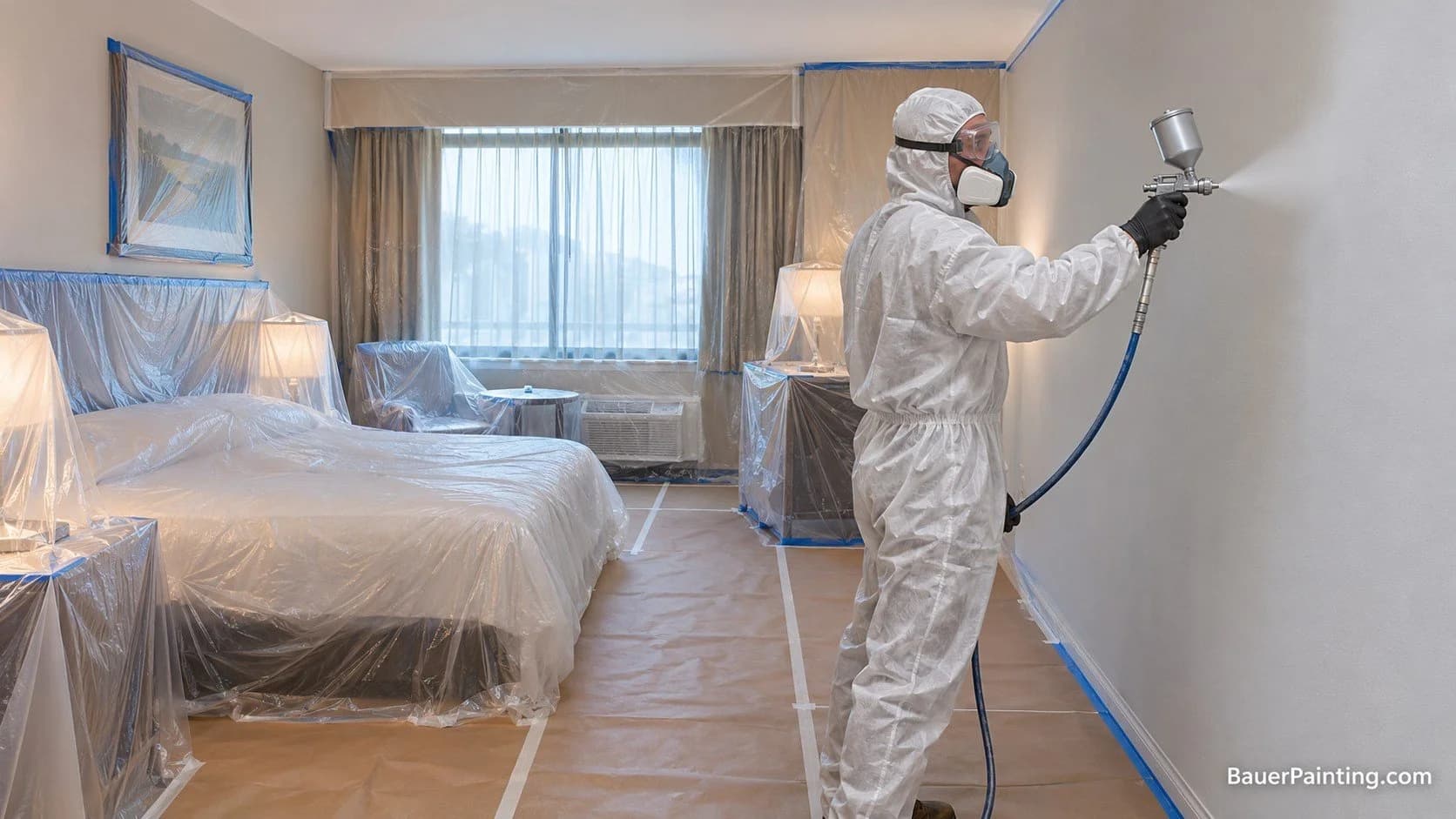
For hotels with repeated room layouts, it is tempting to apply one answer across the property. Similar rooms can still have different coating histories or damage.
Record the decision against the room and wall, then identify where the same assessment may be relevant elsewhere. Do not extend a successful trial to every room without checking the starting condition.
A concise maintenance record can include:
Room and wall reference.
Visible defect and any known cause.
Existing product information and its reliability.
Required substrate repair.
Trial location and review result.
Approved repaint boundary.
Outstanding decisions and responsible contact.
This gives housekeeping and maintenance teams a shared reference without creating a complicated new system. It also preserves useful product information for the next maintenance cycle.
Make Acceptance Clear Before Expanding the Work
Identify who can approve the appearance and scope. A trial accepted by one person should not later be judged against an unstated standard from another team.
Where brand requirements apply, bring the responsible representative into the decision. Do not claim compliance simply because the proposed paint has a familiar colour name.
Record changes to the decision if the trial leads to a larger repaint. The wall reference, revised boundary and accepted finish should remain clear.
Keep Appearance Decisions Separate from Room Release
Accepting a finish is different from confirming that a room is ready for every use. Coating instructions, ventilation and other project requirements still apply.
Avoid setting a universal return-to-service time from the size of the touch-up alone. A small painted area does not establish the product’s requirements or the room’s conditions.
The hotel and contractor should agree the relevant handover arrangements for the selected work. Where broader operational coordination is needed, our guide to painting occupied buildings covers that separate subject.
Here, the main objective is a sound finish decision: repair locally where appropriate, or define a broader repaint where the assessment supports it.

Ask Bauer Painting About Your Markham Guest-Room Walls
Send the room type, wall photographs and available coating records with your enquiry. Explain whether the issue is one isolated defect, repeated touch-up patches or broader wear.
Include previous repair attempts where known. That information helps avoid treating a recurring appearance problem as a completely new mark.
Our Markham commercial painting page provides local service information. To discuss the affected surfaces, visit our hotel interior painting service and share the maintenance decision you need Bauer Painting to assess.
We can discuss the painting scope without assuming every room needs the same treatment or promising that every touch-up will disappear.
Frequently asked questions
Is the Same Colour Code Enough for a Hotel Wall Touch-Up?
No. The product, sheen, substrate and existing wall condition also matter. A colour code is a useful record, but it does not guarantee that a local repair will blend with a used surface. Review the proposed treatment before approving a larger programme.
Why Does a Touch-Up Show Under Side Lighting?
Side lighting can make differences in surface texture or reflected appearance more noticeable. Assess whether the issue concerns the repair, coating or surrounding wall. Review under normal room conditions after the relevant product drying requirements, rather than judging only from one angle.
Does One Damaged Wall Mean Repainting the Whole Room?
Not necessarily. Assess the affected surface and define a suitable repaint boundary. A proposal may concern a local treatment or one full wall. Other walls, trim and ceilings should be included only when the agreed scope identifies them.
Can Older Paint Records Help with Guest-Room Maintenance?
Yes, when they reliably identify the coating used on the actual wall. Product, colour, sheen and repaint dates help establish the starting point. Treat unlabelled containers or records from another room as uncertain until their relevance is confirmed.
What Should Hotel Maintenance Send Bauer Painting?
Provide the address, room and wall references, photographs, known damage history and available product records. Explain whether earlier touch-ups remain visible. These details support assessment of local repair versus broader recoating without assuming the same answer across every guest room.



Join the conversation
Have a question or a useful tip? Leave a comment for our team and readers.
Loading comments…