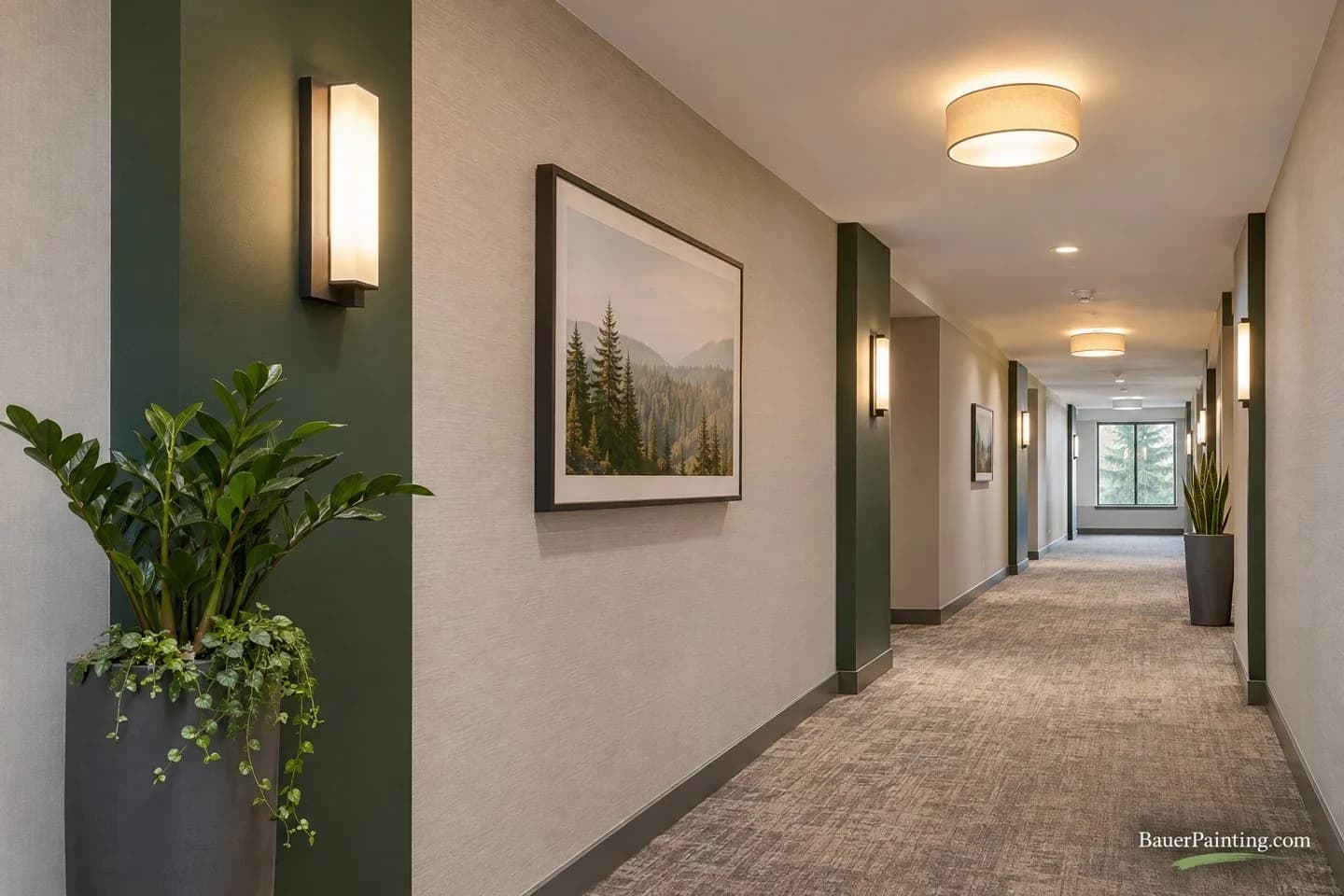
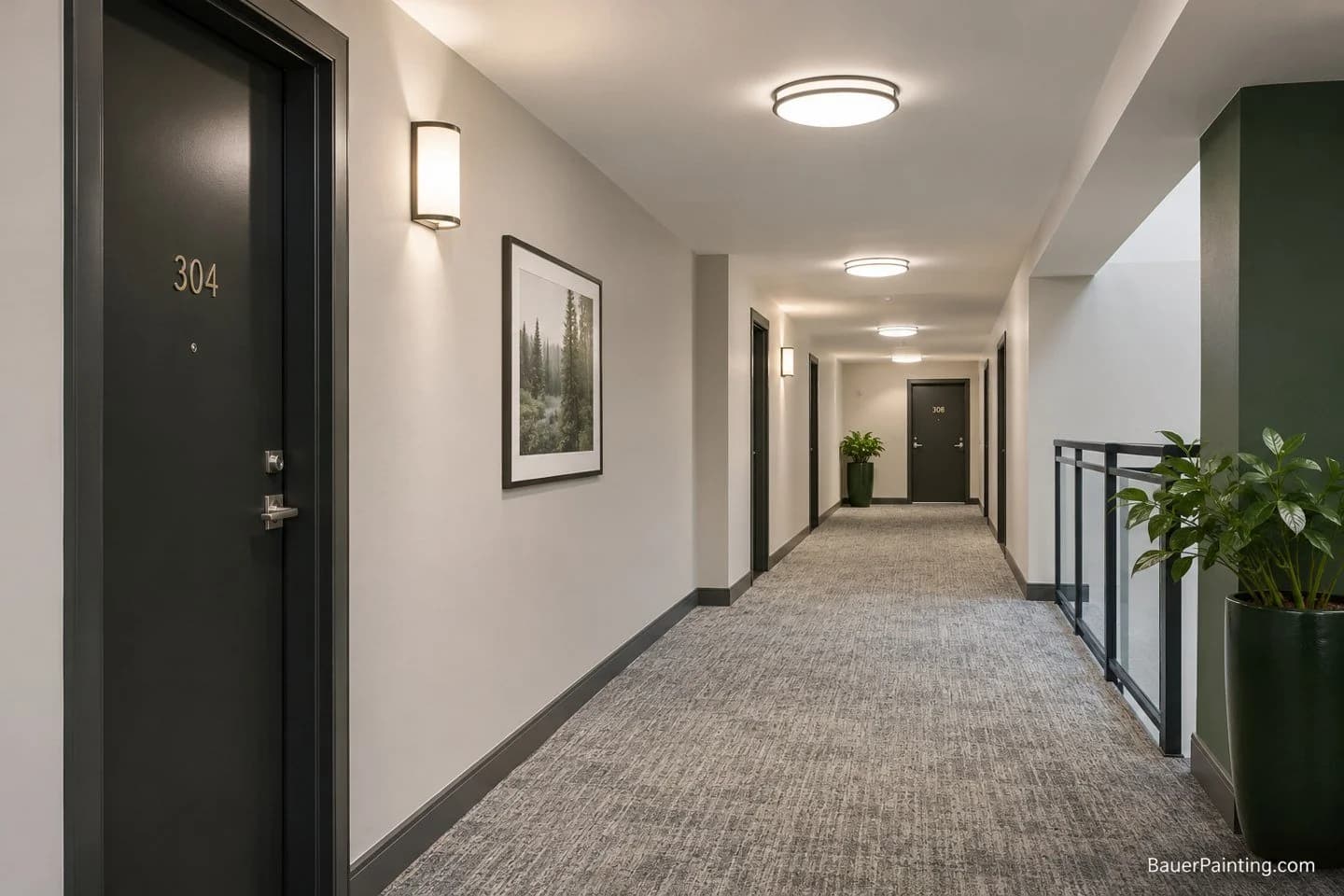
Changing a condo corridor from wallcovering to paint starts with understanding the wall beneath the covering. Photographs of the finished corridor cannot confirm every concealed layer or the preparation it will need. Separate the removal scope from the painting assessment, then review the exposed surface before extending an agreed approach through the building.
At Bauer Painting, our multi-unit and common-area painting service covers agreed painting scopes for corridors, lobbies and other shared spaces. For condo hallway painting in Aurora, a wallcovering conversion needs clear responsibilities and an assessment record that keeps unknown conditions visible.
This guide explains those decisions. It does not assume wallpaper removal is included in a painting quotation. Confirm who handles that work and any specialist review before treating the whole conversion as one approved package.
Establish What Is Known Before Removal
Start with the proposed corridors and wall sections. Identify which coverings are intended to remain and which are being considered for removal. Doors, frames, ceilings, protective rails and other adjacent finishes should be described separately rather than assumed part of the wall work.
Gather reliable building records where available. An old specification or previous refurbishment file may help identify the covering or wall assembly. Keep the source with the information and distinguish an original specification from evidence of what was actually installed later.
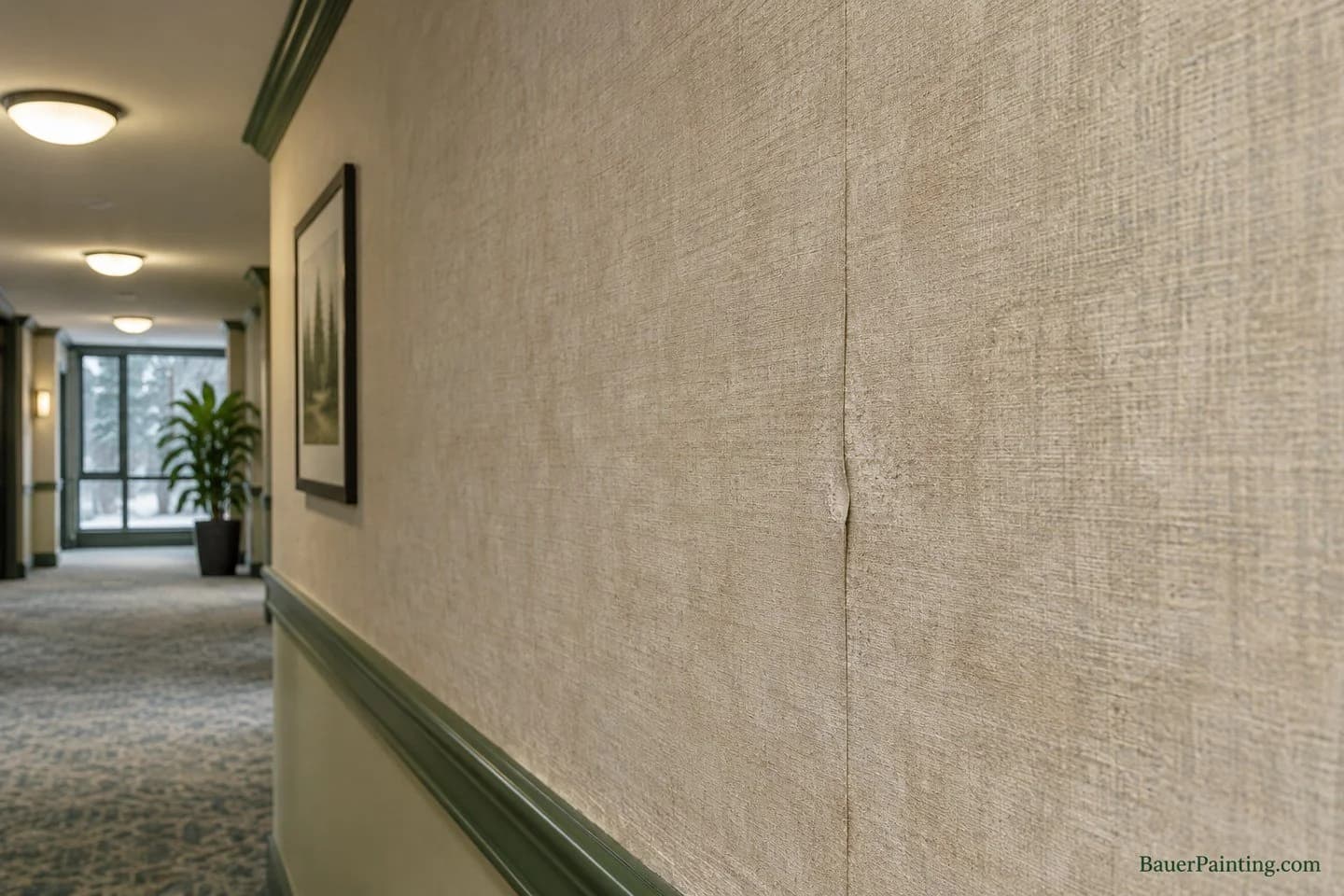
Photographs are useful for showing seams, junctions, visible damage and the scale of the area. They do not establish the condition behind the covering. Take both wide views and closer images, referenced to the floor and corridor section so a finding can be located again.
Visible concerns worth recording include lifted seams, staining, impact damage and changes in texture. Describe what is visible without diagnosing the hidden cause. Repainting should not be treated as the answer to an unresolved building condition.
Also note where the wall meets another material. A rail, corner guard or frame can affect the agreed work boundary. Keeping those junctions visible in the brief helps the team distinguish decorative preparation from separate work on retained components.
Agree Who Handles Removal and Assessment
A painting scope and a wallcovering removal scope need clear boundaries. Ask who is responsible for removal, what area is included and how the exposed surface will be presented for assessment. Do not assume that a price for painting also includes every step needed to uncover the wall.
The authorised building contact should identify who can approve further investigation or changes. If removal reveals a condition outside the agreed work, the team needs a way to report it and obtain a decision before continuing beyond that boundary.
Where building records or site findings raise questions about materials or assemblies, refer them to the appropriate qualified party. This article does not establish a test for identifying hazards or approving changes to a wall assembly. Age and photographs alone are not enough to settle those questions.
Ask for the relevant review before disturbance where it is needed. Avoid allowing a decorative trial to become an uncontrolled investigation of an unknown wall system. The project brief should show which questions are already resolved and which need a separate decision.
For the painting enquiry, provide the removal arrangements that have actually been agreed. If they remain undecided, say so. An explicit open item is more useful than a quotation based on an assumed handover condition that nobody has accepted.
Understand What a Removal Trial Can Resolve
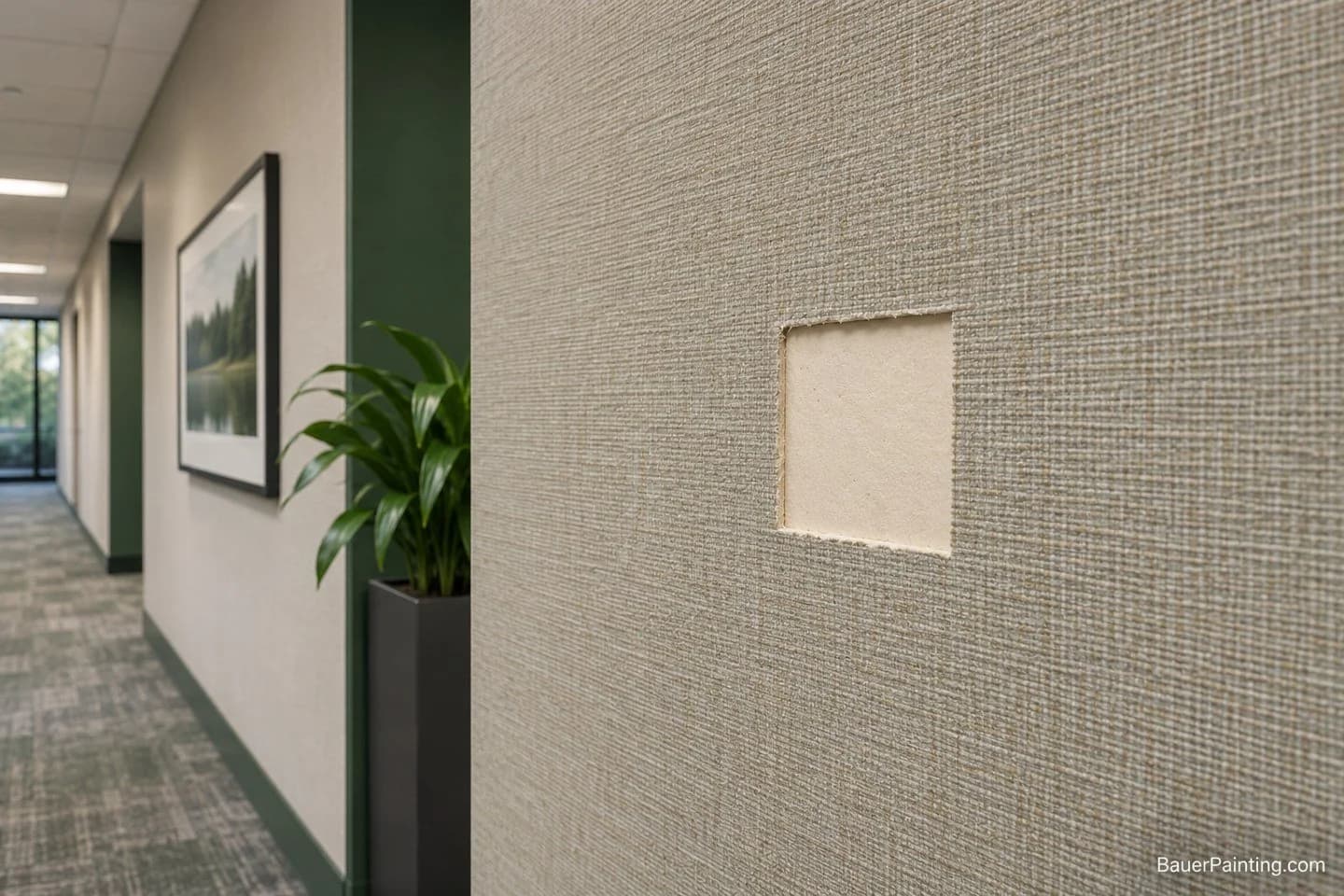
A limited removal trial, arranged by the responsible party, can help reveal the surface and preparation questions in a defined location. Record where the trial took place and what was observed. Keep the findings tied to that location rather than treating them as a result for every floor.
The assessment may need to distinguish remaining adhesive, damaged facing, old patching, uneven texture and other exposed finishes. The purpose is to identify the next preparation decision, not to prescribe the same treatment for every wall.
Ask what remains unknown after the trial. Has the actual paintable surface been established? Are there areas that need separate repair review? Does the proposed preparation address the observed condition and the selected coating’s requirements?
One Trial Does Not Describe Every Corridor
Different floors may have different alteration histories. Even within one corridor, a repaired section can differ from the surrounding wall. A useful record shows the limits of the evidence, including where additional assessment may be needed before extending the approach.
Avoid turning a successful small trial into a guarantee about all remaining work. Agree how newly exposed conditions will be reported and how they may affect the scope. That decision belongs before the team is expected to continue across every area at the original assumption.
Keep the trial photographs factual. Label the location and observation without calling them proof of an entire building’s condition. Do not use a decorative sample to imply that a concealed material or wall assembly has been approved for alteration.
Define Preparation for the Proposed Painted Finish
Once the surface has been assessed, define the preparation needed for the proposed coating system. Painting over an unresolved surface does not remove the underlying uncertainty. Identify any separate repairs and confirm the condition required before the painting work begins.
Residual adhesive needs assessment against the intended system rather than a blanket instruction to cover it. Damaged wall facing, loose material and uneven repairs also need their own decisions. The appropriate preparation depends on the actual substrate and product requirements.
The Canadian Coatings Association’s preparation guidance provides general background on preparing a paintable surface. It is not an approval for a particular concealed wall condition or a universal recipe for removing every wallcovering system.
Ask the proposal to distinguish the included preparation from unresolved repair work. “Make good and paint” is difficult to assess if nobody has agreed what condition is being made good or how far the work extends.
A useful preparation description identifies:
The assessed surface and the areas it covers.
The repairs and preparation included in the painting scope.
Separate work required before painting can proceed.
The proposed primer and finish references where established.
The process for reviewing newly exposed conditions.
Do not use primer as a substitute for defining the surface problem. The proposed system should be reviewed for the actual condition, with unclear technical questions resolved before application.
Review the Appearance on the Prepared Surface
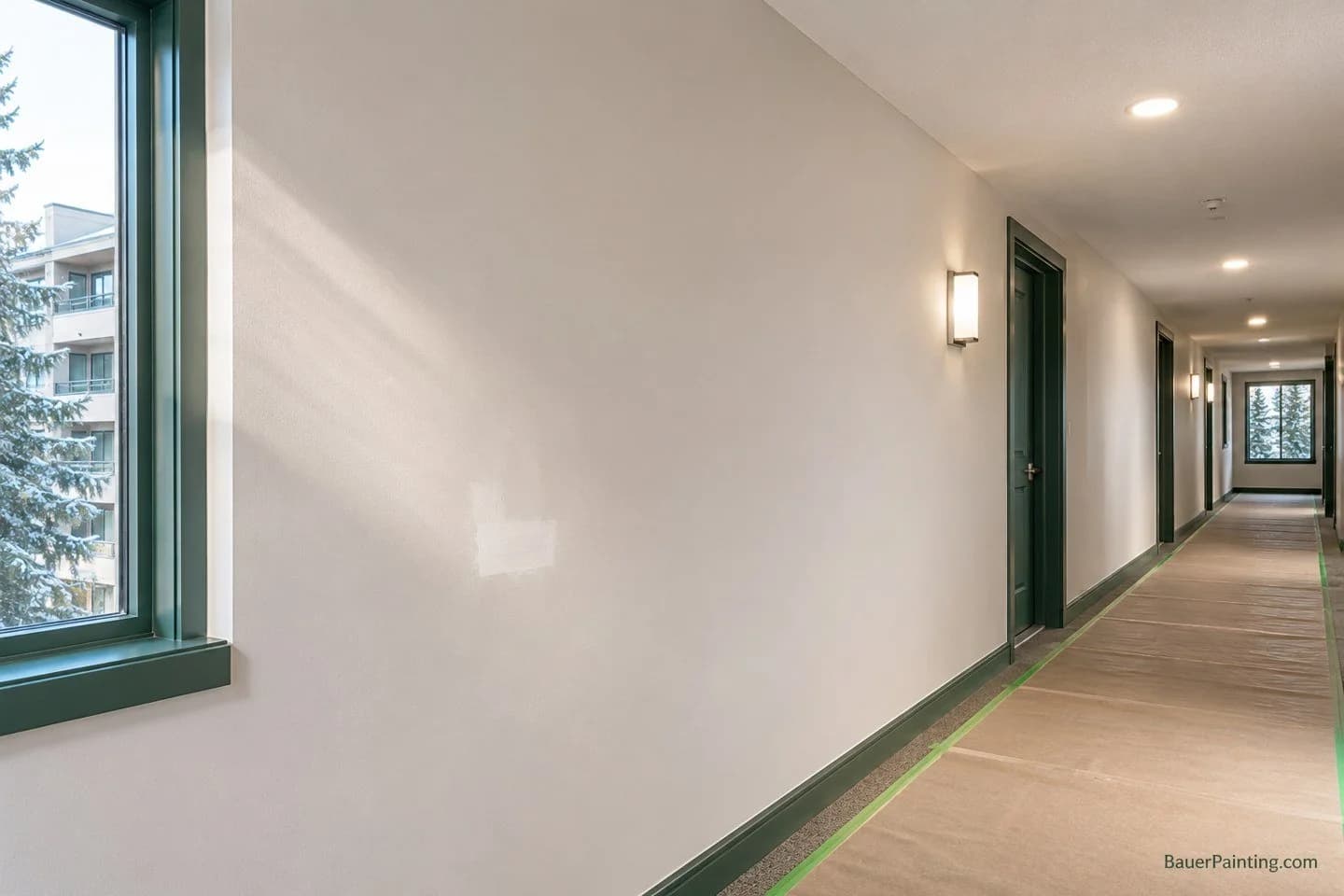
A painted wall can read differently from a textured covering under the same corridor lighting. Once a suitable preparation approach is established, an agreed sample area can help management review the proposed appearance and work limits.
Record which surface and preparation the sample represents. Appearance approval does not establish that every concealed issue has been resolved, and it should not be confused with approval of separate building work.
Our commercial finish selection guide offers broader finish context. Keep this conversion decision centred on the exposed substrate, preparation and approved result rather than repeating a general sheen comparison.
Approve the Assessment Before Extending the Work
Use a short assessment record to connect the removal findings with the proposed painting scope. The record should make it easy to see what has been reviewed and what remains open. It does not replace the building’s own approvals or any specialist documentation.
Assessment field | Decision or information to retain |
|---|---|
Corridor reference | Floor, section and defined work boundaries |
Known covering information | Reliable records and clearly marked unknowns |
Trial location | Exact area represented by the findings |
Observed condition | Exposed substrate, residue and visible damage |
Open questions | Material, assembly or repair matters needing review |
Removal responsibility | Agreed party and handover scope |
Painting preparation | Included work and product references where confirmed |
Approval status | Authorised decision and remaining conditions |
Keep photographs and supporting documents with the entry. Update it when another area reveals a different condition. A change in findings should lead to review, not an automatic assumption that the original preparation still applies.
The authorised contact should know how variations will be described and approved. Define whether the next decision concerns a repair, a larger preparation area or a change in the proposed system. Those are clearer choices than a broad request to approve “extra work”.
For broader resident movement and operational arrangements, see our occupied-building painting guide. Those arrangements matter, but they should remain separate from approval of the wall’s condition and painting preparation.
Discuss an Aurora Common-Area Painting Assessment
For an Aurora commercial painting enquiry, send the proposed corridor references, current photographs and any reliable wallcovering records. Identify the building contact and explain whether removal and assessment arrangements have already been agreed.
We can discuss the painting scope based on the surface information available. Flag unknowns, separate repairs and approval conditions early. That allows the proposal to distinguish defined painting work from decisions still awaiting investigation or removal findings.
If the enquiry includes several buildings or a wider maintenance programme, our property management painting service explains the broader scope we can assess. Each building still needs its own surface and work review.
The useful next step is a defined assessment, not a promise that every covered wall will be ready for the same treatment. Contact Bauer Painting with the proposed areas and confirmed responsibilities to discuss the painting requirements.
Frequently asked questions
Can photographs confirm the wall condition beneath a covering?
No. Photographs can show the visible covering, damage and work area, but they cannot confirm every concealed layer or substrate condition. Use reliable records and an appropriately arranged assessment to resolve the relevant questions. Keep any remaining unknowns visible in the painting brief.
Does a trial on one floor represent all the corridors?
Not automatically. Floors and repaired sections may have different histories. Record the trial location and the limits of its findings. Agree how other areas will be assessed and how newly exposed conditions will be reviewed before applying the same preparation throughout the building.
Who should arrange wallcovering removal?
The authorised building contact should confirm the responsible party and the agreed scope. Do not assume removal is part of a painting quotation. Identify any required review, how the exposed wall will be handed over and who approves further work if unexpected conditions appear.
Can paint go straight over residue or damaged wall facing?
Do not assume it can. Assess the exposed condition and the proposed coating system’s requirements first. Residue and damaged facing need specific preparation decisions; a general promise to prime and paint does not establish that the underlying surface is ready for the intended finish.
What should management send before requesting a painting assessment?
Send the corridor and surface references, clear photographs, reliable existing records and the proposed conversion limits. Explain the removal arrangements, known open questions and approval contact. Keep private resident information out of the enquiry and identify separate repair or investigation work rather than assuming it is included.

Join the conversation
Have a question or a useful tip? Leave a comment for our team and readers.
Loading comments…