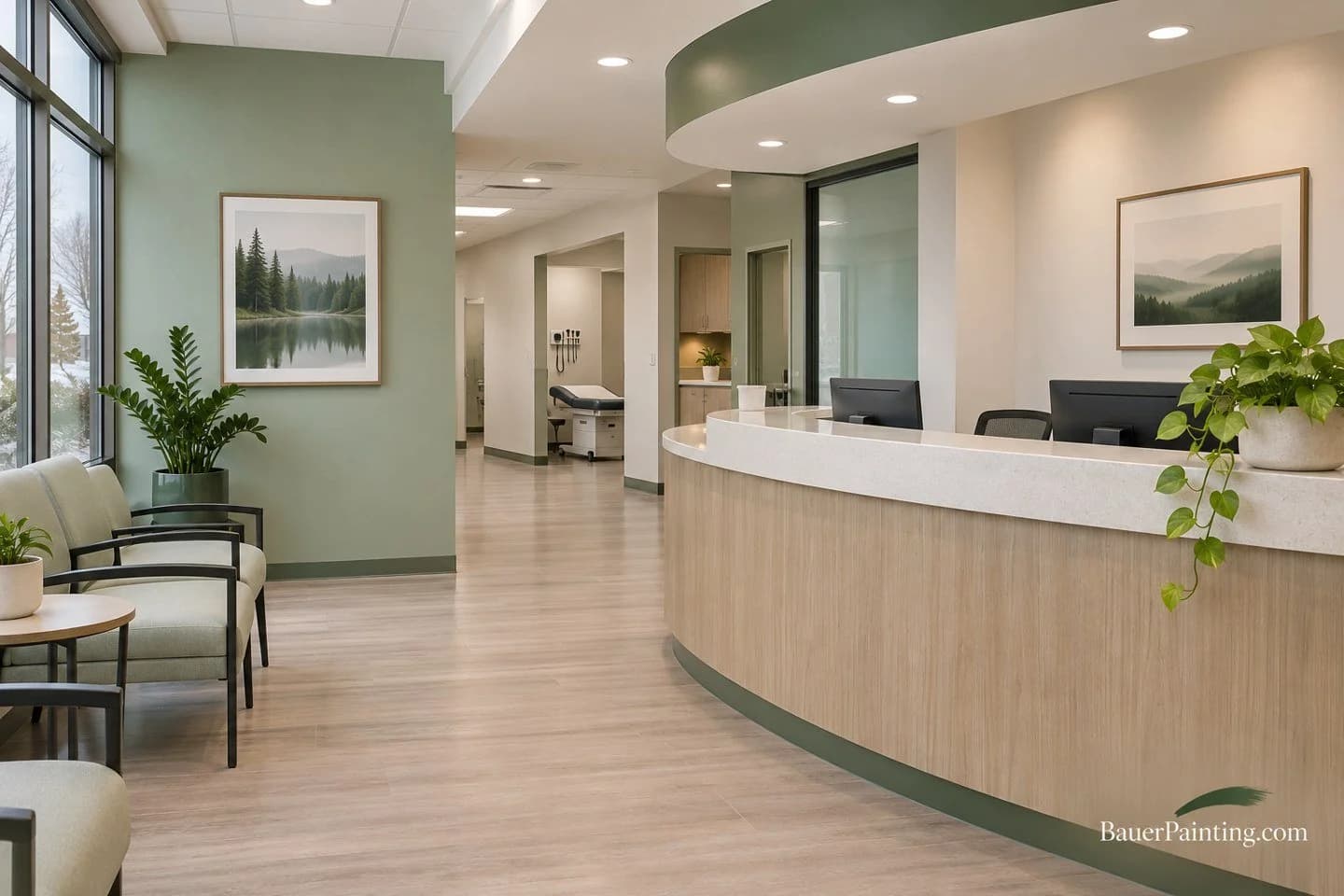
Before choosing wall paint for a clinic, establish what the facility needs to clean and how it cleans it. Provide the proposed surfaces, the cleaning products used on them and the relevant facility requirements. The proposed coating can then be reviewed against those requirements, with unresolved questions referred to the appropriate manufacturer and facility contact.
At Bauer Painting, our healthcare facility painting service starts with the agreed areas and site requirements. For clinic painting in Richmond Hill, the useful starting point is a clear cleaning compatibility brief. A general description such as “durable, washable white” leaves too many decisions open.
This guide explains what belongs in that brief. It helps administrators organise the information needed for a painting assessment without changing their clinic’s cleaning procedures or treating a paint label as clinical approval.
Start with the Clinic’s Existing Cleaning Requirements
A reception wall, examination room and staff corridor may not have the same cleaning demands. Identify the actual painted surfaces included in the proposed repaint. Ask the facility’s cleaning lead which products and procedures apply to each area, rather than sending a general list of everything stored on site.
Record the cleaning product’s full identity and the instructions relevant to the painted surface. If several products are used at different times, identify that distinction. A product name alone may not answer a manufacturer’s questions about how a coating will be exposed during normal use.
The clinic should supply its established requirements. The painting request should not create a new disinfectant routine to suit a preferred decorative finish. Where the information is uncertain, leave the item open for the facility to confirm.
Identify Who Can Confirm the Routine
Name a facility contact who can verify the cleaning information and route technical questions. That may involve more than one person, depending on how the clinic manages its premises. The person arranging quotations should know who can approve the proposed finish and who needs to review it first.
Public Health Ontario’s environmental cleaning guidance explains that cleaning products and surfaces need to be compatible and manufacturer instructions followed. That supports a documented review; it does not identify a universal wall paint for every clinic.
Keep the painting brief specific to this building. Advice for an ordinary office wall is not a substitute for the clinic’s requirements, even when the rooms look similar in photographs.
Describe the Painted Surface and Its Current Condition
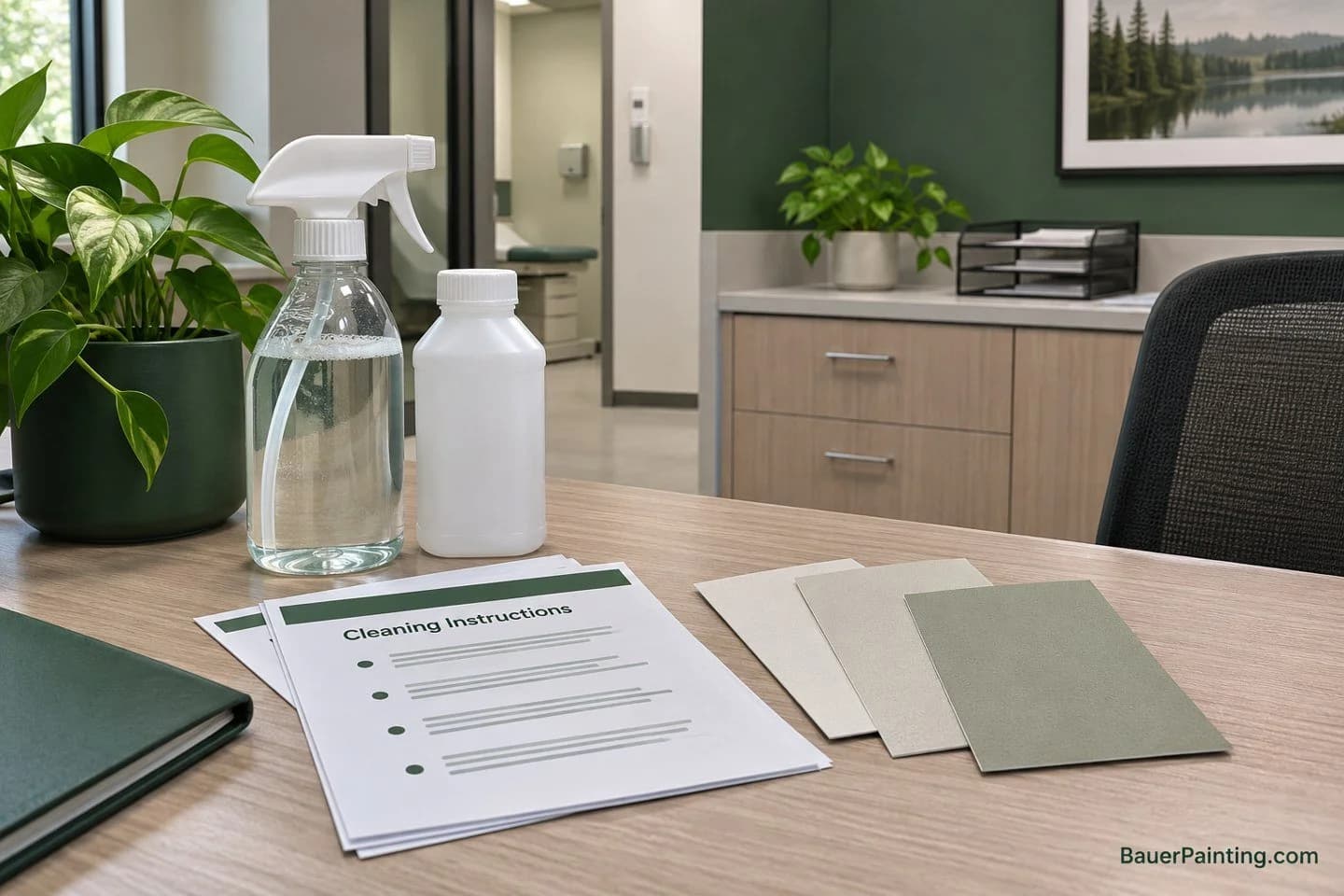
Compatibility is only part of a suitable repaint. The surface receiving the coating also needs assessment. Describe the wall material where known, the existing finish and any visible damage. Distinguish paint from protective wall panels, wallcoverings, sealant joints and other materials that may be outside the proposed work.
Useful photographs show the full wall and a closer view of the concern. Include the room reference, not just an unlabeled close-up. Keep patients, screens, charts and other private information out of the images shared for a quotation.
Record what is known about previous painting. A documented product reference is useful; an uncertain recollection should remain marked as uncertain. A wall’s appearance does not establish the identity or condition of every layer underneath it.
List issues separately so they can be reviewed on their own terms:
Peeling or loose coating around a defined area.
Repeated marks near a protective rail or doorway.
Previous patching with an uneven surface.
Staining or moisture concerns requiring investigation.
Junctions where the painted wall meets another finish.
Do not turn every defect into a promise that repainting will resolve it. Where a separate building issue is suspected, the appropriate investigation should establish what needs correcting before decorative work proceeds.
Ask for Relevant Compatibility Information
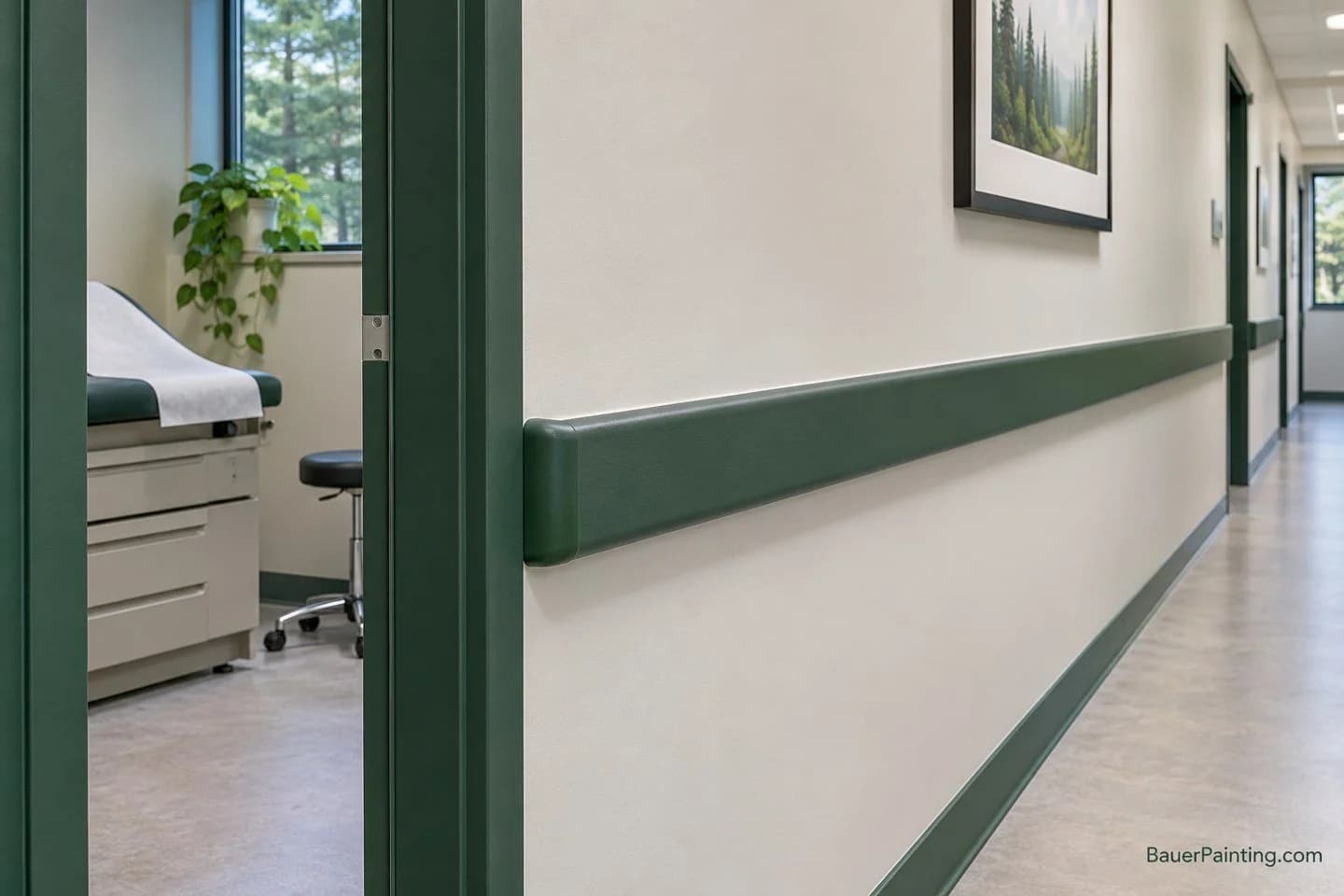
“Washable” is a useful product description, but it does not answer every question about a clinic’s cleaning products. A proposed coating needs to be considered against the stated use, rather than accepted because its general marketing sounds suitable.
Ask what the available product information actually covers. Does it address the intended wall substrate and coating system? Does any cleaning-resistance information relate to the named products and conditions supplied by the clinic? Are there limitations or further instructions that the reviewer needs to understand?
Separate three different ideas:
General cleaning performance: what the product documentation says about maintaining the finish.
Compatibility with a stated cleaning routine: whether the available information addresses the clinic’s actual requirements.
Other product claims: statements that need their own evidence and must not be assumed to establish either of the above.
A sheen name does not settle those questions. Neither does a broad phrase such as “commercial grade”. Avoid comparing products solely by the front of the container or a short online description.
Resolve Missing or Unclear Documentation
If a technical sheet does not answer a question, identify the missing point and seek clarification. Send the relevant cleaning information with the question so the response addresses the proposed use. Keep the reply with the product reference and the area under review.
An unresolved point should remain unresolved in the approval record. Do not turn “we have used a similar finish elsewhere” into evidence for this clinic. A small appearance sample can help the facility judge colour and sheen, but it is not proof of long-term cleaning compatibility.
Our guide to commercial paint finishes explains general finish considerations. For clinical areas, that background still needs the facility-specific review described here.
Separate Coating Approval from Return-to-Use Decisions
Agreeing a product does not automatically release the completed room for normal use. The work plan also needs preparation, protection, application, cleanup and the coating’s stated requirements. The facility should identify who reviews the area and authorises its return to use.
Dry to the touch, ready for another coat and ready for routine cleaning are not interchangeable statements. Refer to the selected product’s instructions and obtain clarification where needed. Do not replace them with a fixed reopening period borrowed from a different project.
Low odour is not an approval decision either. It should not be used on its own to determine whether a clinical room is ready. Any facility requirements affecting ventilation, equipment, work boundaries or handover need to be addressed by the responsible people.
Keep this discussion separate from colour approval. A sample can establish an accepted appearance while technical review remains open. Recording those as different decisions prevents an approved colour from being mistaken for approval of the full coating system.
For the broader arrangements around a building that remains in use, see our occupied-building painting guide. The clinic’s designated contact still determines the site-specific requirements.
Build a Cleaning Compatibility Brief
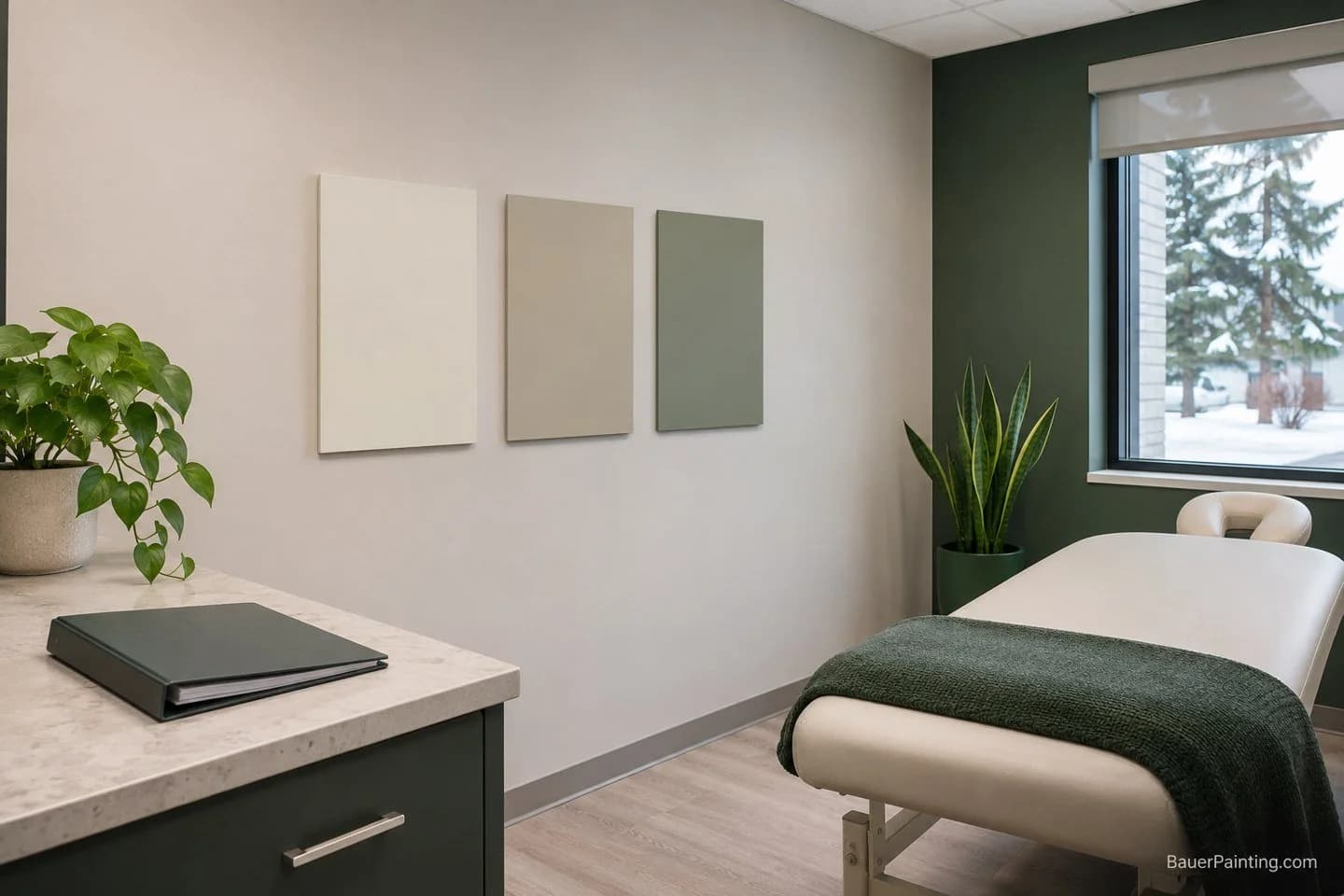
Use a short record for each area with different requirements. It can be a shared document or part of the clinic’s existing project file. The purpose is to make the information and outstanding decisions easy to trace, not to create another approval system alongside the facility’s own process.
Brief field | Information to record |
|---|---|
Area and surface | Room reference, wall or other included surface |
Existing finish | Confirmed coating details, or clearly marked unknowns |
Cleaning reference | Applicable products and facility-supplied instructions |
Facility requirements | Relevant specifications and review requirements |
Proposed system | Product references and preparation under consideration |
Evidence needed | Questions awaiting documentation or clarification |
Responsible reviewer | Person confirming each decision |
Status | Open, under review or approved, with a date |
Attach the source documents rather than copying only selected phrases from them. Keep the version or date where available. When a proposal changes, update the record so an older approval is not accidentally applied to a different product or surface.
Keep the final brief practical. It should allow the facility contact and painting team to see what has been agreed, what remains open and which areas are affected. Avoid entering patient information or unrelated clinical records; they are not needed for a wall-painting assessment.
At handover, retain the agreed coating references and relevant care information. If the cleaning routine or product later changes, the existing record gives the facility a starting point for a fresh compatibility review. It is not permission to assume the new routine is suitable.
Discuss a Richmond Hill Clinic Repaint with Bauer Painting
For a Richmond Hill commercial painting enquiry, send the proposed areas, clear surface photographs and the facility contact responsible for the requirements. Include the cleaning information already available and flag anything still awaiting confirmation.
We can assess the painting scope against the supplied surface and site details. Identify equipment arrangements, separate repair work and the required approval process before treating the proposal as ready to proceed. Confirm any exclusions rather than assuming all work in a clinical room is included.
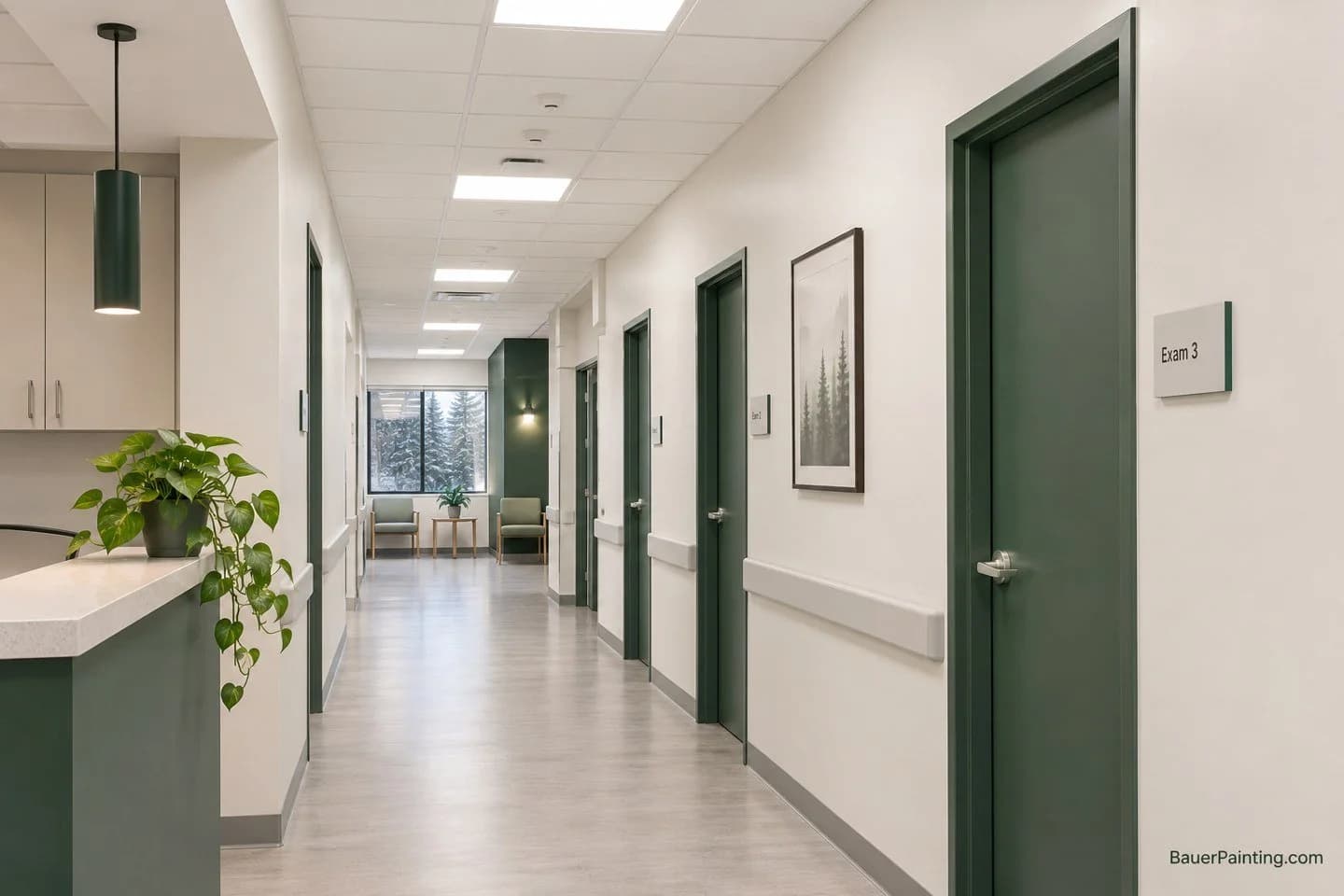
A useful request does not need a long specification written from scratch. It needs accurate information, clear responsibilities and visible open questions. Contact Bauer Painting to discuss the proposed repaint and the information needed for a defined assessment.
Frequently asked questions
Is washable paint automatically compatible with every clinic disinfectant?
No. A washable finish is not a blanket statement about every cleaning product or procedure. Provide the actual requirements and review the proposed coating information against them. Where the documentation is unclear, seek clarification from the relevant manufacturer and facility reviewer before approval.
What cleaning-product information should the clinic supply?
Supply the full product identity, relevant manufacturer instructions and the facility’s established requirements for the painted surfaces. Identify where different routines apply. The clinic’s designated contact should confirm the information rather than asking the painting team to infer it from a general product category.
Who should approve a proposed coating for a clinical area?
The facility should identify its authorised reviewer and any other people who need to be involved under its own procedures. A painting quotation does not replace that process. Record the approval, the product and surface it covers, and any conditions that remain outstanding.
Does low odour establish that a room is ready for use?
No. Low odour alone does not establish readiness. The selected coating’s requirements, cleanup and the facility’s handover conditions still matter. Agree who authorises return to use and obtain product-specific clarification rather than relying on smell or a generic reopening timetable.
What if the existing wall-coating product is unknown?
Mark it as unknown and share any reliable maintenance records or previous specifications. Photographs and site assessment can help define further review, but they do not establish an exact product identity. Preparation and proposed coating decisions should account for the uncertainty instead of recording a guessed match.


Join the conversation
Have a question or a useful tip? Leave a comment for our team and readers.
Loading comments…