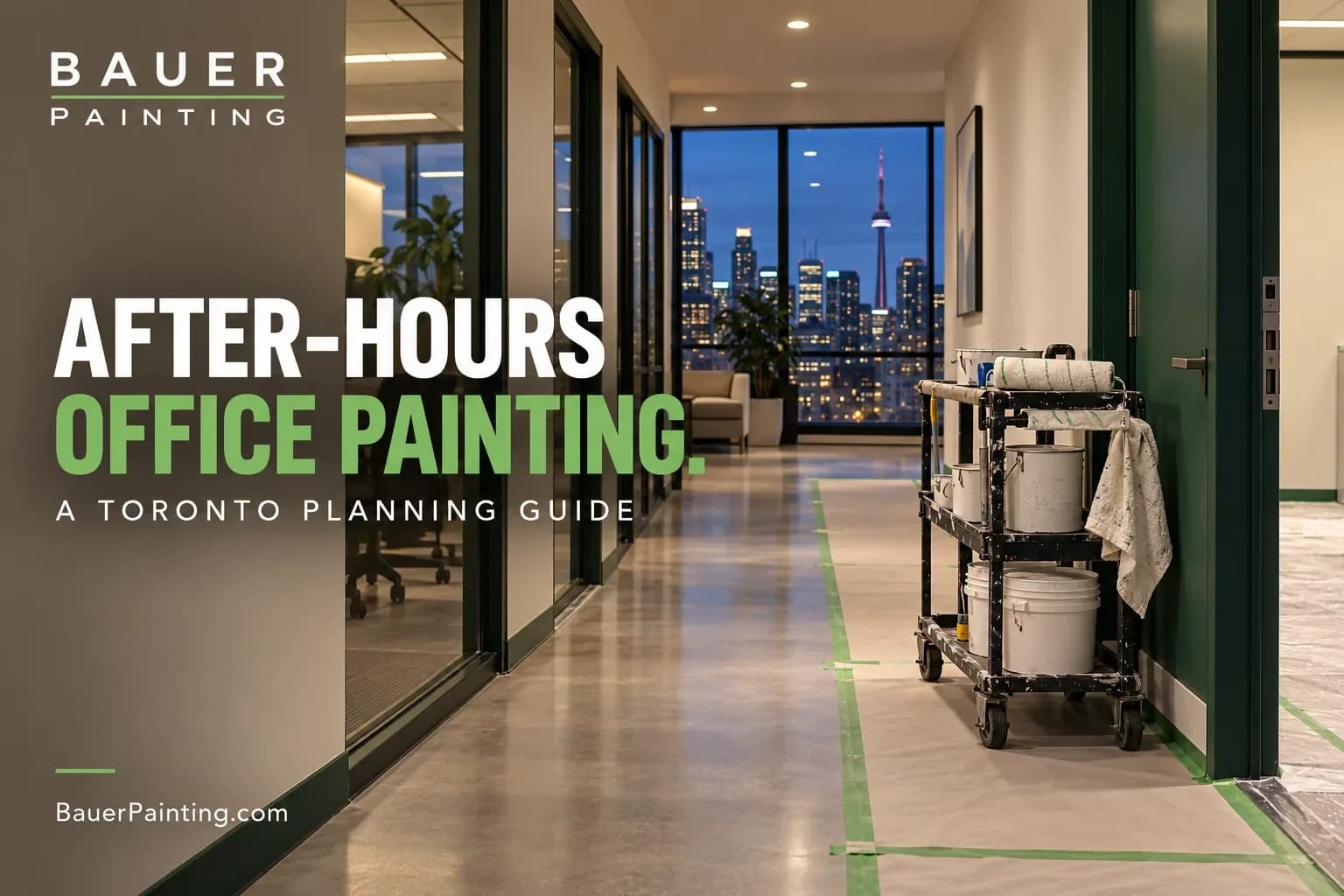
An office manager’s main question is usually practical: can the workplace be refreshed without losing more working time than necessary? The answer depends on which rooms can be released, the condition of the surfaces and the requirements of the proposed coating. Evening, overnight, and weekend work are different options, not interchangeable promises.
This guide helps Toronto businesses prepare a useful brief for commercial office painting. It focuses on planning an occupied workplace rather than quoting a universal completion time. Bauer Painting serves Toronto commercial properties from its Acton office, with site access and project arrangements confirmed for the individual building.
Can an office be painted outside business hours?
Yes, an office repaint can be planned outside normal business hours when the building permits access, and the work window is sufficient. The decision should account for preparation, repairs, coating intervals, ventilation, cleanup and the areas staff needs next. Some rooms may require a longer closure or a separate phase.
A small meeting room with sound walls presents a different scope from a reception, corridor and several occupied workstations. Wall repairs, doors and ceilings can add activities that cannot simply be compressed into the hours after staff leaves. Identify those tasks before choosing a date.
Also check who uses the premises outside the usual office day. Cleaners, security teams, remote-support staff, visitors and neighbouring tenants may still be present. The access plan should reflect those people, not only the time the main reception closes. For the broader approach to occupied properties, see our guide to planning painting around building operations.
Evening, overnight or weekend: which work window fits?
Evening work can suit a limited, clearly defined area when access is reliable. The available hours must accommodate the planned tasks and the condition in which the room will be left. Repeatedly setting up and clearing the same space can affect both progress and cost.
Overnight work provides a longer continuous window, but it needs arrangements for supervision, access and ventilation after application. Confirm whether the premises must be completely cleared by a particular time and who will review the room before employees return. Do not treat the end of the crew’s shift as the reopening decision.
Weekend work may suit larger zones or tasks that need fewer interruptions. It still depends on building rules, other contractors, product requirements and Monday’s room priorities. If several floors are involved, a weekend may be one stage of the project rather than the entire schedule.
Phased work divides the scope into rooms, wings or other agreed zones. It can be combined with evenings or weekends. Each phase needs a defined boundary, protection plan and return-to-use decision; temporary storage and alternative staff routes should be discussed before the first area is released.
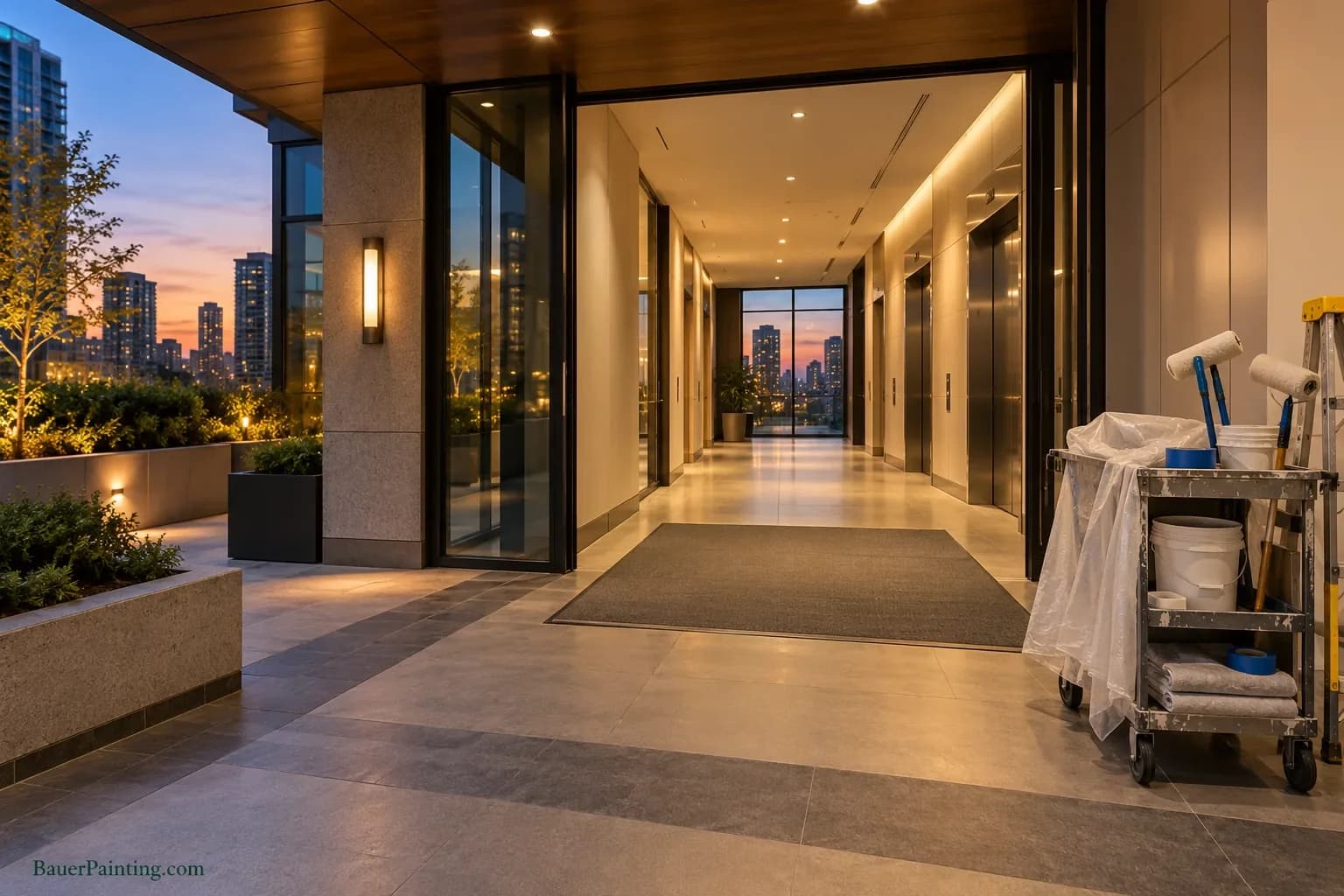
Confirm Toronto building access before agreeing dates
The building’s actual requirements matter more than a generic checklist for the city. Ask the property manager which contractor procedures apply to your address. Shared office buildings may have restrictions that differ from those of a standalone commercial unit.
Entry and supervision: identify who admits the crew, provides keys or access cards and remains reachable after hours.
Loading and parking: agree where materials can be unloaded and whether a service elevator or loading space needs booking.
Documentation: ask what insurance, contractor or site documentation management requires, and allow time to review it.
Work restrictions: confirm permitted hours, noise restrictions, cleaning schedules and the procedures for work near building services.
Ventilation and security: identify the building contact who can confirm the agreed arrangements and secure the work area afterwards.
Emergency routes: agree how exits, access routes and areas outside the painting zone will remain available.
Record approvals in the project brief. A confirmed elevator slot does not, by itself, confirm permission for every preparation method or an overnight work period. Resolve uncertainties before materials and equipment are mobilised.
What needs protection in an occupied office?
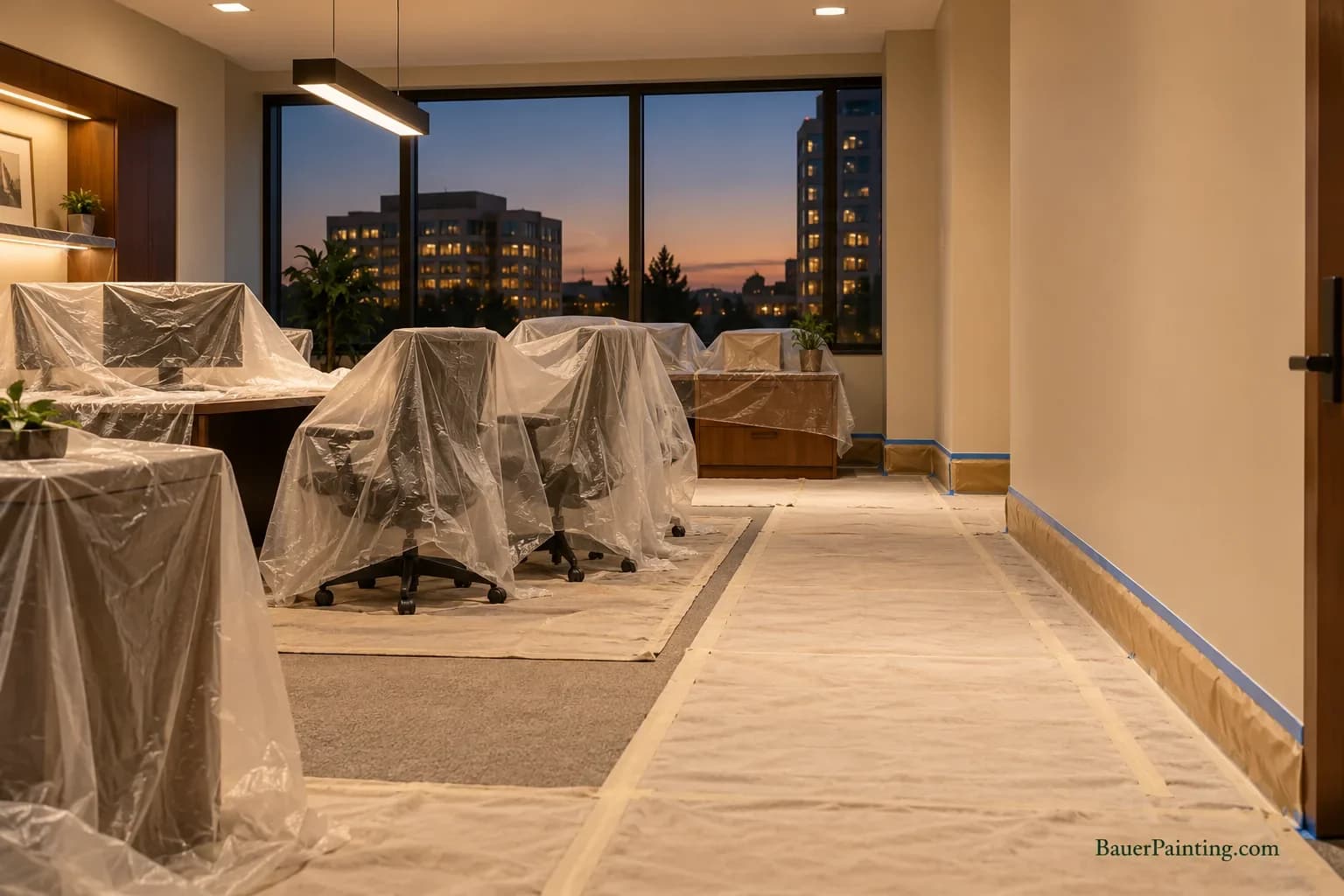
Start with a room inventory. Desks, monitors, cabling, seating, files, wall-mounted fittings and flooring can all affect access to the surfaces. Agree what the office team will remove, what remains in place and what the painting scope includes protecting.
Employees should remove personal possessions and sensitive information before the work zone is handed over. IT equipment should only be moved, isolated or disconnected by an authorised person. Covering a workstation is not permission to disconnect equipment or change its operating conditions.
Identify where displaced furniture can be stored without blocking another work area. If a desk must return to the same position, discuss the clearance and handling needed around the new finish. Protecting the route used to move furniture is part of the discussion, not just protecting the wall being painted.
Preparation can determine whether the window is realistic
An after-hours plan should list preparation separately from painting. Existing finishes may need cleaning, localised repairs, sanding, adhesion checks or primer. The appropriate steps depend on the substrate and coating condition; a quick visual refresh and a damaged-wall repair project are different scopes.
Ask how patching and primer requirements affect the sequence. A repair that needs another stage should not be concealed behind an optimistic finish date. If suspected hazardous materials or uncertain older coatings are present, flag them before disturbance so the appropriate assessment and controls can be discussed.
The Canadian Centre for Occupational Health and Safety’s painter guidance highlights evaluating workplace hazards, consulting safety data sheets and maintaining appropriate ventilation. An office project should therefore include an agreed preparation and protection method, rather than assuming that working at night removes the risks associated with the work.
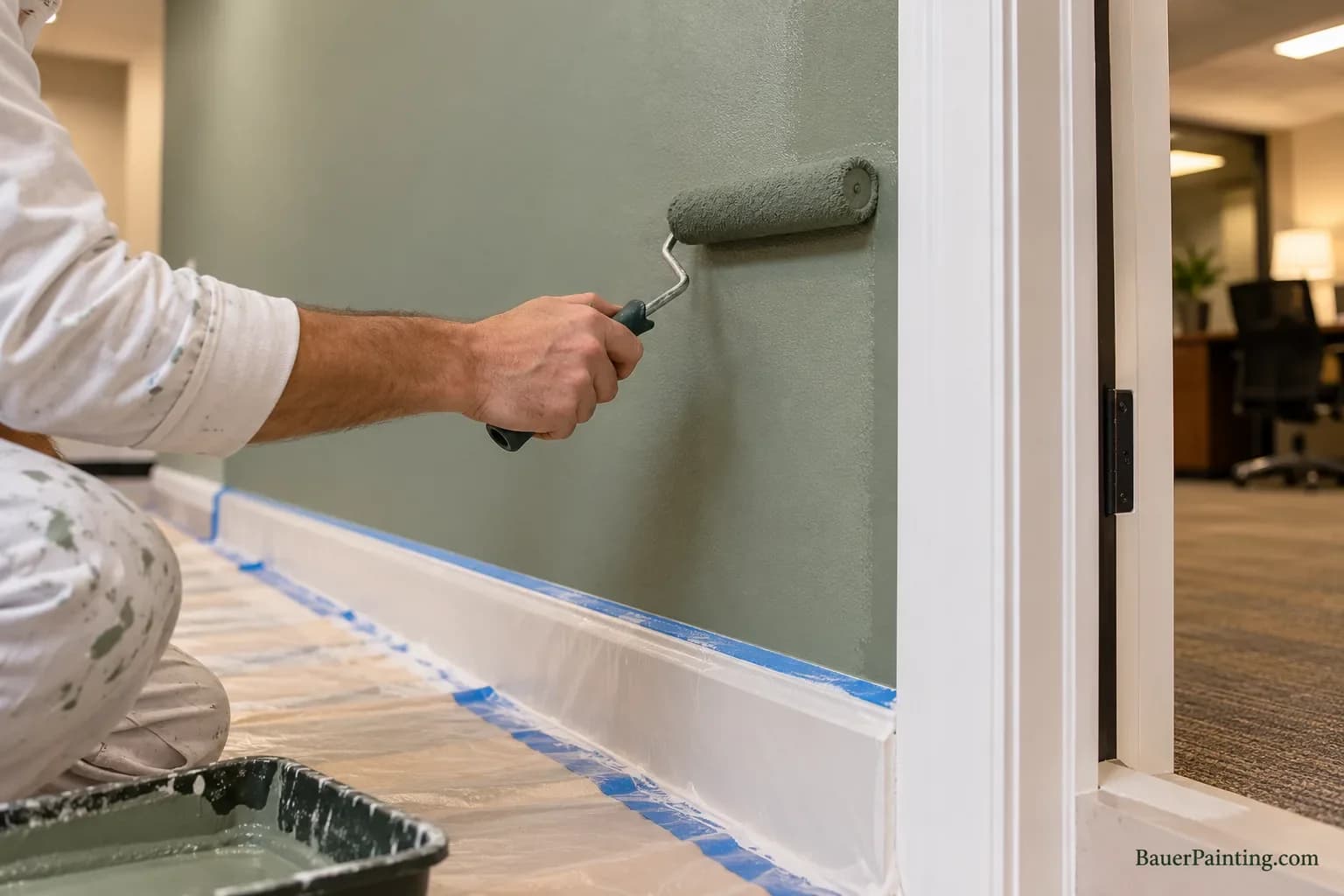
Drying, recoating, curing and reopening are different decisions
Touch-dry describes an early condition of the coating. Recoat time concerns when another coat can be applied under the specified conditions. Curing is the development of the finish’s intended properties. None of these terms should be substituted automatically for a building-specific return-to-use decision.
Obtain the current technical data sheet for the exact product, sheen and market version proposed. Record its preparation, application and drying requirements in the project plan instead of borrowing a time from another paint. Ask the contractor to provide the relevant documentation with the specification. Check that the proposed substrate, cleaning conditions and return-to-use requirements are addressed before approving the product for the office.
Temperature, humidity and airflow can affect the work window. The APCA cold-weather interior painting guide discusses environmental planning for indoor work. Check the actual room and surface conditions against the chosen coating’s instructions. Do not set a reopening commitment from a generic internet drying time; confirm the requirements for the product and space being painted.
Before handover, agree which activities can resume and which remain restricted. Moving furniture against a wall, washing the coating and normal room access are different uses. A room may need precautions against contact with the finish after some other activities resume. Put the relevant instructions in writing for the person reopening the area.
Winter planning: keep ventilation in the schedule
Winter office painting requires a plan for indoor conditions throughout preparation, application and the period afterwards. Confirm what the building systems do overnight and on weekends. Do not assume that daytime heating or ventilation arrangements continue unchanged once staff leave.
Low odour is not a substitute for following product instructions or assessing the work area. Health Canada advises professional painters to read labels and safety data sheets and continue ventilation after painting. Any ventilation arrangement should be coordinated with the responsible building contact; opening windows indiscriminately may conflict with the conditions needed for the coating or the building’s controls.
Discuss sensitive occupants or known site restrictions with management before the schedule is fixed. The aim is a workable project plan, not a promise that any particular paint makes every occupied room suitable for immediate use. Where the requirements cannot be met in the proposed window, revise the sequence or release the room for longer.
A practical phased-work plan
Use the following sequence to organise the discussion with your contractor and building contact. The site conditions and coating specification determine the duration.
Survey and define: list rooms, surfaces, existing damage, colours, products and exclusions before agreeing the work window.
Release and protect: confirm the room is available, arrange equipment responsibilities and establish the protected work zone.
Prepare and apply: complete the specified preparation and coating stages within their product and site requirements.
Review and hand over: inspect the agreed areas, confirm cleanup and access, and record any return-to-use or finish-care restrictions.
Give each phase its own acceptance point. If a room is not ready to be released, change the sequence rather than assuming the crew can work around every obstruction. Keep an accessible contact available to approve scope changes or resolve access problems during the agreed hours.
What affects an after-hours office painting quote?
The price reflects the agreed work, not simply the fact that the crew arrives at night. Relevant factors include paintable surfaces, repairs, primer, finish coats, ceiling height, access equipment, furniture protection, supervision and the number of separate visits. Include cleanup and handover arrangements when comparing scopes.
Restricted work windows can change the practical sequence. Several short visits may involve more setup than one continuous closure; a longer closure may be unsuitable for business operations. There is no universal Toronto after-hours surcharge that should be assumed for every project. Ask how the proposed schedule affects your specific quote.
Use our Toronto office-painting cost guide for the broader budgeting questions. This article focuses on scheduling decisions rather than replacing a measured assessment with a standard square-foot price. If you manage several sites, review painting services for property managers when preparing a portfolio brief.
Your office handover checklist
Confirm the agreed rooms and surfaces have been reviewed and identify any outstanding items.
Check the work zone, furniture routes and adjoining areas for the agreed cleanup and protection removal.
Record which rooms are released for use and any remaining restrictions or barriers.
Give the site contact the specified product and colour details, together with relevant finish-care instructions.
Confirm the ventilation arrangements and who is responsible for any continuing building requirements.
Agree who receives follow-up questions after the crew leaves.
A clear handover helps the office manager avoid making assumptions when staff return. If a condition has changed, such as a different room opening first or furniture arriving early, raise it with the project contact before using the freshly painted area differently from the agreed plan.
Request a scope that fits your office hours
For an after-hours office-painting enquiry, send the Toronto property address, a room and surface list, photographs, approximate dimensions and the available access windows. Include known wall damage, ceiling heights, building rules, furniture responsibilities and your preferred completion date. Identify which rooms matter most if work needs more than one phase.
Bauer Painting can discuss commercial interior painting and the practical requirements for your office assessment. Request a project quote with your building details so preparation, protection, coating selection and timing can be considered together. The useful starting point is a clear brief, followed by an agreed scope—not a blanket next-morning reopening promise.
Frequently asked questions
Can you arrange after-hours office painting in Toronto?
Bauer Painting can discuss evening, overnight or weekend access for a Toronto office assessment. Feasibility depends on the rooms, preparation, building rules and coating requirements. Send the address, photographs and available work windows so the proposed scope and sequence can be reviewed.
Can our office reopen the morning after painting?
There is no universal next-morning reopening time. The product, application conditions, ventilation and planned activities all matter. Agree the handover requirements before work starts, including any restrictions on washing walls, moving furniture or using particular rooms.
Is weekend office painting more expensive?
The effect on price is project-specific. Access restrictions, supervision, protection, repeated setup and the number of visits can change the quote. Ask for the same surfaces, preparation and coating specification when comparing a weekday schedule with an evening or weekend option.
Does low-odour paint remove the need for ventilation?
No. Lower odour does not replace product instructions, safety data sheets or the building’s ventilation arrangements. Confirm the proposed product and work method, and coordinate the conditions during and after painting with the responsible building contact.
Do desks and computers need to be removed?
It depends on the space and surfaces being painted. Agree what must be moved, what can be protected in place and who is responsible. Staff should remove sensitive information, while authorized IT personnel should handle equipment that needs disconnecting or moving.
Can office painting be split into several phases?
A room-by-room or zoned approach can be discussed when access and the building layout allow it. Each phase needs an agreed work boundary, protection, preparation and handover plan. Staff routes, storage and the next rooms to be released should be considered together.
What should we send for an after-hours office painting quote?
Provide the Toronto property address, room and surface list, photographs, approximate dimensions and preferred dates. Include available hours, wall damage, ceiling heights, furniture responsibilities and building-access rules. Identify the rooms that must return to use first if the project is phased.


Join the conversation
Have a question or a useful tip? Leave a comment for our team and readers.
Loading comments…