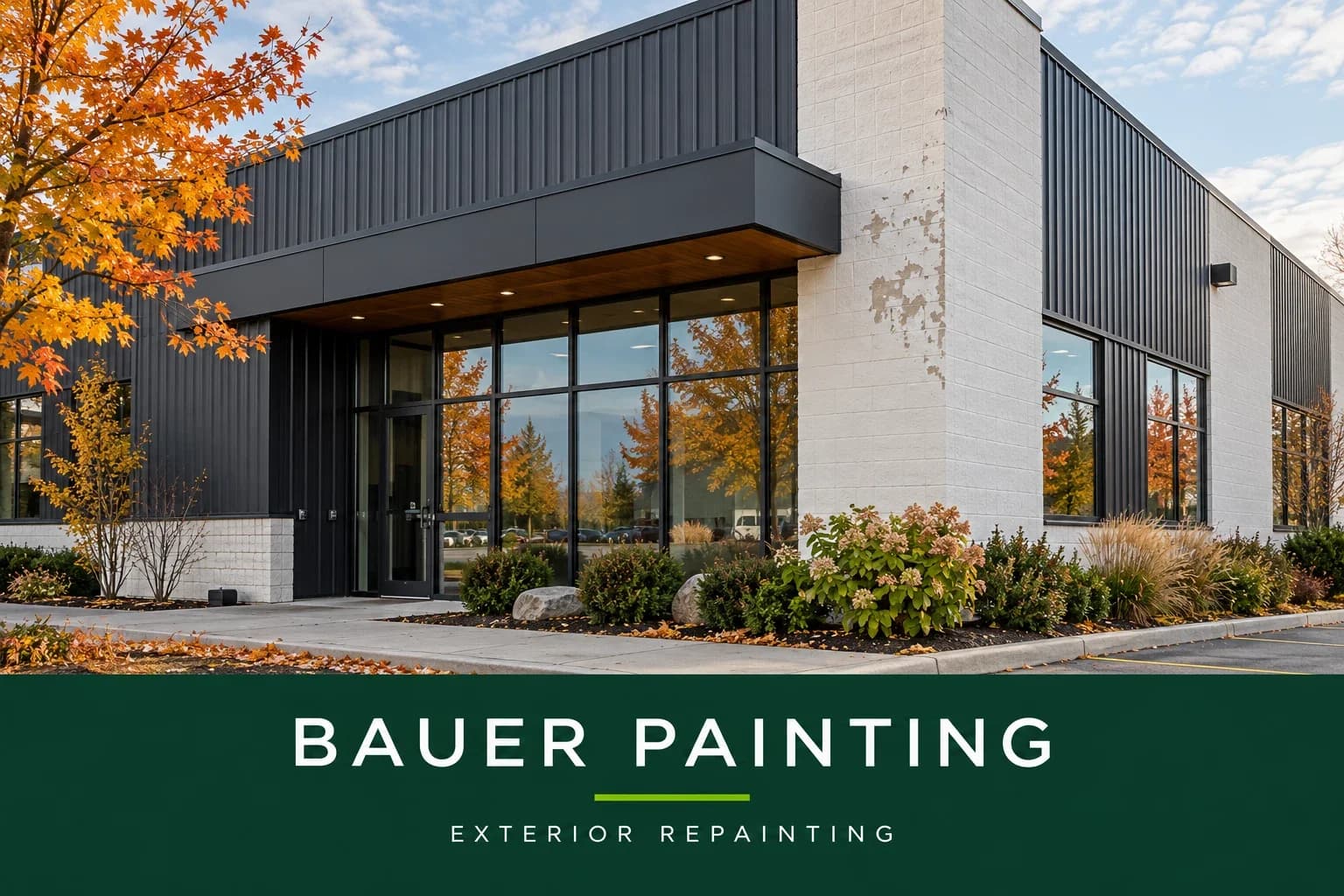
For commercial property managers in Toronto, Mississauga, Hamilton and the rest of the GTA and surrounding areas, the most useful repainting question is: what needs to change on this building, and why? A faded entrance, a rusty loading-bay frame and a sound sheltered wall can require three different decisions. Treating them as one surface can produce an incomplete quote or unnecessary work.
This guide explains how to inspect the visible condition, distinguish maintenance from coating failure, compare repair and repainting options, and prepare a practical brief for commercial exterior painting. It covers offices, warehouses, retail premises and other commercial properties. It does not assign a universal coating lifespan or replace a site assessment, product specification or building-envelope investigation.
How often should commercial exterior painting be reviewed?
Review the exterior as part of routine property maintenance, after a significant damage event, and whenever the coating changes noticeably. A repeatable condition review is more useful than assuming every surface must be repainted on the same anniversary. The appropriate repainting date depends on the material, existing system, exposure, preparation history and condition found during inspection.
Keep the original application records where available, but use them to inform the assessment rather than dictate it. An older finish can remain serviceable in one area while a newer finish fails near a persistent wet joint. Record what has changed since the previous review. The photographs, location notes and coating records then give a contractor a better starting point than a message saying the building looks old.
Check from safe, accessible positions. High-level cladding, roof edges and difficult-to-reach steel need suitable professional access rather than an improvised inspection. The Canadian Centre for Occupational Health and Safety painter overview identifies access and material hazards associated with painting work. A site-specific plan remains necessary for the actual building.
Which exterior warning signs need investigation?
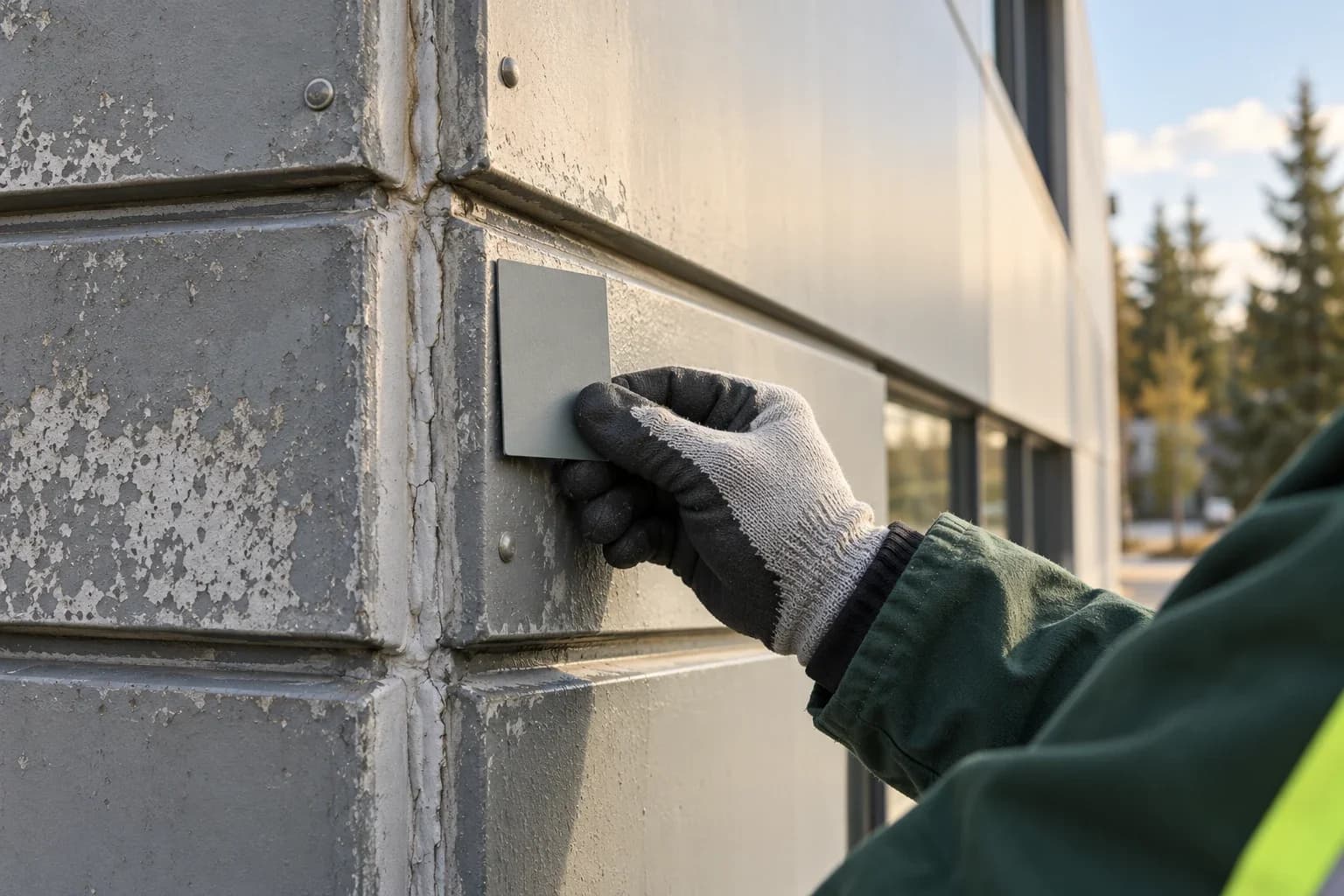
Begin with signs that the coating is losing adhesion or no longer protecting the substrate. Appearance matters, but active deterioration should guide the first discussion. Record the following separately so the assessor can distinguish a finish problem from a material or moisture problem:
Peeling or flaking: note the size, location and whether several coating layers are separating.
Exposed substrate: identify bare steel, wood, masonry or other material rather than describing every mark as a scratch.
Rust staining or corrosion: photograph edges, connections and fasteners as well as the surrounding finish.
Blisters, damp patches or repeated staining: record where and when the condition appears.
Heavy chalking: distinguish powdery residue from ordinary surface dirt.
Cracks or open joints: note whether the surrounding material appears damaged or repeatedly repaired.
Fading and uneven colour: compare exposed and sheltered areas before assuming the coating has failed everywhere.
One sign does not establish the cause. Peeling can be associated with preparation, incompatibility, moisture or other conditions, and a photograph may not distinguish them. Describe what you can observe without turning it into a diagnosis. That keeps the next step focused on assessment and avoids choosing a primer or repair method before the underlying issue is understood.
Does fading mean the whole building needs repainting?
Fading alone does not necessarily mean that every elevation needs a complete repaint. First establish whether the finish remains sound, whether cleaning changes its appearance, and whether colour variation conflicts with the owner's presentation requirements. Public entrances and signage areas may have different appearance priorities from screened service elevations.
Map the difference instead of relying on a single overall impression. Compare the same material in exposed and sheltered positions, note previous spot repairs, and review the proposed finish under the lighting in which it will be seen. A local repair may remain visible because the surrounding coating has weathered. Ask the contractor to explain the likely appearance before treating a small touch-up as a colour-matching guarantee.
What is chalking, and why does it affect repainting?
Chalking is powdery residue that develops as some exterior coatings weather. It can resemble fading or transfer to an adjacent surface. The Sherwin-Williams explanation of chalking describes the condition and the importance of removing loose residue before a suitable new coating is applied.
For a commercial repaint, ask how the proposed preparation will establish a sound surface and how readiness will be checked. A description such as wash and paint should explain the actual condition it assumes. Where cleaning reveals further coating loss or damaged material, the scope may need adjustment before the next stage. Applying additional paint does not make loose powder a reliable foundation.
Should moisture problems be repaired before exterior painting?
Yes. Suspected active moisture needs investigation before repainting the affected surface. A new finish should not be used to conceal an unresolved leak or damaged building detail. Identify the appropriate person to review the condition, define the repair, and confirm that the surface is ready for the proposed coating work.
Separate these responsibilities in the quotation. Coating preparation, replacing damaged substrate, repairing a flashing and correcting drainage are different tasks. If another trade must complete a repair first, record the dependency and leave time for reassessment. This prevents a scheduled painting visit from becoming a decision to cover material whose condition has not been resolved.
The practical readiness question is specific: which surfaces have been assessed, what was corrected, and what conditions must be met before coating? Keep photographs of the affected area before and after repair. If uncertainty remains, ask what further investigation is needed instead of assuming a stain-blocking product or extra finish coat can address the source.
How do metal siding, masonry and trim change the scope?
Different substrates require different preparation and compatible coating systems. A commercial exterior can include factory-coated metal panels, previously painted masonry, steel doors, wood trim and older spot repairs on the same elevation. The proposal should identify these surfaces separately. Their similar colour does not prove that the same existing film or primer is present.
For metal siding and gutter painting, clarify the extent of chalking, corrosion, damaged panels and fastener issues. For brick and masonry painting, discuss existing coatings, moisture and substrate condition. Where the work includes structural steel painting, separate coating preparation from any structural assessment or material repair that may be required.
Ask for the proposed product system and preparation assumptions by surface. The contractor should be able to explain what requires further assessment, where a sample area is useful and how unexpected conditions would be handled. A generic promise of commercial-grade paint does not provide enough information to compare different approaches or understand future maintenance.
When is a touch-up suitable, and when is a wider repaint better?
A touch-up is worth considering when the damage is isolated, the adjacent finish is suitable for recoating, and a visible blend is acceptable. A wider repaint may be more practical where failures are repeated, preparation affects a substantial area, or consistent appearance across an uninterrupted elevation is important. The assessment should establish which option is technically suitable before comparing prices.
Compare the full consequences of each option. Separate visits can mean repeated access equipment, protection, tenant notices and deliveries coordination. A combined project can reduce repeated setup but may involve more immediate work. Ask for clearly defined alternatives so you can compare the surfaces treated, exclusions, disruption and maintenance implications on the same basis.
Avoid presenting a partial repaint as a permanent solution to every remaining area. Record what will be retained and monitored, and make the boundaries clear on a marked photograph or elevation. This gives the next property manager a usable record of the decision instead of an assumption that the entire exterior received the same treatment.
What weather conditions matter in the GTA and surrounding areas?
The selected coating's technical information should guide surface preparation, application, recoating and curing conditions. Air temperature alone is not enough: a sunlit wall, a shaded damp elevation and an exposed metal panel can behave differently on the same day. Forecast changes, surface moisture and the available drying window belong in the project plan.
Assess surface dryness, current weather and the proposed coating’s application requirements before planning exterior preparation or painting. A commercial specification should identify the actual substrate, primer and finish system, with preparation and drying conditions stated for that combination. A limit quoted for one coating should not be transferred to another. Confirm the current instructions for each product included in the written scope.
Include a weather contingency and an agreed communication route for rescheduling. If the priority entrance cannot be worked on, ask whether another suitable area can proceed. This is particularly important where retail hours, customer routes or warehouse deliveries restrict the available window. An opening date does not remove the coating's application requirements.

Can a business stay open during exterior repainting?
Some exterior projects can be phased around an operating business, but continued opening depends on the surfaces, access method, protection and site controls. Identify public entrances, delivery routes, windows, air intakes, parked vehicles and areas used by other tenants. Discuss any temporary closures rather than assuming every route can remain available throughout the work.
A useful plan shows who releases each work zone and who can approve changes. Let the contractor know about security restrictions and delivery peaks before equipment is booked. For a broader discussion of protection and stage handover, see our guide to painting occupied commercial buildings. Exterior work needs the same clarity about responsibilities as interior work, with additional exposure and access considerations.
For properties in Toronto, Mississauga or Hamilton, provide the actual address and operating constraints when enquiring. A city name establishes location; it does not describe loading access, tenant arrangements or the condition of a particular facade. Those details need to come from the site.
What should an exterior painting quote include?
Ask for a written scope that allows the owner and contractor to identify the same surfaces. It should make preparation, proposed systems, access, protection and exclusions understandable. Where a quantity or condition is uncertain, agree how it will be assessed and how additional work would be approved. This is more useful than comparing totals attached to different assumptions.
Building address, site contact and the elevations or areas included.
Surface types, approximate quantities and condition photographs.
Preparation work, repair allowances and work excluded for other trades.
Proposed primer and finish systems, colour approval and sample-area requirements.
Access equipment, protection, deliveries coordination and work windows.
Weather dependencies, expected stages and agreed communication.
Completion checks, product records and maintenance information to be handed over.
Painting cost depends on the defined work, not just the property's floor area. High walls, difficult access, extensive preparation and several different materials can change the scope substantially. Request a site-specific proposal rather than adopting a price from an unrelated building. Review our commercial painting process to prepare the questions you want answered during the assessment.
What records should you keep after the repaint?
Retain the approved product names, colour references, sheen, areas painted and relevant maintenance directions. Record any retained surfaces, exclusions or follow-up items. Take completion photographs from the same positions used for the condition review. A later comparison is easier when the record shows both the detail and its position on the building.
Keep responsibilities clear after handover. The property team needs to know who will review new damage, arrange cleaning and investigate recurring moisture. When work is staged across several elevations, record the date and system for each stage. These details support a more accurate next assessment and prevent future repairs from being specified solely from a remembered colour name.
Plan your next commercial exterior painting assessment
Start with the condition information you already have: building location, surface list, wide and close photographs, known moisture or corrosion issues, and the work windows available. You do not need to diagnose every defect before asking for help. The goal is to give the assessor enough context to identify the next checks and prepare a defined proposal.
Contact Bauer Painting to discuss the exterior surfaces and operational priorities for your commercial property. Learn about the Bauer Painting team and use our service locations to review the published coverage. A useful repainting decision connects coating condition, preparation, access and maintenance to the actual building, rather than choosing a date without examining the work.
Frequently asked questions
How often should a commercial building exterior be repainted in Ontario?
There is no single interval that suits every Ontario commercial building. Review the condition of the coating and substrate, exposure, previous preparation and maintenance records. Use those findings to decide whether cleaning, local repairs, a staged repaint or a wider project is appropriate.
What are the main signs that a commercial exterior needs attention?
Peeling, exposed substrate, corrosion, heavy chalking, blisters and recurring dampness deserve assessment. Fading may be primarily an appearance concern. Record where each sign occurs and investigate the cause before selecting a preparation method or coating system.
Can you paint over peeling exterior paint?
A new coating needs a suitable, sound base. Loose material and the cause of the failure must be assessed before recoating. Preparation, compatible products and any necessary moisture or substrate repairs should be defined in the project scope.
Does a faded commercial facade need a full repaint?
Not always. Check whether the coating remains sound and whether cleaning changes its appearance. Local work may suit isolated issues, while a full elevation may be preferred for consistent colour and sheen. Ask how a repair will blend with the weathered surrounding finish.
Should moisture damage be repaired before exterior painting?
Suspected active moisture should be investigated before coating the affected surface. Identify the repair responsibility and confirm readiness for painting. A fresh finish cannot be relied on to correct an unresolved leak, failed building detail or damaged substrate.
When is the best time for commercial exterior painting in the GTA and surrounding areas?
Choose a work window that meets the selected product requirements for surface condition, application, recoating and curing. Check weather, surface temperature and moisture rather than relying on the month alone. Include a contingency for unsuitable conditions and coordinate the work with building operations.
Can a business remain open during exterior painting?
That depends on the surfaces, access method, protection and site controls. Entrances, deliveries, air intakes, parked vehicles and shared routes need consideration. A phased plan may support continued operation, but any required restrictions or closures should be agreed before work starts.
What affects the cost of commercial exterior repainting?
Surface area, material, coating condition, preparation, access equipment, protection, product system and working restrictions all affect the scope. Building floor area alone does not describe the painted surfaces. Request a site-specific quotation with inclusions, exclusions and allowances clearly identified.
Do metal siding and brick need the same preparation?
No. Identify each substrate and the existing finish before choosing a system. Metal corrosion, factory coatings, masonry moisture and older repairs can require different assessment and preparation. Ask for the proposed approach by surface rather than assuming one primer and finish suits the entire building.
What should I send Bauer Painting for an exterior assessment?
Send the actual address, wide and close photographs, surfaces involved, known moisture or corrosion issues and available work windows. Include previous coating records, access restrictions and other repairs that must happen first. This helps define the assessment and the next quotation steps.
Join the conversation
Have a question or a useful tip? Leave a comment for our team and readers.
Loading comments…