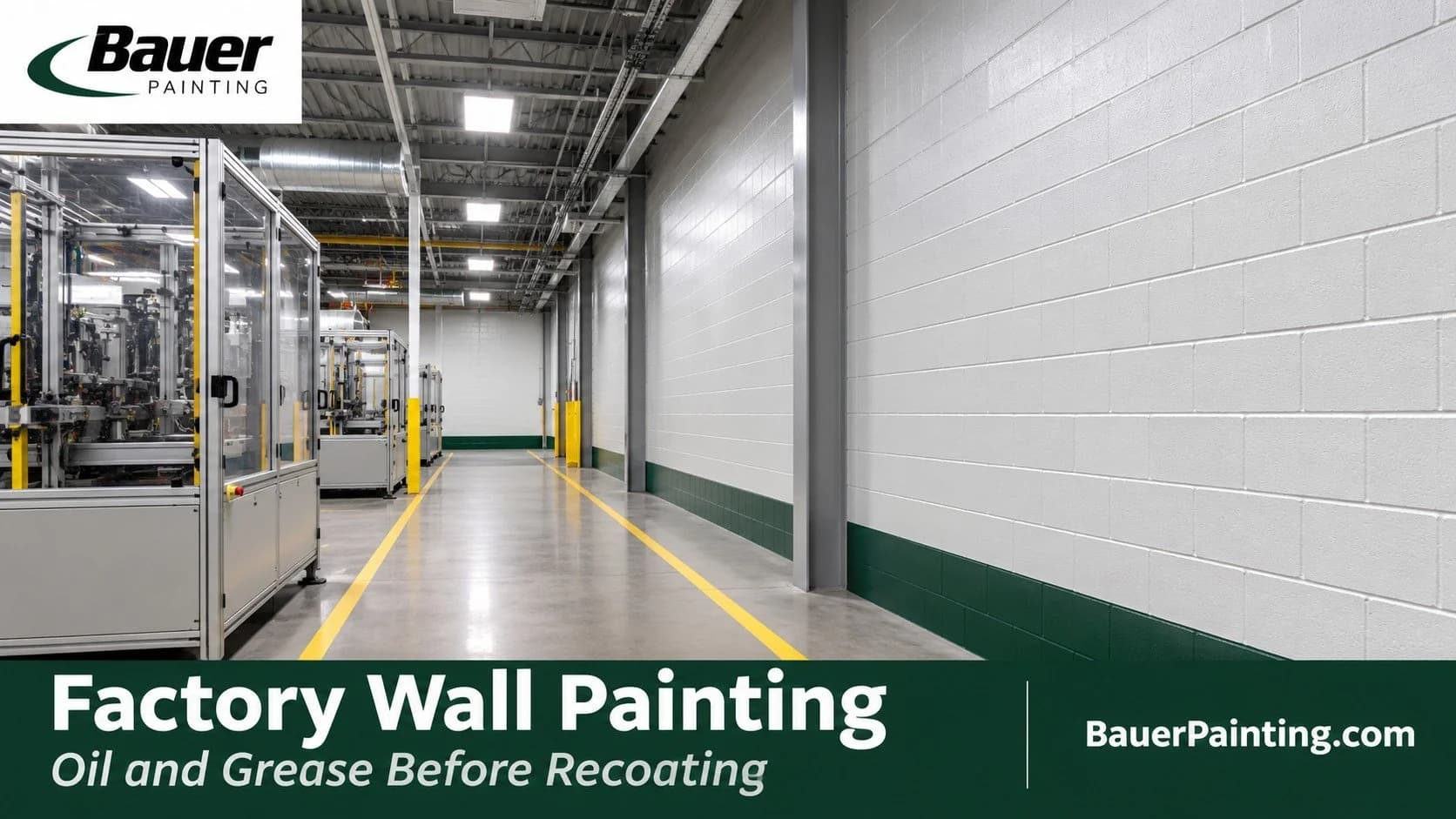
An oily-looking factory wall needs assessment before a repaint is specified. Identify the wall material, existing coating and likely deposit source, then establish suitable preparation and how the cleaned surface will be accepted. A stronger topcoat is not a substitute for resolving contamination or an ongoing source of deposits.
At Bauer Painting, our factory interior painting service starts with the surfaces and conditions in the proposed work area. For a Brampton manufacturing facility, the coating discussion should account for what the wall is exposed to rather than treating every production area alike.
This guide explains the information that helps an assessment. It is not a chemical-cleaning recipe or a method for working on machinery. The objective is a clear, substrate-specific painting proposal supported by the facility’s own information.
Identify the Wall Material and the Residue Source
A factory can contain coated concrete block, metal panels, drywall partitions and other wall systems. They do not necessarily respond to the same preparation or coating approach.
Identify each surface separately. If the material is uncertain, record that uncertainty rather than selecting a cleaning method from its appearance.
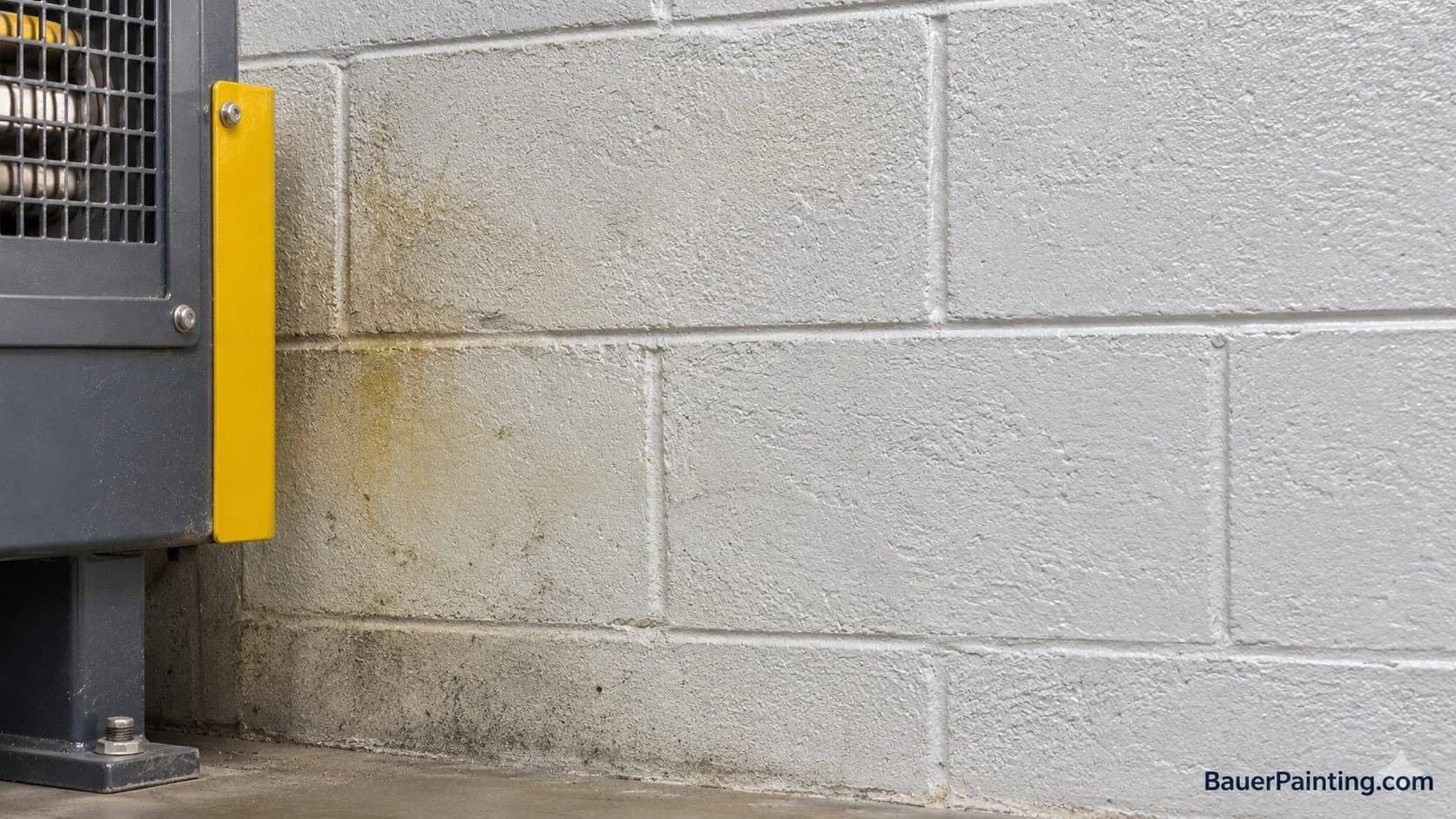
Then describe the deposit and its location:
Is it concentrated near one process or distributed across the area?
Is there a known fluid, product or maintenance activity nearby?
Has the same deposit returned after previous cleaning?
Does the current coating appear intact or visibly damaged?
Are earlier preparation or coating records available?
These observations guide the enquiry. They do not establish the residue’s composition or prove that a particular product caused it.
Ask the production or maintenance contact for relevant process information. A painting contractor should not have to identify an unknown industrial substance from a close-up photograph.
Use Available Chemical Information
Where a known product may be involved, provide its correct identity and relevant safety information to the responsible team. Avoid informal descriptions such as general machine oil if several different fluids are used nearby.
CCOHS explains that metalworking fluids include a range of oils and other liquids. That variety is one reason not to assume all process-related residues need the same response.
The CCOHS resource is background on those fluids, not a wall-cleaning specification. Cleaning selection and controls must reflect the actual material, site conditions and responsible assessment.
Record What Is Known and What Is Suspected
Separate confirmed information from observations. A maintenance log identifying a particular leak is different from a guess based on the stain’s colour.
For each affected area, record the evidence available and the person who can resolve the remaining question. This avoids turning an initial assumption into an instruction carried through the whole project.
If specialist assessment is needed, identify it before final coating approval. Unresolved substance identification should not disappear simply because a repaint date has been proposed.
Distinguish Surface Deposits from Coating Failure
A dark or uneven area may involve contamination, damaged paint or both. The appropriate work depends on what is present and how securely the existing coating is attached.
Ask the assessment to distinguish:
Material sitting on the existing coating.
A surface altered by repeated cleaning or contact.
Loose, peeling or otherwise unsuitable coating.
Damage to the substrate beneath the finish.
Staining connected to an unresolved building or process issue.
Do not assume that removing a visible deposit makes the old paint ready for recoating. Equally, a colour difference alone does not establish that all existing paint must be removed.
The proposal should explain what remains sound, what needs treatment and what still needs investigation. That is more useful than a generic instruction to degrease everything.
Avoid Diagnosing Adhesion from Photographs
Photos can locate the issue and show its extent. They cannot establish every property of the existing surface, the identity of a deposit or the compatibility of a new coating.
Include safe wide views and closer images, but allow for assessment where the condition cannot be confirmed remotely. Do not touch, scrape or sample unknown deposits simply to improve the enquiry.
A limited trial or testing requirement may be proposed by the appropriate technical contact. Its method and interpretation should be agreed rather than improvised by the facility team.
Why Preparation Must Suit the Substrate
Industrial preparation references are specific to their intended materials and outcomes. A method used on steel should not automatically be applied to coated block, drywall or insulation.
AMPP’s surface preparation standards summary describes several steel preparation methods and their purposes, including removal of visible oil and grease. It demonstrates why the substrate and required result belong in the specification.
Use that information to ask better questions, not to prescribe one standard across every factory wall. The actual coating manufacturer’s requirements and the assessed surface condition still need to inform the proposed system.
Coated Block and Other Masonry Surfaces
For a coated block wall, the condition of the old coating and the underlying surface both matter. Preparation should account for what is being cleaned, what can remain and what the new system requires.
Ask how repairs, contamination and any relevant moisture concerns will be addressed. Do not assume a metal-cleaning instruction establishes a suitable treatment for masonry.
Where the wall condition remains uncertain, identify the assessment needed before selecting a primer or finish. The presence of a familiar wall colour is not evidence that its existing coating is compatible with the proposed replacement.
Metal Panels and Existing Industrial Coatings
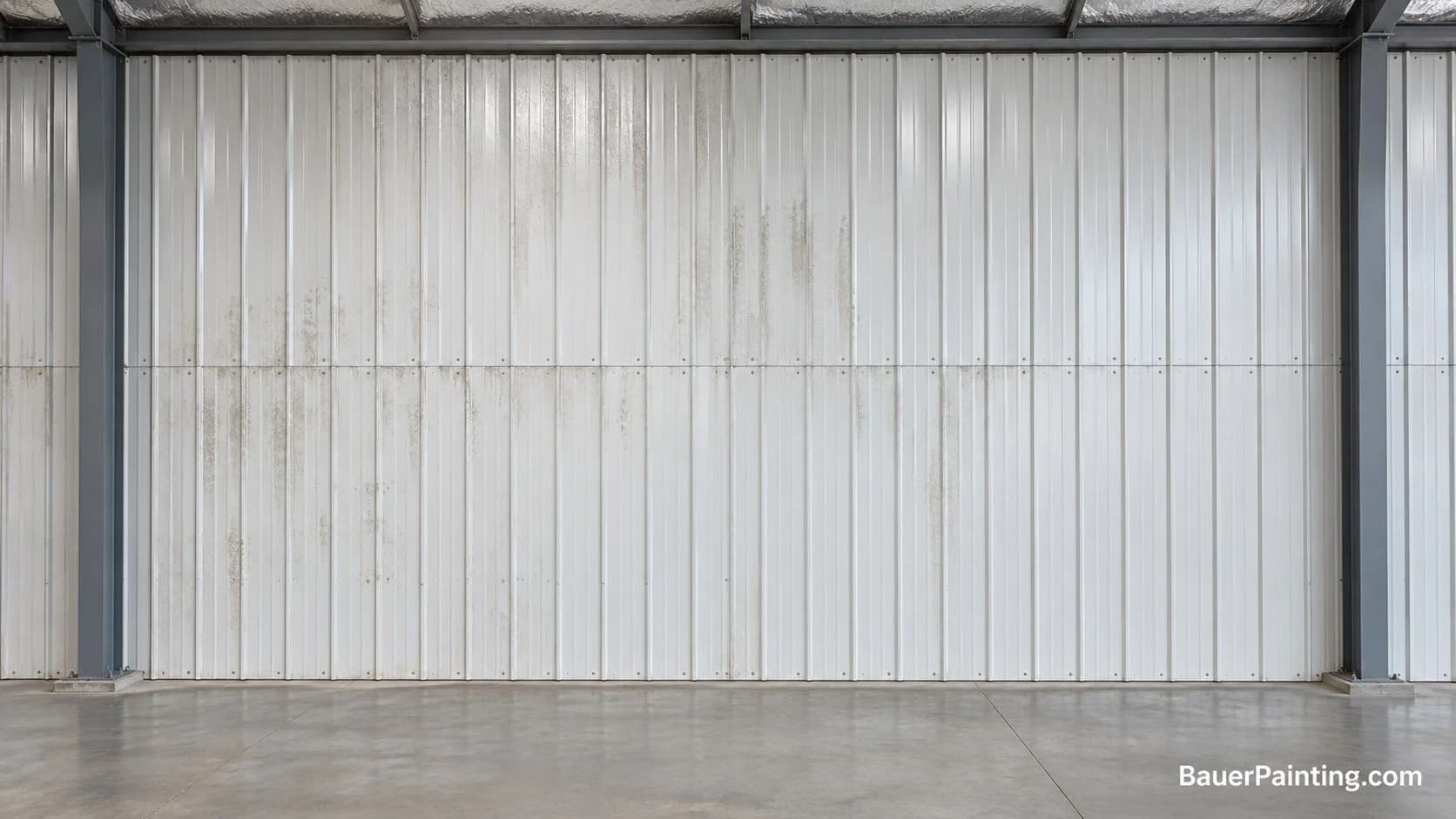
Metal wall panels may have a factory-applied finish or a later site coating. Obtain available product and maintenance records rather than assuming the exposed surface is bare steel.
Discuss compatibility, attachment and any visible corrosion separately from the deposit itself. Cleaning and coating removal are different tasks, even when both are needed in one area.
The quote should describe the intended preparation outcome. It should not rely on the label industrial paint as a complete explanation of the proposed system.
Resolve Continuing Contamination Before Coating Approval
If deposits keep returning, establish whether a process or maintenance issue remains active. A repaint cannot be expected to correct an ongoing source that belongs to another part of the facility operation.
The responsible team may need to review the source, its controls and the expected future exposure. That is separate from the painting contractor’s decorative or protective coating work.
Record whether the source has been resolved, remains under investigation or represents an expected operating condition. The proposed coating discussion needs that distinction.
Avoid assuming a particular coating will tolerate unspecified chemicals or cleaning routines. State the actual expected exposure and obtain relevant product guidance before treating a system as suitable.
Keep the Wall Scope Separate from Machinery Work
An enquiry about walls near a production line should not imply that machinery cleaning, maintenance or isolation is included. Identify the equipment contact and the boundaries of the painting work.
This article does not provide instructions for stopping or servicing machines. Such arrangements belong with the facility’s responsible personnel and applicable procedures.
Where machinery limits access to a wall, describe that constraint. It may affect assessment, preparation or the agreed work boundary without turning the repaint into an equipment-refinishing project.
Record Cleaning and Coating Acceptance Requirements
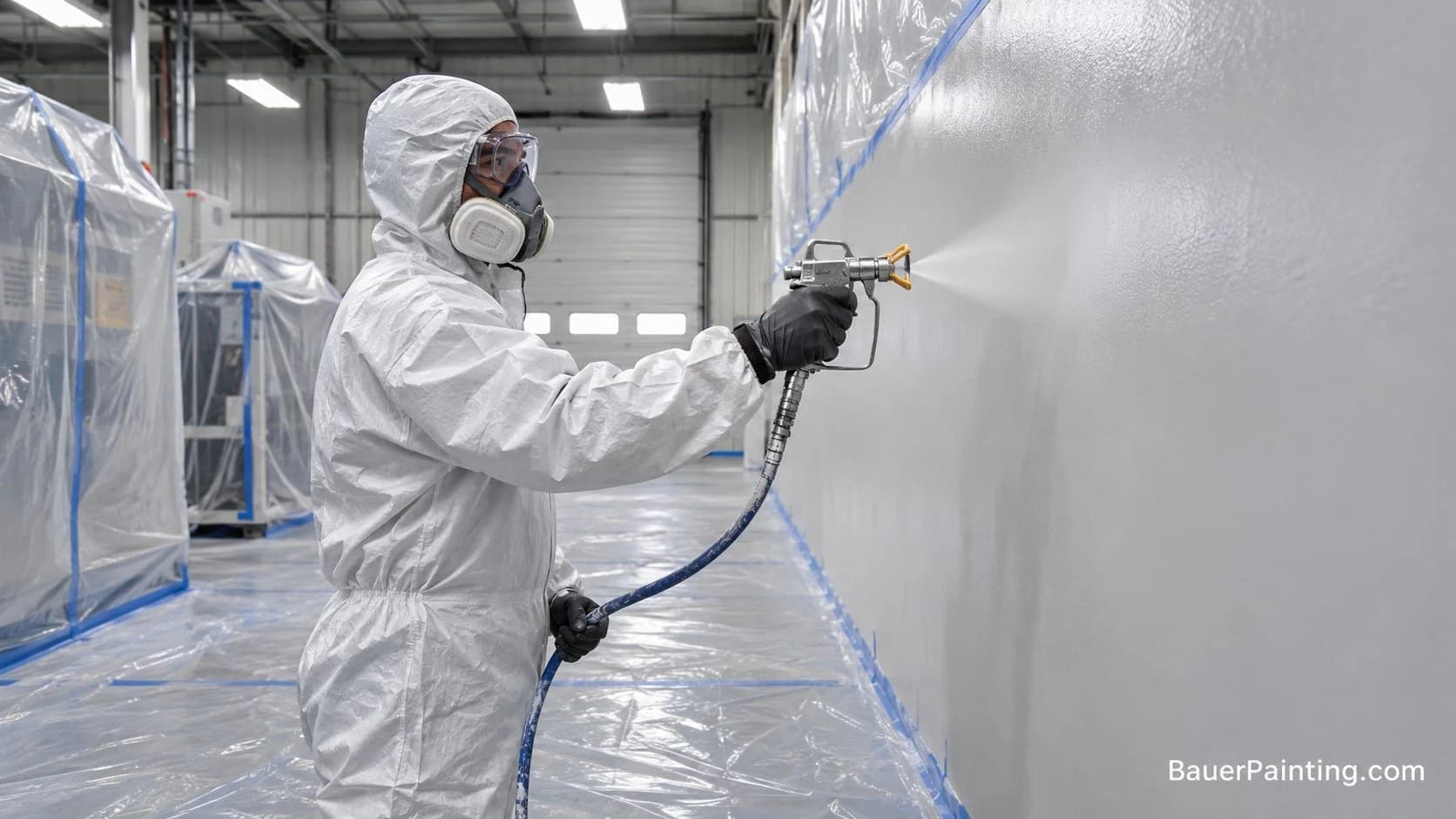
Agree how the prepared wall will be reviewed before coating proceeds. A surface that looks different after cleaning is not automatically accepted for every coating system.
The responsible proposal should identify the required condition, relevant checks and any product-specific requirements. Avoid inventing a universal test or acceptance threshold for all facilities.
A contamination assessment record can use these fields:
Location: Wall or production-area reference.
Substrate: Confirmed material and current coating information.
Observed condition: Deposit, loose coating or another visible concern.
Source information: Known product or process, plus unresolved questions.
Proposed preparation: The assessed work and any trial requirements.
Acceptance: Who reviews the prepared surface and against what requirements.
Coating decision: Proposed system, limitations and outstanding approvals.
Keep this record tied to actual locations. One assessment should not silently become approval for different wall materials elsewhere in the building.
Compare Proposals on Preparation, Not Only the Topcoat
Two quotations may name similar finish products while allowing for different preparation. Review the work preceding application before treating the prices as directly comparable.
Clarify the extent of cleaning, treatment of unsuitable existing coating, repairs, protection and any unresolved work. Identify exclusions rather than assuming a lower price covers the same starting condition.
Likewise, a more expensive product does not explain how the wall will be made ready. The preparation and coating need to form one coherent proposal for the assessed area.
Discuss Your Brampton Factory Walls with Bauer Painting
Send the address, wall locations, photographs and available coating records with your enquiry. Identify known products or processes associated with deposits and explain whether the source has been addressed.
Mention any earlier cleaning or repainting attempts and what happened afterwards. Accurate history is more useful than a promise that the next coating simply needs to be stronger.
Our Brampton commercial painting page provides local service information. For the proposed wall work, review our factory interior painting service and share the conditions you need Bauer Painting to assess.
Broader operational arrangements are covered in our guide to painting occupied buildings. The starting point here is a sound preparation brief built around the wall material and actual contamination.
Frequently asked questions
Can a New Coating Simply Cover an Oily Factory Wall?
Do not assume so. Identify the deposit, substrate and existing coating, then establish suitable preparation before application. Covering a visible mark does not demonstrate that the wall is ready or that the source of contamination has been resolved.
Is Steel Preparation Guidance Suitable for Concrete Block?
Not automatically. Preparation guidance has a defined substrate and purpose. A method or standard for steel should not be presented as a universal instruction for block or other walls. Match the assessment and product requirements to the actual surface.
What If Deposits Return After the Wall Is Cleaned?
Ask the responsible facility team to investigate the continuing source or exposure. Repainting alone does not resolve an active process or maintenance problem. Record what is known before approving a coating system or assuming a repeat cleaning will be sufficient.
Does a Stronger Coating Remove the Need for Preparation?
No. The wall still needs the condition required by the selected system. Product performance claims do not establish compatibility with unknown residue or unsuitable existing paint. Review preparation, expected exposure and coating requirements together rather than choosing only a tougher-sounding finish.
What Factory Information Should We Supply to Bauer Painting?
Provide wall references, photographs, substrate and coating records, known residue information and relevant process history. Explain previous cleaning attempts and unresolved source questions. These details support a preparation assessment; they do not replace closer inspection where the condition remains uncertain.


Join the conversation
Have a question or a useful tip? Leave a comment for our team and readers.
Loading comments…