
A useful painting record connects an actual building surface with the work completed on it. It identifies the area, the coating and colour, the date, and the evidence behind those details. Across several properties, that record gives the next maintenance decision a clearer starting point than a folder of unidentified colour names.
At Bauer Painting, our painting service for property managers supports building-specific scopes. For Oakville portfolios, we recommend keeping a simple paint register that distinguishes confirmed information from assumptions. The aim is a record someone else can understand after staff, tenants or contractors change.
This article explains how to organise that register, update it and hand it over. It is a practical management recommendation, not a prescribed legal template or a promise that future repairs will match invisibly.
Give Every Building and Area a Stable Reference
Start with the location of the painted surface. “Lobby white” is not enough if several buildings have lobbies, or if one lobby has walls, columns, doors and trim in different finishes. Use the property’s existing naming system where possible rather than inventing competing room references.
A record should let someone find the surface without asking the original project coordinator. Include the building identifier, floor or level, area and surface. For a long corridor, a junction or other stable boundary can help define where one finish ends and another begins.
Keep those references consistent across the scope, photographs and completion information. If the proposal calls an area “north entrance”, avoid recording it later as “main lobby” unless the relationship is clear. Similar names can conceal separate surfaces or create duplicate entries.
For several managed properties, use one field structure but retain individual building records. That allows the portfolio team to compare information without treating every building as if it has the same coating history or condition.
Useful location fields include:
Property identifier and address reference.
Floor, room or common-area reference.
Surface type, such as wall, ceiling or metal frame.
Start and end boundaries where needed.
A photograph reference that shows the location clearly.
Use only the information the maintenance team needs. Keep tenant names, access codes and other private operational details in their appropriate controlled systems rather than adding them to a general paint register.
Record the Coating System, Not Just the Colour
A colour name is one part of the record. It does not identify the coating product, sheen, preparation or surface beneath it. Two areas recorded under the same colour may still need different maintenance decisions because the materials and work history differ.
Capture the product information supplied for the completed work. Where applicable, keep the primer and finish references separate. Retain the colour code or approved reference alongside the product identity rather than relying on a photograph of the room.
Record sheen as its own field. The Canadian Coatings Association’s paint finishes guide explains sheen in terms of reflected light. For a maintenance record, that is a reason to identify the finish as well as its colour. It does not mean a sheen name alone establishes a product’s suitability.
Keep relevant technical and care documents with the entry. A clear link to the file is more useful than a note saying “instructions supplied”. Include the date of the work and any agreed limits, such as a wall repainted only between two defined junctions.
Separate Verified Details from Unconfirmed Information
Older properties may have incomplete records. Keep reliable information without making the gaps look resolved. An invoice naming a product is different from an informal note saying a previous manager remembers using something similar.
Use a confirmation field and identify the evidence. “Unknown” is useful information when it prevents someone ordering a supposed match on the strength of an assumption. Do not automatically assign a new product reference to older areas that were not included in the work.
The record is a maintenance aid, not a guarantee about the condition of concealed layers. If later assessment reveals a different surface or previous repair, update the entry and preserve the earlier reference so the change can be understood.
Keep Portfolio Standards Separate from Site Exceptions
A portfolio may use a preferred palette or a standard finish schedule. Record that standard separately from the actual work at each building. A preferred colour is an instruction for consideration; it is not evidence that every existing wall has already been painted that colour.
Create a clear distinction between the current portfolio preference and the confirmed finish at a location. This matters when a standard changes, a property is added, or only part of a building has been refreshed. Without that distinction, the newest standard can overwrite the building’s real history.
Document approved exceptions in the same structure as standard work. Identify the affected surface and the reason recorded by the project team, where available. Do not use an exception field to invent technical justification that was never assessed.
For example, the record can state that a particular metal frame has a separate product reference from the adjacent wall. It does not need to claim that either material is superior. The useful fact is that later maintenance should not treat the two surfaces as one item.
When requesting work across multiple properties, provide the relevant current records for each site. The painting scope still needs to reflect actual condition. A portfolio template can organise the information, but it cannot replace building-specific assessment.
Our commercial paint finishes guide covers general selection considerations. Keep the register focused on what was specified and completed rather than turning it into another product selection manual.
Update the Register After Repairs and Repaints
A register loses value when it records the original work but misses later changes. Make updating it part of closing each painting task, including smaller repairs that alter a surface’s coating history. Identify who receives the completion information and who enters the change.
Do not overwrite an entire room entry when only one wall has been repainted. Record the actual limits of the new work. A note that distinguishes a repaired section from the surrounding older finish can prevent confusion during the next assessment.
Keep the previous entry accessible. A simple dated change log can show what changed, which area it affected and where the supporting information is stored. Use a clear current status so staff are not left comparing several files with no indication of which one applies.
The update should answer four practical questions:
Which surface was changed?
What work and coating information were confirmed?
When was the work completed?
Where is the supporting record?
If a repair exposes a previously unknown condition, record the finding separately from the decorative work. The register should not suggest that painting resolved a building issue unless the relevant work and outcome have actually been confirmed.
Do not set a building-wide repaint date simply because a register has a date column. Condition, use and the agreed scope still guide maintenance decisions. The date helps establish history; it does not determine the same service interval for every surface.
Build a Register the Next Manager Can Use
Use a format the organisation can maintain. A spreadsheet may suit a small portfolio; an existing maintenance platform may already provide the right home. Adding another system is less useful than keeping a familiar record accurate and accessible to the appropriate team.
The following fields provide a starting structure. Leave unconfirmed fields open rather than completing them with estimates that look authoritative.
Register field | What it establishes |
|---|---|
Property and area ID | Where the surface can be found |
Surface and substrate | What was assessed or recorded |
Product or system reference | Confirmed primer and finish details where available |
Colour and sheen | Approved reference for the recorded work |
Completion date and limits | When and where the work took place |
Evidence reference | Location of documents and photographs |
Confirmation status | Verified details and remaining unknowns |
Later changes | Dated repairs or repaints affecting the entry |
Record owner | Person or role responsible for updates |
Keep filenames and links understandable. A document labelled only “final revised new” makes handover harder. Use a stable project or area reference and a date that the team can interpret consistently.
Before a manager handover, check a small selection of entries against their supporting files. Can the incoming person locate the surface and find the product reference? Are the links available under the organisation’s normal access arrangements? Resolve broken references while the outgoing team can still explain them.
Use the Records to Prepare an Oakville Painting Enquiry
For commercial painting in Oakville, send the entries relevant to the proposed areas rather than the entire portfolio archive. Add current photographs and identify the condition prompting the enquiry. Older records help describe history; current assessment establishes what the new work needs.
We can review the proposed painting areas, known finish information and site requirements. Flag any missing records early so the scope does not rely on a supposed product match or an assumed preparation method.
For condominium shared spaces, our multi-unit and common-area painting service explains the areas we can assess. Keep individual suites, common areas and exterior work identified separately in both the enquiry and the register.
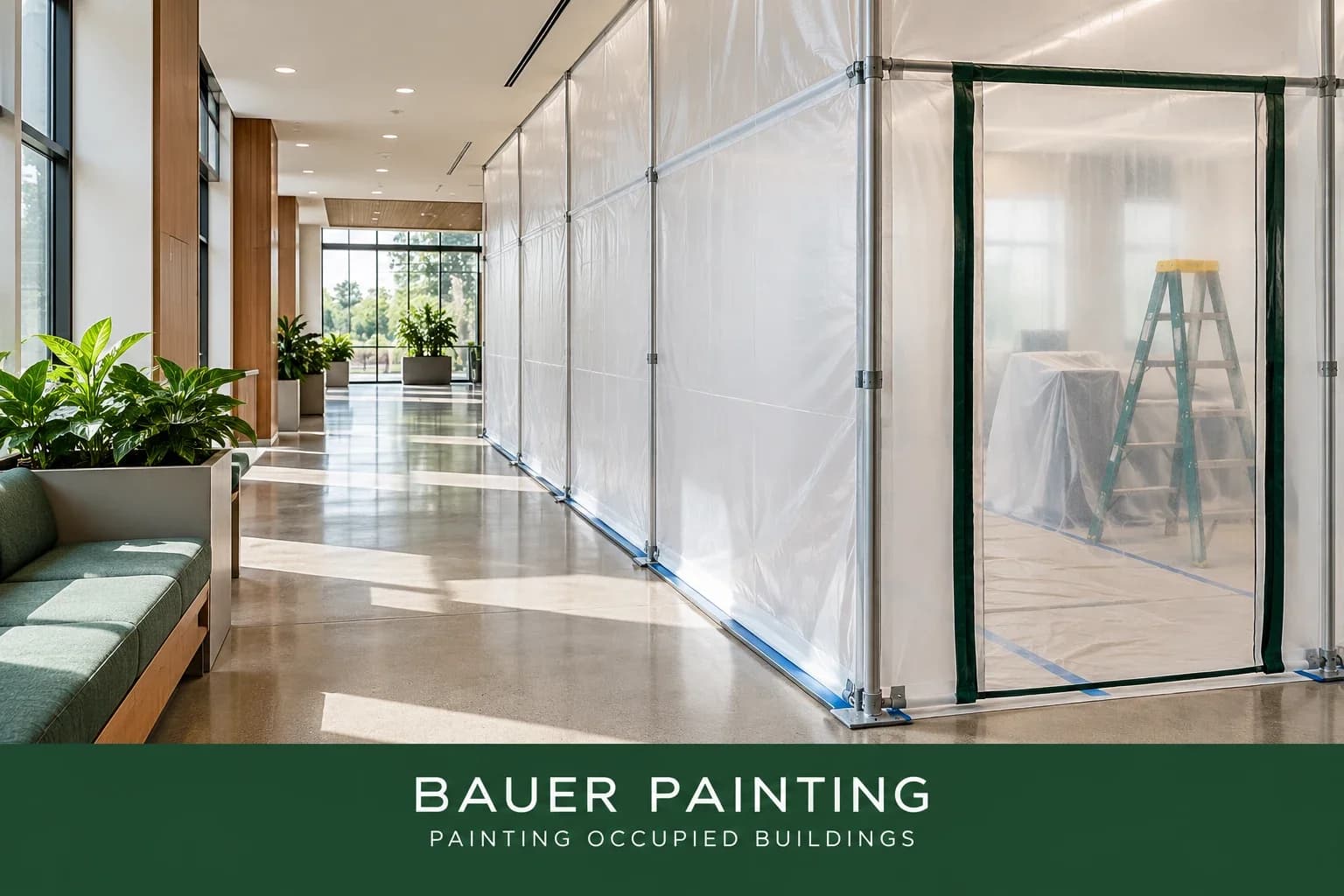
If the building remains occupied, link the painting record to the separate project arrangements rather than filling it with access instructions. Our occupied-building painting guide addresses that planning. The finish register should remain a clear account of the surfaces and work.
Contact Bauer Painting with the property details and priority areas. A concise, accurate record helps the discussion start with the right building and finish information, while leaving room for the site review the proposed work requires.
Frequently asked questions
Is a colour name enough for a building’s painting record?
No. Keep the colour reference alongside the product, sheen, surface, date and completed work limits where available. The same colour name does not identify every coating detail. Supporting documents make the record more useful than a room photograph or an isolated colour note.
How should we record an unknown existing coating?
Mark it as unknown and retain any reliable evidence separately. Distinguish confirmed product information from recollections or assumptions. Later assessment may add useful detail, but the register should not present a guessed product as an established match or use it to order materials automatically.
Can a portfolio standard replace individual building records?
No. A standard records the organisation’s current preference; a building record describes what is known at a particular surface. Keep approved exceptions and partial updates visible. Changing the standard does not mean every building has already been repainted to it.
When should a paint register be updated?
Update it when completed repairs or repainting change the recorded surface information. Include the actual work limits, supporting reference and date. Assign responsibility for the update as part of closing the task, so smaller maintenance changes are not lost between larger painting projects.
What should an incoming property manager receive?
Provide the current register, its naming conventions, supporting documents and a clear list of unknowns or open updates. Confirm how the records can be accessed and who maintains them. A usable handover should let the next manager find an area and understand the evidence behind its entry.


Join the conversation
Have a question or a useful tip? Leave a comment for our team and readers.
Loading comments…