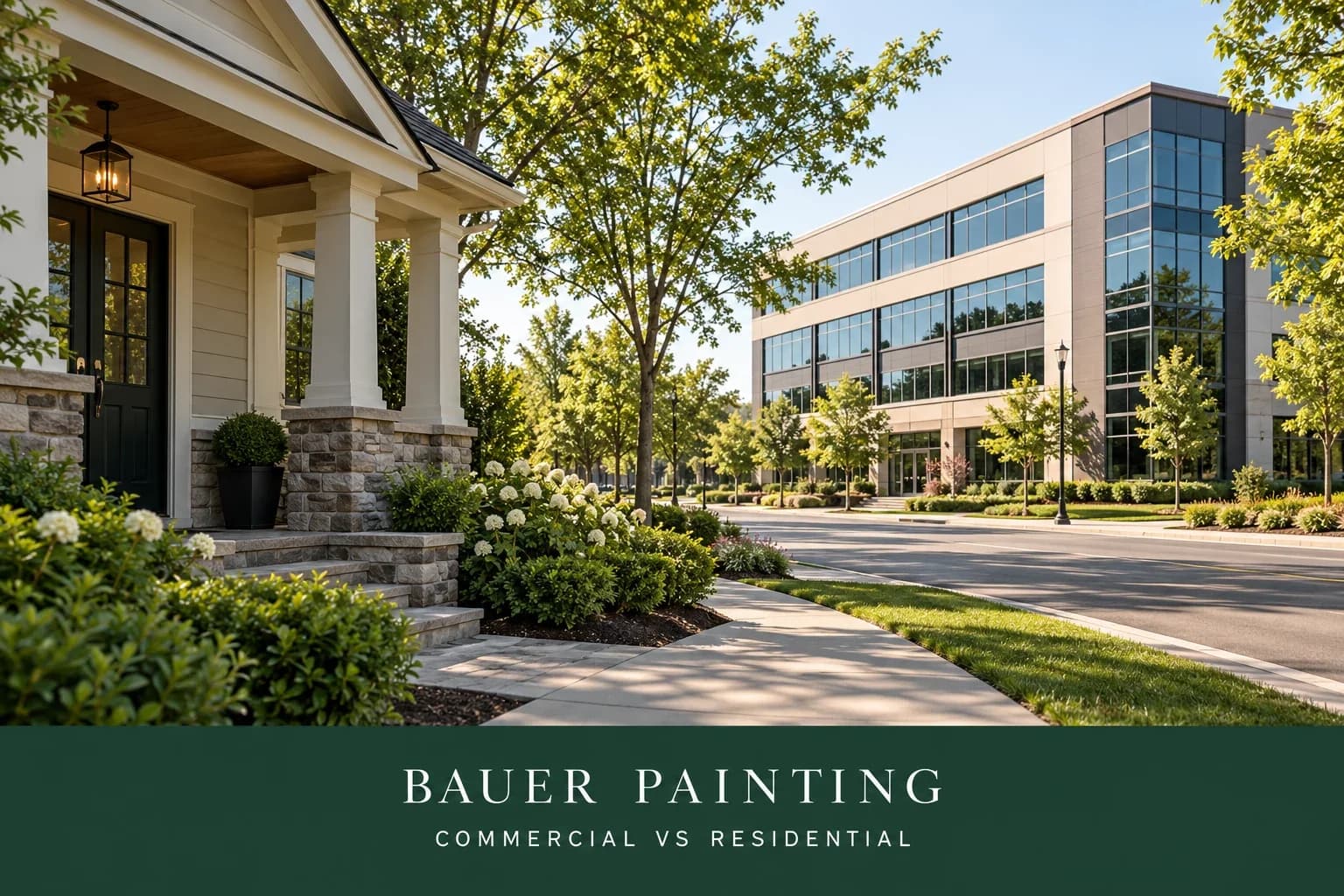
A small commercial office can require more coordination than a larger empty space. A mixed-use property can contain private dwellings, commercial units and shared areas with different decision-makers. Labels help describe the property, but they do not establish the correct coating system, project price or work sequence on their own.
This guide explains the distinctions that matter to Ontario property managers comparing painting proposals. Bauer Painting's published services focus on commercial interior painting, commercial exterior painting and related work. The comparison helps define a commercial brief; it should not be read as an offer of detached-home painting or a promise that every project in either category follows the same rules.
What is the main difference between commercial and residential painting?
The main difference is the property's use and the requirements that follow from it. Commercial work may involve operating businesses, public access, shared building systems, tenant arrangements or formal procurement. Residential work may involve a different approval group and occupancy pattern. Neither category automatically establishes scale, technical difficulty or product quality.
Begin with what happens in the area being painted. Identify who uses it, what contacts the surfaces and which activities must continue. Then define the material, condition, access and finish requirements. A proposal built around those details is more useful than one that assumes commercial means large and residential means straightforward.
Does commercial painting always involve a larger project?
No. A commercial request can be a small office, an entrance or a defined area within a managed property. A residential project can involve extensive surfaces, difficult access and detailed finishes. Size and complexity should be reviewed separately rather than inferred from the property's label.
For an occupied commercial office, even a modest floor area can require agreed room releases, protection and building access. A large empty unit can have different constraints. State the actual conditions when requesting a quotation so the contractor can assess the work instead of pricing an assumed version of the property.
Which surfaces should a commercial brief identify?
List the actual surfaces and existing finishes. A commercial property may include drywall, concrete block, steel, metal cladding, masonry, doors, frames and ceilings. A residential property can also contain varied materials. The relevant question is whether the proposed preparation and coating system suit each surface and its condition.
Separate interior and exterior areas where they have different access, exposure or preparation needs. A warehouse wall, office corridor and loading-bay door may share an address without sharing a suitable system. Ask the proposal to identify those differences so they remain visible when prices are compared and when the finished work is reviewed.
Our warehouse painting service and metal siding painting service provide different starting points for a commercial enquiry. They are not interchangeable specifications. Use the closest service information to begin the discussion, then confirm the actual material, existing coating and expected use through the project assessment.
Does every commercial building need a specialist coating?
No. System selection should follow the substrate, existing finish, exposure, cleaning routine and performance required. Some areas may need a different coating from others, but a commercial label alone is not enough to select it. Ask for the exact proposed products and an explanation of how they suit the defined surfaces.
Avoid relying on terms such as commercial-grade or premium without further detail. A colour name or sheen description does not identify the full system. Specify the substrate, preparation, primer where needed and finish product; then check the technical information against the intended use. Review our commercial finish-selection guide for practical questions about contact, samples and maintenance before approving the proposed coating.
Where the brief includes demanding cleaning, abrasion or another defined exposure, explain it before selecting a product. Do not assume a coating suited to one area establishes suitability throughout the property. The written scope should keep walls, trim, doors and other surfaces distinguishable, even where the owner wants a consistent colour scheme.
How do access and equipment affect the comparison?
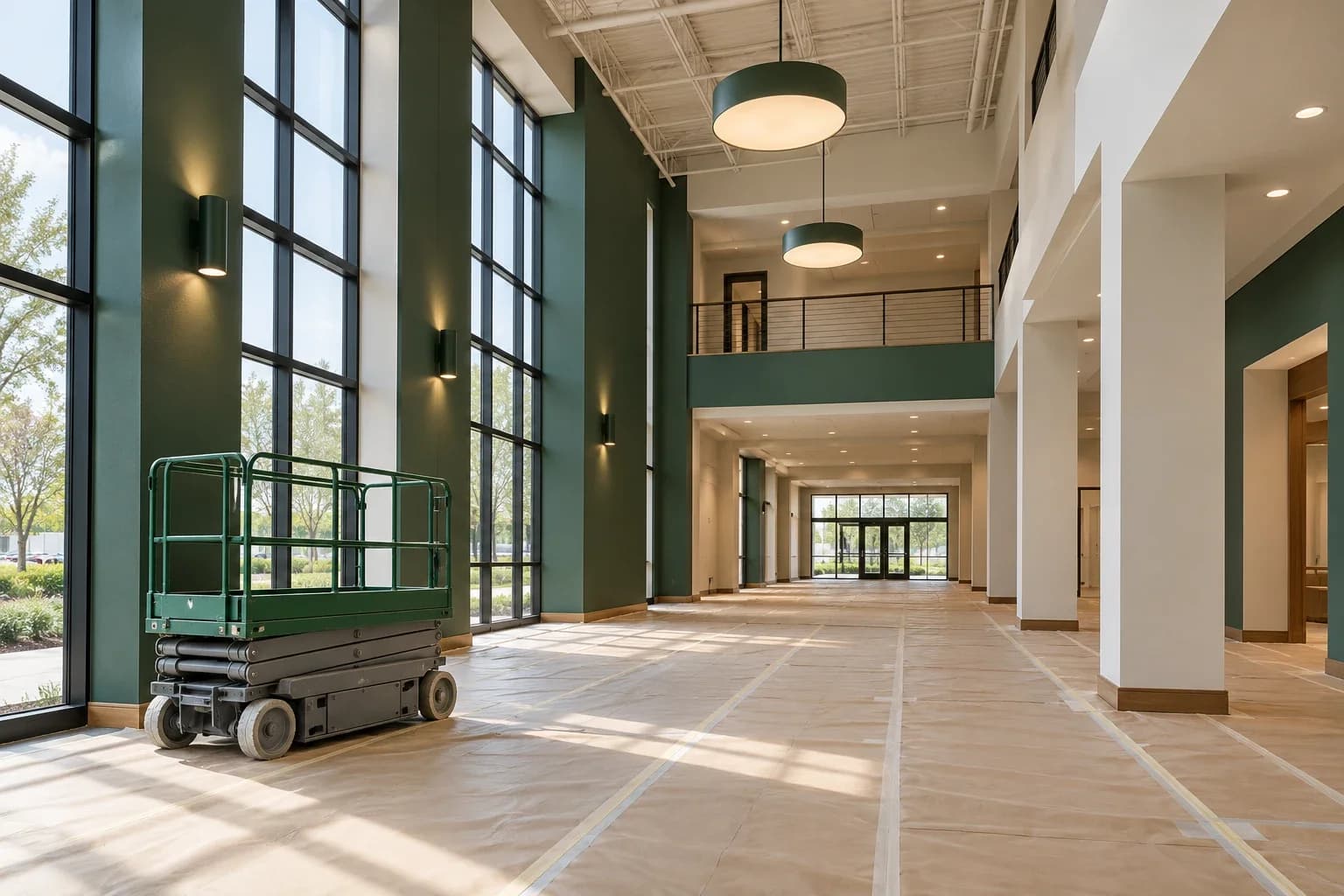
Assess access separately from the amount of paintable area. High ceilings, exterior elevations, restricted entrances, parked equipment and shared routes can affect preparation, equipment and sequence. These questions can arise in either commercial or residential work. The contractor needs to assess the actual site and explain the access assumptions included in the proposal.
For a commercial property, identify delivery periods, security entry, loading arrangements and areas shared with other occupants. State who can authorize access and what remains unavailable during assessment. A quotation should make significant equipment or protection assumptions visible rather than treating them as an undefined issue to resolve after appointment.
The CCOHS painter overview describes access, material and work-area hazards associated with painting. It is useful background for asking about planning, but it does not establish a suitable method for a particular building. Do not select a contractor solely because an equipment photograph resembles the work you expect; discuss the actual assessment and controls needed.
Why can approvals be more complex in a managed commercial property?
Several people may have authority over different parts of the work. The owner may approve spending, a property manager may coordinate access, and a tenant may approve appearance within a defined area. Facilities staff may control building systems. A clear brief identifies those responsibilities instead of assuming that the person opening the door can approve every change.
Name the contacts for scope, colours, programme, access and handover. Explain how a requested change becomes an authorized instruction. A tenant's request for an extra room can affect cost and staging, even if the crew is already nearby. Recording the approval route helps prevent conflicting directions without adding unnecessary complexity to a modest project.
Residential work can also involve several decision-makers, so avoid treating this as an absolute distinction. The practical point is to identify who can agree what for the actual property. A good contractor discussion should reveal missing approvals before they become delays or disagreements during the work.
Can commercial painting happen while the building stays open?
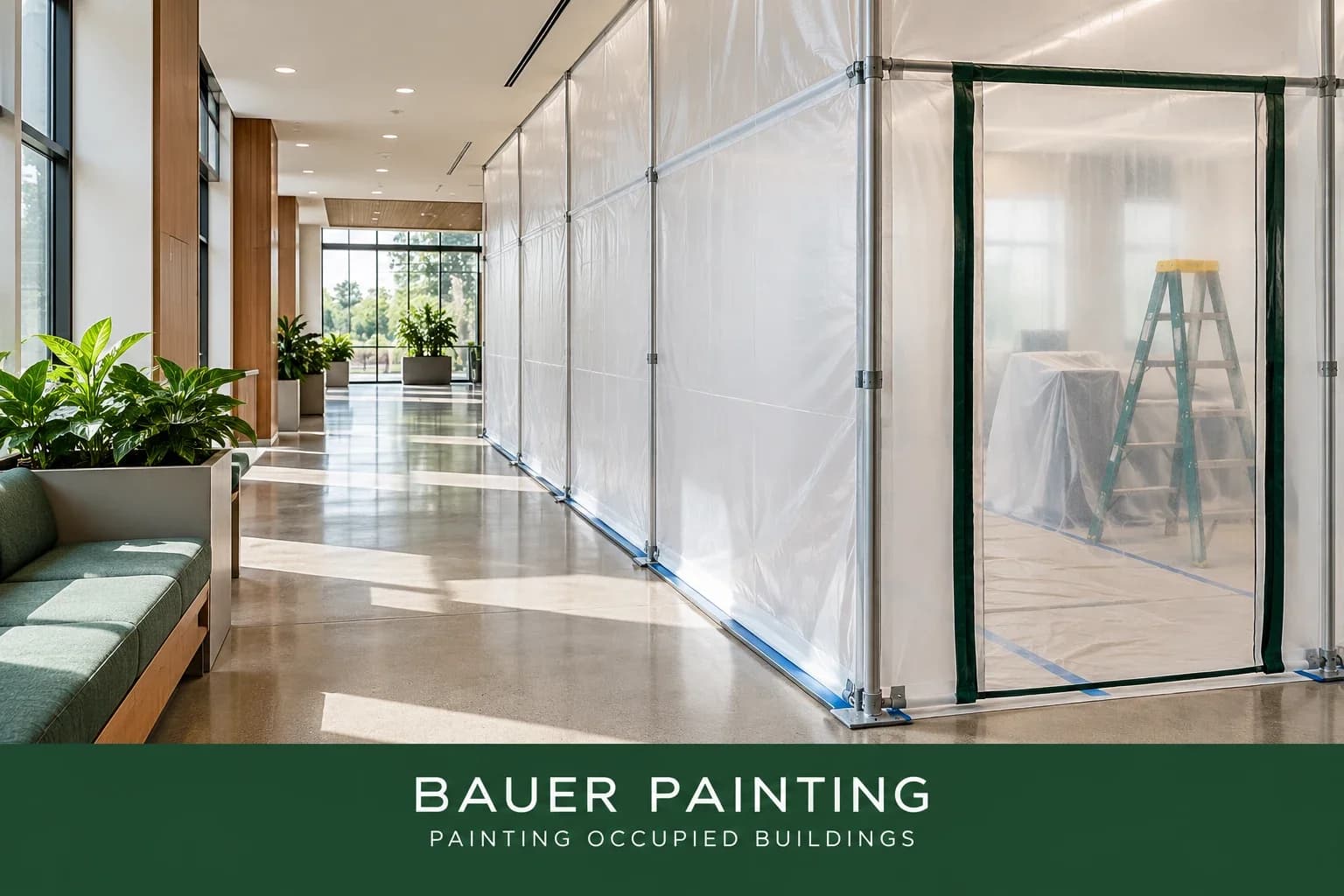
Sometimes, but continued operation depends on the activities, products, application method, protection and building arrangements. Define the work zones and the areas that can be released. Some operations may continue elsewhere while particular rooms or routes need temporary restrictions. A commercial project should not be sold on an assumption that no area will ever need to close.
The CCOHS indoor air quality guidance explains that painting activities can affect workplace air and may need additional control measures. Coordinate the actual arrangements through the responsible people. Low odour or an after-hours window does not, by itself, establish readiness for occupancy or eliminate the need for a building-specific plan.
Our occupied-building painting guide explains area release, communications and staged handover in more detail. Residential occupants can also have access and availability constraints. The right comparison identifies the actual conditions, rather than assuming that a commercial building is always occupied or a home can always be vacated.
What should be compared in commercial and residential quotations?
Compare like-for-like work before comparing the totals. Two proposals can use the same property label while including different surfaces, preparation, products, access or protection. Give bidders a consistent brief and ask them to identify their assumptions and exclusions. A lower price alone does not explain whether one proposal is more efficient or simply covers less work.
Surfaces: which rooms, elevations, doors, frames and other items are included?
Preparation: what cleaning, repairs and assessment allowances are specified?
Products: are the exact systems, colours and sheens identified?
Access: which equipment, work windows and permissions are assumed?
Protection: who moves, covers and reinstates furniture, stock or equipment?
Changes: how will additional work be assessed and authorized?
Handover: what completion checks, restrictions and records are included?
Where quantities or conditions remain uncertain, agree what further assessment is required and how the uncertainty affects the quotation. Do not treat an allowance as though it describes completed investigation. A defined proposal gives the property team a basis for approval and helps the contractor understand what will be reviewed at handover.
Is commercial painting always more expensive?
No universal price relationship follows from the category alone. Surface area, condition, access, protection, preparation, products and working constraints affect the scope. A difficult residential project can involve substantial work, while a limited commercial request may be smaller. Compare the actual proposal rather than applying an unsupported percentage premium to either label.
Floor area is not the same as paintable surface area. Height, partitions, doors, ceilings and included exterior details can change the work involved. If a contractor provides a unit rate, ask what the measurement and inclusions represent. A rate without that context is a weak basis for comparing two different properties or two differently defined scopes.
For commercial enquiries in Toronto, Mississauga or Hamilton, provide the actual address, surface list and operating constraints. Location is relevant to planning, but it does not explain the condition or access of a particular building. Request a site-specific assessment rather than adopting a price from an unrelated project.

Which documents should a property manager request?
Ask the responsible building team what information is actually required for the proposed work. This may include a written scope, product information, insurance documentation and building-specific access or approval records. Clarify those needs before appointment so a contractor can explain what it can provide and what requires further coordination.
Do not turn a generic online checklist into a claim that every project has identical legal or procurement requirements. The actual property, owner and work determine the relevant questions. If a requirement is unclear, resolve it with the appropriate responsible person rather than assuming that a commercial label settles it. A document is useful when it supports an actual decision or obligation.
Keep the approved scope, samples and changes in one accessible record. The person taking over the property later should be able to understand which areas were included, what was approved and which items remained outside the contract. This continuity matters whether the original project was small or extensive.
How should shared areas and mixed-use buildings be described?
Distinguish private dwellings, shared areas and commercial premises. A mixed-use address can contain several different scopes and approval groups. State which rooms, corridors, entrances or exterior elements are included and who has authority over each part. A broad instruction to paint the property can otherwise hide questions that should be resolved before quotation.
For managed common areas, review our multi-unit and strata painting service and painting services for property managers. Keep the enquiry tied to the actual areas and responsibilities. A discussion about shared corridors should not imply an agreement to repaint every private dwelling within the same development.
Explain whether the scope includes several buildings or addresses. If so, give each a separate surface list, contact and priority. A common colour standard can be useful without assuming that the same preparation or coating system suits every substrate. Those distinctions should remain visible in the proposal and later maintenance records.
What records matter after completion?
Retain product names, colour references, sheen, areas painted and relevant care instructions. Record retained surfaces, outstanding items and any restrictions at handover. The future maintenance team needs enough information to identify the system without guessing from a colour chip or assuming that every room received the same treatment.
Use the approved scope and sample to review the completed work. If something needs attention, record its location and the agreed next action. A clear maintenance file makes later repairs and assessments more practical. It also prevents a remembered claim about service life from replacing information about what was actually applied and how it should be maintained.
How should you choose a contractor for a commercial project?
Ask how the contractor would assess the surfaces and address the property's actual constraints. Review a written scope, relevant product information, access assumptions and the proposed approval route. Discuss experience relevant to the work without treating the size of a portfolio image or a broad category label as proof that a particular plan is suitable.
Learn about the Bauer Painting team and our commercial painting process, then contact us with the address, photographs and areas to review. This website focuses on commercial painting. A defined discussion of scope, preparation, access, occupancy and handover is the practical way to establish whether a request fits, rather than relying on a commercial-versus-residential label alone.
Frequently asked questions
What is the main difference between commercial and residential painting?
The main difference is property use and the requirements that follow from it. Commercial projects may involve operations, tenants, shared systems and formal approvals. Compare the actual surfaces, condition, access, products and occupancy rather than assuming the label establishes the scope.
Is commercial painting always a larger job?
No. A commercial request can cover a small office or entrance, while a residential project can involve extensive surfaces and difficult access. Review size and complexity separately. Provide the actual area list and working conditions so the contractor can assess the request.
Is commercial painting always more expensive than residential painting?
There is no universal price relationship based on the category alone. Surface area, preparation, products, protection, access and working restrictions affect the scope. Compare defined quotations with matching inclusions rather than applying an unsupported percentage premium to either type of property.
Does every commercial project need a specialist coating?
No. Choose the system for the substrate, existing finish, exposure, cleaning and appearance required. Different areas may need different systems, but the commercial label is not a specification. Ask for exact products and an explanation of their suitability for the assessed surfaces.
Can one paint system be used on every surface in a building?
Do not assume so. Walls, ceilings, doors, metal cladding and masonry can have different materials, conditions and service requirements. Identify the proposed preparation and coating by surface. A common colour scheme does not require every substrate to receive the same product.
Can a commercial property remain open during painting?
Sometimes, but the scope, method, products, ventilation and site controls must be reviewed. Identify work zones and the areas that can be released, then agree restrictions and handover conditions. Continued opening should not be promised solely because the property is commercial.
How should a mixed-use property be described in a painting brief?
Separate private dwellings, shared areas and commercial premises. Identify the surfaces included and who can approve work in each area. A discussion about common corridors or an exterior does not automatically include every private unit or every part of the same address.
What should property managers compare in painting quotations?
Compare included surfaces, preparation, exact products, access, protection, working assumptions, exclusions and completion checks. Clarify allowances and the approval route for changes. Give bidders the same brief so a difference in total price can be understood in the context of the work.
Which documents should be requested for a commercial painting project?
Ask the responsible property team what the actual project requires. Relevant information may include the written scope, product details, insurance documentation and building-specific approvals. Clarify requirements before appointment rather than assuming every commercial property has identical procurement or documentation needs.
Does this comparison mean Bauer Painting offers residential house painting?
The website focuses on commercial painting services. This guide helps property managers understand project differences and prepare a clearer brief. Contact the team with the actual property and areas involved to ask whether a particular request is a suitable fit.
Join the conversation
Have a question or a useful tip? Leave a comment for our team and readers.
Loading comments…